

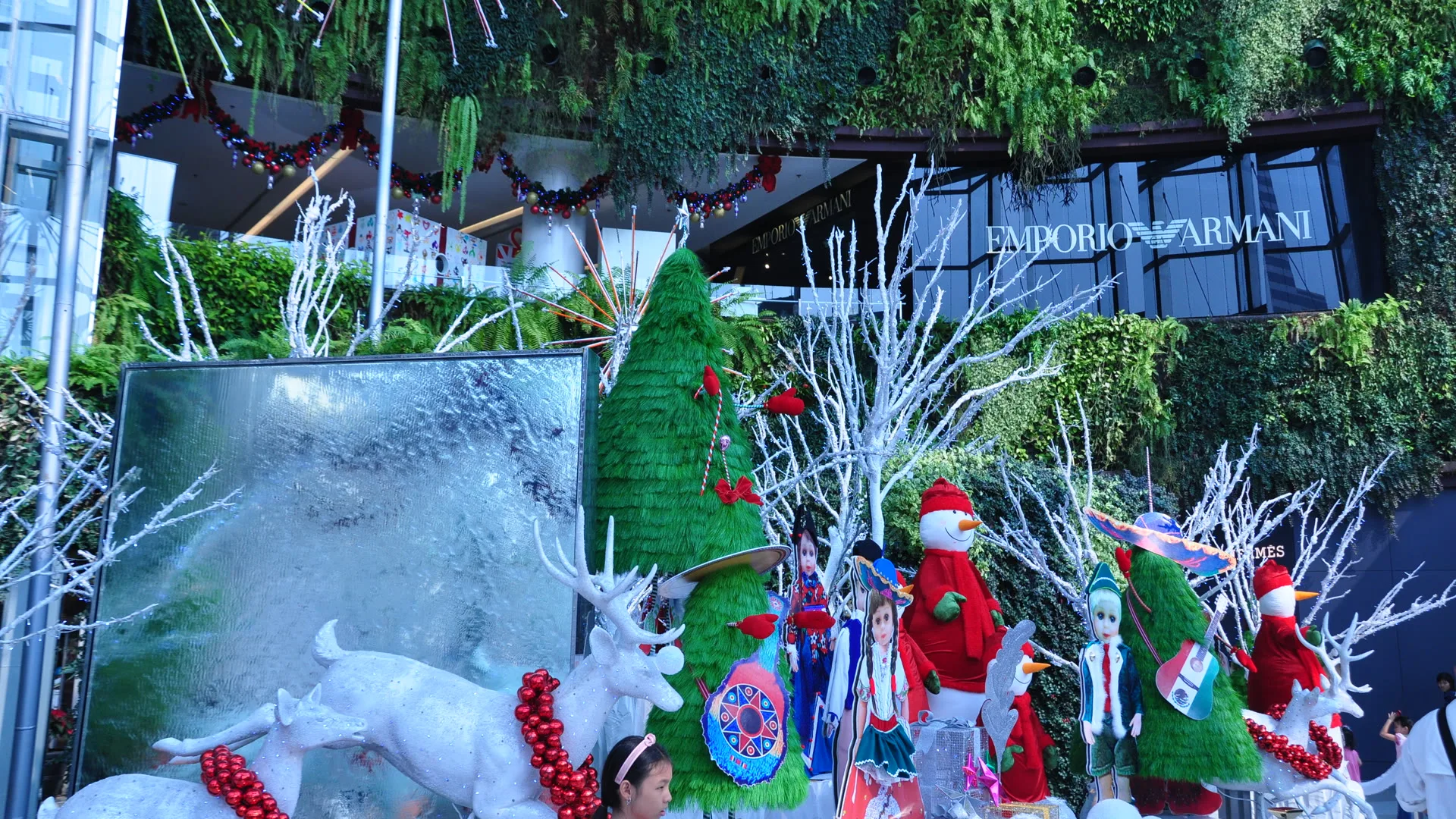
Christmas in Bangkok looks very different from Christmas in Europe: fewer traditional holiday scenes, more city life, festive events and logistical challenges. Let’s start with what you can actually expect and how to plan your visit without falling into the usual tourist traps.
One moment you’re standing in shorts in front of a gleaming golden Buddha statue, and the next you’re walking past an enormous plastic Santa Claus. That’s December in the City of Angels. It can be quite a culture shock. If you’re dreaming of a peaceful Christmas Eve beside a crackling fireplace, Bangkok will disappoint you. But look at the bright side: you’re swapping your winter scarf for a tropical cocktail! During Christmas and New Year, the city transforms into one enormous neon-lit playground. Just be careful: the crowds around CentralWorld can become overwhelming and potentially dangerous, while some so-called “Christmas dinners” are little more than overpriced tourist packages. I’ll show you how to enjoy the festive season without making expensive mistakes.
- Have you noticed how Instagram fills up with palm-tree Christmas photos instead of snowy landscapes? Christmas in Bangkok has become increasingly popular, but don’t expect peaceful carol singing by candlelight. Here, the festive season is largely a massive commercial celebration of lights and shopping, with malls competing to build the biggest Christmas trees. For many Thai people, it’s simply another opportunity to have fun and decorate, so the atmosphere is relaxed, cheerful and completely free from the pressure of preparing a traditional family Christmas dinner back home.
- December weather is one of Bangkok’s biggest attractions. The rainy season has generally ended, and temperatures settle at a relatively pleasant 30°C or so during the day. Walking around in flip-flops and shorts beside an artificial snowman in a shopping mall feels surreal at first, but you’ll quickly get used to it. Just remember that this is peak tourist season. Visiting Thailand over Christmas means hotel prices can rise dramatically, so arriving without accommodation booked in advance isn’t a particularly good idea.
- What about Christmas Eve dinner? Forget traditional carp unless you’ve somehow brought your own. A rooftop dinner overlooking the city or a cruise along the Chao Phraya with views of illuminated temples makes a wonderful alternative. Instead of beetroot soup, you might find yourself enjoying seafood and pad thai. AsiaTrip.pl can often help arrange reservations at carefully selected venues, so you don’t end up eating Christmas dinner at McDonald’s. A Christmas Eve dinner in Bangkok might taste of lemongrass and chili, and that’s part of what makes it such a refreshing change.
- Most places remain open, which is probably the biggest advantage for anyone who doesn’t want to spend the holidays sitting around a dining table. Museums, temples and tourist attractions generally continue operating because Christmas isn’t a public holiday in Thailand, although individual opening hours can vary. That means you can plan day trips from Bangkok, perhaps to the historic ruins of Ayutthaya or to see the famous Damnoen Saduak Floating Market, while families back in colder countries are relaxing in front of the television. Just leave early in the morning, because Bangkok’s traffic doesn’t take a Christmas break.
- New Year’s Eve in Bangkok is an extraordinary combination of excitement and chaos. Major celebrations around ICONSIAM attract enormous crowds, but the fireworks above the river can be spectacular. If you don’t enjoy crowded spaces, consider a smaller celebration or a rooftop bar instead. Whatever you choose, book well in advance. Popular venues can start filling up as early as October.
- Having experienced local support during this period can make a real difference, especially if it’s your first visit and the festive crowds seem intimidating. Exploring Bangkok with a licensed Thai guide and an English-speaking group coordinator can help you avoid common tourist traps and navigate attractions more efficiently, although queues at popular sites are not always avoidable. A knowledgeable local team, such as AsiaTrip’s, can also introduce you to excellent places to eat without paying inflated tourist prices around Khao San Road.
- Don’t be afraid to combine sightseeing with relaxation. After a few days in Bangkok’s concrete jungle, you may find yourself dreaming of the beach. Many travelers spend Christmas exploring the city’s temples and soaking up its lively atmosphere, then head south for New Year, perhaps to Phuket or Krabi. It’s a great balance of culture, nightlife and, finally, a tropical cocktail on the sand. A 14-day trip to Thailand gives you enough time to experience several sides of the country and recharge before heading back to winter at home.
Why Christmas and New Year in Bangkok Are So Unique

The Festive Atmosphere: What Is It Really Like?
I’ve noticed something lately: Bangkok’s shopping malls seem to be in a competition to see who can put up the biggest Christmas tree, and the whole thing is wonderfully over the top. You step outside your hotel into the tropical heat, only to find yourself staring at an enormous illuminated reindeer and artificial snow falling from the roof of Siam Paragon. That’s when your brain has to adjust to an entirely different idea of Christmas. There’s no silent night here. It’s loud. It’s colorful. The streets are just as lively as they are on any other day, except now you might spot tuk-tuks decorated with Christmas lights and drivers wearing Santa hats. Can you imagine the energy? This isn’t a sleepy Christmas atmosphere beside a fireplace. It’s a celebration spilling out onto the sidewalks.
Many tourists assume Christmas in Asia will feel like a poor imitation of the real thing, but in Bangkok it’s simply different. More intense, in fact. You’re standing outside in shorts, sipping iced coffee, while a remix of “Jingle Bells” plays through the speakers. And somehow, it works. Spending two or three days exploring Bangkok with a licensed Thai guide and an English-speaking group coordinator during the festive season is a completely different experience from visiting in July. The city feels electric. People are relaxed. Nobody is rushing around trying to prepare a traditional Christmas meal. Instead of the stress of holiday preparations, you get a sense of freedom and the feeling that you’re right in the middle of a city where anything is possible.
There is one thing you need to watch out for, though: the crowds at popular attractions. If you’re planning a Christmas Eve dinner in Bangkok at a sought-after rooftop restaurant, make your reservation well in advance. Seriously. Local residents love going out, taking photos with the decorations around CentralWorld and celebrating the season in their own way. It’s a mixture of chaos and excitement. You won’t necessarily find the nostalgic Christmas atmosphere you remember from home. What you will find is an exhilarating visual spectacle that will make you forget all about the cold weather you’ve left behind.
A Cultural Mash-Up: East Meets West
I find the Thai approach to Christmas fascinating. After all, Thailand is a predominantly Buddhist country, isn’t it? But there’s a wonderful Thai concept called “sanuk”, which is all about finding enjoyment in life. So if Christmas provides an excuse to have fun, why not join in? You might see a Buddhist monk in orange robes walking calmly past a giant plastic snowman, and nobody gives it a second thought. This meeting of cultures feels remarkably natural here. For visitors, it can be a culture shock, but for many locals, it’s simply another opportunity to celebrate. There’s little religious pressure surrounding the commercial festivities, just an enthusiastic embrace of Western decorations and traditions with a distinctly Thai twist.
Imagine spending the morning visiting temples. Temple sightseeing in Bangkok still comes with important etiquette rules, including covering your shoulders and dressing appropriately, but as soon as you leave Wat Pho, you can find yourself surrounded by festive decorations and shopping displays. Thai people love gifts and colorful decorations. You may even notice spirit houses, those small shrines outside buildings, decorated with strings of lights that would look perfectly at home on a Christmas tree. That’s the beauty of this cultural mash-up. You don’t have to choose between something exotic and something familiar. You get both, sometimes quite literally on the same plate, with restaurants offering festive menus that might even include pad thai with turkey.
For many people who join our private Christmas sightseeing tours in Bangkok, this is the moment when their perspective changes. They stop looking for the familiar traditions of home and begin appreciating the relaxed atmosphere. You don’t have to spend hours around a dining table with relatives you’d rather avoid. Instead, you could enjoy a private long-tail boat tour through Bangkok’s canals, watching everyday life unfold along the waterways while someone hangs Christmas decorations on a palm tree. There’s something wonderfully liberating about it. Christmas becomes a genuinely enjoyable break, without the usual list of obligations. And that’s exactly what makes Bangkok in December so appealing.
The cultural mixture is especially enjoyable when it comes to food. Instead of traditional Christmas soup and dumplings, you can experience Bangkok’s street food in Chinatown with the help of a knowledgeable local coordinator, where red Chinese lanterns mingle with green Christmas trees. That’s the wonderful thing about the city: nobody is going to tell you that you’re celebrating the wrong way. You can eat spicy curry on Christmas Eve, then enjoy a glass of champagne on the 40th floor of a skyscraper overlooking the city. It’s your holiday, and Bangkok gives you the freedom to celebrate it however you like, without worrying about convention.
December Weather: Is Bangkok Really as Hot as People Say?
Let’s clear up a common misconception. Everywhere you look, you’ll read that December and January are part of Thailand’s “cool season”. So when you’re packing for a trip to Thailand in December or January, during one of the best periods for pleasant weather, you might think, “Okay, I’ll bring a sweater.” Not so fast. Bangkok’s cool season can still mean daytime temperatures around 30°C. For Thai people, that might feel like winter, and you really will see some locals wearing jackets, but for visitors from colder countries, it feels like summer. The biggest difference is the humidity. Conditions are generally much more comfortable than in July or August, when the air can feel almost impossibly thick. At this time of year, you can finally breathe a little easier.
It’s an excellent season for sightseeing because you won’t necessarily be drenched in sweat after a five-minute walk. Exploring Bangkok with a guide becomes much more enjoyable instead of feeling like an endurance test. The skies are often blue and relatively clear, while rainfall is generally limited. That’s precisely why this period is so popular and prices tend to be higher. You’re paying for more comfortable conditions. You can plan a full day of activities, from the Grand Palace to the night markets, and still have energy left in the evening. It’s the kind of “winter” you dream about while sitting beside a radiator back home.
But be careful, because the sun is still powerful. Even when there’s a pleasant breeze, UV exposure can be intense. I’ve seen countless travelers on sightseeing tours around Thailand get badly sunburned on their first day because they assumed it wasn’t hot enough to be dangerous. Don’t make that mistake. Sunscreen is essential, and so is drinking plenty of water. And remember one of Bangkok’s great temperature paradoxes: sometimes the coldest places are indoors. Air conditioning on the BTS Skytrain and in shopping malls can feel almost Arctic. One minute you’re outside in 32°C heat, and the next you’re stepping into a building that feels closer to 18°C. That’s when a light sweater suddenly becomes useful, although you’ll probably only need it in your backpack.
One more thing about the weather: evenings can be wonderful. Temperatures often drop to around 24-25°C, making evening sightseeing in Bangkok, including illuminated landmarks and night markets, especially enjoyable. The sticky, oppressive humidity associated with the rainy season is usually much less noticeable. You can spend hours at a rooftop bar wearing just a T-shirt and feel perfectly comfortable. This is one of the reasons an outdoor New Year’s Eve celebration in Bangkok can be so much more appealing than a house party during a European winter. You’re standing outside, the air is warm, the atmosphere is pleasant, and you know you’ve made a good decision.
My First Taste of Christmas in Bangkok
Delicious Discoveries: What to Eat and Where to Find It
You might be surprised when Christmas Eve brings the aroma of lemongrass and grilled prawns instead of the familiar smells of a traditional holiday dinner. But that’s exactly when you should embrace the change and try something new. In Bangkok, a Christmas meal doesn’t necessarily mean sitting at a table covered with a white tablecloth, unless you’ve booked an expensive hotel dinner. And between us, some of the city’s best culinary experiences happen right on the street. One of the best places for a Christmas Eve feast is Chinatown (Yaowarat Road), where crowds, neon signs and sizzling woks create an atmosphere no European Christmas market could ever reproduce. Order some seafood, perhaps enormous, juicy river prawns or crab in curry sauce, and forget about your usual Christmas dishes. Your taste buds will thank you for breaking with tradition. And if you’re worried about trying unfamiliar food, remember that exploring Bangkok street food with a knowledgeable local coordinator can make the experience much easier for first-time visitors.
If you’d prefer something a little more organized but still distinctly local, a Christmas Eve dinner cruise along the Chao Phraya is an excellent choice. Imagine looking out at the illuminated Wat Arun temple while enjoying pad thai and sipping a cold Chang beer. It’s the kind of experience you’ll still be talking about with friends five years later. Just one warning: during the festive season, popular dinner cruises can sell out quickly, so make your arrangements well in advance, ideally with help from an established local travel company such as AsiaTrip. That way, you can choose a cruise that suits your expectations rather than accidentally ending up on a boat that feels more like a techno nightclub than a relaxing evening on the river. And don’t expect to find traditional Christmas dumplings on the menu. Rice and chili are much more likely, and remember that what locals consider “a little spicy” might feel extremely hot if you’re not used to Thai food.
And for dessert? Forget traditional Christmas poppy seed cake. Here, mango sticky rice takes center stage, and believe me, the combination of sweet coconut milk, glutinous rice and ripe mango is a revelation if you have a sweet tooth. You’ll find it all over Bangkok, but some of the best stalls are easy to recognize by the queues of local customers. Join the line. Even if you have to wait 15 minutes, it can be worth it. Thai people certainly love sweet treats, and around Christmas you’ll also find cafes selling elaborate cakes shaped like Christmas trees or reindeer. They may look impressive, but their taste doesn’t always live up to their appearance. Some are overwhelmingly sweet and rather artificial. That’s why I’d recommend that you stick to the local classics. There’s not much that beats drinking fresh coconut water straight from the coconut on a warm December evening, knowing that people back home are wrapped up against the cold while you’re perfectly comfortable in a T-shirt.
Local Markets: A Shopper’s Paradise
This isn’t your typical Christmas market selling ornaments and woolly socks. Oh no, shopping here is a whole different experience. The biggest name is, of course, Chatuchak Weekend Market, and if your Thailand holiday falls on a weekend, it’s an absolute must-visit. Fair warning, though: this place is a maze that practically swallows people whole. It’s hot, crowded, noisy, and insanely intense, but you’ll find just about everything imaginable, from handmade ceramics and vintage clothing to… well, things you never even knew existed. Bargaining is practically a national sport here, so don’t assume the first price is the final one. Smile, try a little “thao rai khrap/kha” (how much is it?), and negotiate. For the vendors, it’s part of the fun, and for you, it’s a chance to save a few baht for another mango shake.
But if you’re after more of an evening atmosphere, head to night markets such as Jodd Fairs or Asiatique The Riverfront. Asiatique is the more upscale option, cleaner and pricier, with a giant Ferris wheel that looks fantastic in photos. You can actually get a taste of that commercial Christmas atmosphere here, too, because the decorations tend to be wonderfully over the top. Jodd Fairs, on the other hand, is a paradise for food lovers and anyone hunting for trendy accessories. Expect crowds of young Thais, live music, and stalls serving those famous volcano ribs, which look like an entire mountain of meat. Just keep an eye on your wallet and phone, not because these places are particularly dangerous, but because it’s easy to lose something in the crowds or attract a pickpocket while you’re distracted by all the glittering decorations.
It’s also worth knowing that shopping in Bangkok in December is a fantastic opportunity to pick up gifts that won’t end up gathering dust in a cupboard. Instead of yet another coffee mug, you can find beautiful silk scarves, natural soaps shaped like fruit (they smell incredible!), or spices that will bring back memories of your trip long after you get home. One little tip: if you see something you like, buy it there and then. The “I’ll come back for it later” approach doesn’t work at Bangkok’s night markets. First, you’ll probably never find that stall again in the maze of vendors, and second, someone else might snap up your treasure before you return. It’s a jungle out there, so trust your instincts.
And since we’re talking about markets, it would be a shame not to mention the floating ones. They’re a Thai classic that practically everyone wants to experience. Two of the most popular floating markets near Bangkok are Damnoen Saduak and Amphawa, but they offer completely different experiences. Damnoen Saduak is a full-blown tourist attraction. It’s crowded, colorful, and perfect for photographs, but prices can be ridiculously inflated (seriously, 100 baht for a coconut is daylight robbery). Amphawa has a more authentic feel, opens in the afternoons, and attracts plenty of Thai visitors too, which is usually a good sign. If you’re planning day trips from Bangkok, consider combining a floating market with a visit to Maeklong Railway Market, the famous market where a train passes straight through the middle of the stalls.
Festivals and Lights: Where Are the Best Places to See Them?
Bangkok goes absolutely crazy for Christmas lights in December, in the most wonderfully kitschy and charming way imaginable. No snow? No problem! We’ll make some out of foam or plastic! One of the best places to witness this festive madness is around the CentralWorld shopping mall in the Siam area. This is where they put up what they claim is Southeast Asia’s largest Christmas tree and host an enormous beer garden. The crowds are unbelievable. Everyone is taking selfies with giant cartoon characters or teddy bears, and the whole atmosphere feels like one massive picnic in the middle of the city. This is the beating heart of Thailand’s commercial Christmas celebrations, and if you love places buzzing with activity, you simply have to experience it, even if it’s just to see how Thais interpret winter when it’s 30 degrees Celsius outside.
Another must-visit is ICONSIAM on the riverfront. This shopping complex is practically a small city in its own right, and its light shows and dancing fountains set to festive music are impressive even if you’re normally hard to impress. The evening view across the Chao Phraya River from its terrace is magical, and the decorations tend to be more elegant and artistic than those at other locations. Interestingly, many Thais treat these displays as backdrops for elaborate photo shoots. You’ll see entire families dressed in matching red-and-green outfits, sometimes accompanied by professional photographers. So don’t be shy. Take out your phone and start snapping pictures. Nobody will judge you for being a “typical tourist” because pretty much everyone is doing exactly the same thing.
But Bangkok’s festive lights aren’t limited to shopping malls. It’s worth heading towards Ratchadamnoen Avenue, near the Grand Palace, where the streets are decorated with millions of yellow lights for the King’s Birthday and New Year celebrations. The effect is completely different from the colorful Christmas illuminations you might be used to. It’s more dignified, regal, and… golden. An experienced local guide can tell you the best time to visit to avoid the worst traffic, because Bangkok’s evening congestion can sometimes bring everything to a standstill for an hour. A walk around this area after dark also offers a welcome break from the noise and crowds of the Siam shopping district.
For anyone who wants to make the most of the evening, I’d recommend exploring Bangkok by tuk-tuk after dark. It gives you a completely different perspective on the city. Picture the wind in your hair (and exhaust fumes, let’s not pretend otherwise), the neon lights of Chinatown blending with Christmas decorations, and a quick ride past illuminated temples such as Wat Pho or Wat Arun. Many local drivers decorate their tuk-tuks with Christmas garlands in December, which looks hilarious but adds to the charm of the experience. Just remember to agree on the fare before getting in, because some drivers are more than happy to add a little “holiday surcharge” to their prices.
In Thailand, the idea of “New Year” is taken three times as seriously, because who says you can only celebrate it once? There’s the Western New Year on January 1, Chinese New Year, often celebrated in February, and the most important traditional Thai New Year in April. Each has a completely different energy, but they all share one thing: an incredible intensity of experiences that’s hard to find in Europe.
What Makes Traditional Thai New Year Celebrations So Special?
Songkran: The Water Festival That’ll Leave You Soaked!
Imagine the temperature climbing above 35 degrees Celsius, heat rising from the asphalt, and suddenly someone empties a bucket of ice-cold water straight down your back. And the strangest part? You’re actually grateful. Songkran, the traditional Thai New Year celebrated in mid-April, is often described as the world’s biggest water fight. It transforms the streets of Bangkok, Chiang Mai, and Phuket into enormous water-battle zones. Forget the gentle sprinkling of water you might associate with traditional celebrations elsewhere. During Songkran, roads are closed to traffic, and trucks carrying huge barrels of water patrol the streets, looking for anyone who has somehow managed to stay dry. If you’re planning a trip to Thailand during this period, forget about fancy clothes and makeup. The only things that matter are having fun and surviving the wonderfully wet chaos. But there’s a deeper meaning behind all this madness, something that’s easy to forget when you’re aiming a plastic water gun at a complete stranger. In Thai culture, water symbolizes purification, washing away the misfortunes and sins of the previous year. So, at least symbolically, the wetter you get, the more good luck you can expect over the next 12 months. Locals also sometimes apply a white paste made from talcum powder and water, known as din sor pong, to people’s faces. It’s traditionally associated with protection from evil spirits. You might look as though you’ve fallen into a flour mill, but the gesture is meant kindly. Remember that during Songkran, people generally take playful splashing in good spirits. It’s one of the few times of year when you might even see someone splash a police officer (although exercising restraint is definitely wise) or their boss, with everyone laughing about it afterward. Logistically, it’s a challenge, but it can also be the adventure of a lifetime, especially if your tour around Thailand coincides with the celebrations. You should know that electronics are particularly vulnerable during Songkran. Phones can get ruined in seconds, so a waterproof pouch for your phone and money is an absolute must. You can buy one from street vendors almost everywhere for very little money. If you’re in Bangkok and want to stay dry, avoid Silom and Khao San Road, although staying completely dry can be nearly impossible. But if you’re looking for the party of a lifetime, those are exactly the places to go. There’s something incredible about watching language and cultural barriers disappear beneath torrents of water as you celebrate alongside Thais, European travelers, and even monks (although, seriously, don’t splash the monks!).
The Meaning of Making Merit
Getting up at 5:30 in the morning while you’re on holiday sounds like torture, but in Thailand, it can open the door to a deeper understanding of the local culture, particularly around New Year, both in January and April. “Making merit”, or *Tam Boon*, is the Buddhist practice of accumulating merit, and you can witness it at dawn near many major temples, whether in bustling Bangkok or on a quieter trip to northern Thailand and Chiang Mai. The idea is that karma isn’t just a fashionable buzzword; it’s something people actively invest in through their actions. When you offer food to barefoot monks walking through the streets with their alms bowls, you’re not simply doing them a favor. In Buddhist belief, they’re giving you an opportunity to generate merit and improve your prospects in this life and future lives. It’s an experience worlds apart from the nighttime parties on Khao San Road. Everything is quiet and contemplative, with the scent of incense mingling with the aromas of freshly cooked rice and curry packed into small bags. If you decide to take part in this ritual, which I’d highly recommend even if you’re an atheist, remember to show respect. Remove your shoes before stepping onto any designated raised platform, avoid touching monks (particularly if you’re a woman), and move calmly while observing what local people do. On organized trips, including those arranged by AsiaTrip, a licensed Thai guide and an English-speaking group coordinator can help you prepare appropriate offerings so that you don’t commit a cultural faux pas by giving a monk something unsuitable, such as alcohol or cigarettes. Another form of merit-making involves releasing animals, a practice you may encounter near rivers and canals, including on a visit to Ayutthaya from Bangkok. People buy small fish, eels, and even caged birds for the purpose of setting them free. Believe me, there’s something strangely heartwarming about the moment you open a cage and watch an animal escape. It’s important, however, to approach this practice responsibly and avoid tourist traps where the same birds are repeatedly captured and sold. The best approach is to ask a local guide about ethical alternatives where your act of merit-making genuinely benefits the environment rather than simply supporting a commercial operation. For many Thais, *Tam Boon* at New Year, even on January 1, is an absolute priority, more meaningful than fireworks or champagne. Some people visit nine different temples in a single day, believing it will bring them exceptional good fortune. It’s a spiritual marathon that also happens to be a wonderful way to discover Bangkok from a completely different perspective. If you’re considering a private tour of Thailand, ask your guide about a “nine temples” itinerary. You’ll discover architectural gems you might otherwise overlook and experience the distinctive sense of calm that settles over the city when millions of people turn their attention to doing good.
Family Gatherings: How Do Locals Celebrate?
It might surprise you, but during major holidays, Bangkok, the city that never sleeps, suddenly… empties out. For many Thais, New Year, both the Western celebration and Songkran, is primarily about returning home to their families in the provinces to spend time with parents and grandparents. As a result, traffic jams in the capital can seemingly disappear overnight, while bus terminals become packed with travelers. This isn’t really about sitting down in fancy restaurants with white tablecloths. Real family life unfolds on mats spread out in front of people’s homes, where several generations gather around a *Moo Krata*, a Thai-style barbecue combined with a hotpot that becomes the culinary center of every family feast. The atmosphere is relaxed, noisy, and incredibly warm. Nobody sits stiffly around a formal dining table. Children run between adults, and neighbors drop by unannounced, bringing even more food. If you’re lucky enough to be invited to one of these home gatherings, which happens more often than you might expect thanks to Thailand’s welcoming culture, prepare yourself for endless questions about your life, your weight (yes, comments about weight can be surprisingly casual here!), and how much you earn. Food is a language of love, so your bowl is unlikely to stay empty for long. Turning down another helping can be almost impossible, so it’s best to eat slowly and savor every bite of grilled pork with spicy nam jim dipping sauce. For the older generation, one particularly meaningful tradition is the *Rod Nam Dum Hua* ritual, which involves gently pouring scented water, often infused with jasmine and rose petals, over the hands of elders. It’s a beautiful, moving moment when younger family members ask for blessings and forgiveness for any wrongdoings during the previous year. The contrast between the wild celebrations in the streets and this intimate gesture of respect at home reveals another side of Thailand, a country where modern life and tradition don’t compete but move together in harmony. Even if you’re spending your Thailand holiday in a hotel, the staff may organize a small version of this ceremony, so don’t be surprised if someone approaches you with a smile and a bowl of fragrant water. If you don’t have a Thai family to celebrate with but would still like to experience the atmosphere, head out in the evening to one of Bangkok’s public parks, such as Lumphini or Benjakitti, or visit a local night market away from the main tourist areas. You’ll see extended families picnicking on the grass, sharing food, and laughing together. This is where you’ll discover the city’s real heart. Having a knowledgeable local guide or someone from the AsiaTrip team with you can make the experience even better. An English-speaking group coordinator can help break the ice and explain exactly what’s going onto the grill, because some local delicacies can be… quite an adventure for an unaccustomed palate.
The Truth About Western-Style Christmas Celebrations in Bangkok
Where Can You Find the Best Christmas Trees in the City of Angels?
You might imagine that a Christmas tree in the tropics is nothing more than a sad plastic decoration tucked into the corner of a hotel lobby, but Bangkok will quickly prove you wrong. Nobody does things by halves here. When Thais put up a Christmas tree, they make sure it can practically be seen from space. The undisputed champion of Christmas photo spots is the square outside CentralWorld shopping mall, where an enormous installation appears every year, often claimed to be the tallest Christmas tree in Southeast Asia. This is no ordinary tree. It is a high-tech art installation packed with electronics and ever-changing themes, from Pokemon characters one year to futuristic ornaments the size of small cars the next.
If your holiday in Thailand falls in December, don’t expect quiet contemplation beneath these Christmas trees. Everyone is hunting for the perfect Instagram shot. The crowds can be enormous, and locals love wearing Santa hats and taking hundreds of photos. You’ll need plenty of patience if you want to photograph the decorations without dozens of smiling teenagers in the background. Interestingly, these trees rarely smell anything like a forest. Real fir trees would struggle to survive in this climate, but what the displays lack in natural fragrance, they more than make up for with thousands of LED lights that look spectacular against the concrete jungle after dark.
Another place worth visiting if your evening plans include guided sightseeing in Bangkok is the Chao Phraya riverfront beside the luxurious ICONSIAM shopping complex. Here, the Christmas tree stands against the backdrop of the river, creating a scene unlike anything you would normally see in Europe. The illuminated tree, with barges and boats passing nearby, makes for an extraordinary sight. It is a wonderful contrast: a traditional Thai river, humid tropical air, and a symbol of Western Christmas celebrations that looks almost surreal in these surroundings, yet somehow fits perfectly.
Shopping Malls: Are the Christmas Decorations Really That Impressive?
When the sun is beating down and you’re desperate for a break from the 30-degree heat, Bangkok’s shopping malls become your best friends. And believe me, they know exactly how to put on a show. Step inside and you’re greeted not only by a glorious blast of cool air but also by an explosion of extravagant Christmas decorations that can make displays in London or New York seem positively restrained. Thais love “sanuk”, the idea of having fun, and nowhere is that more obvious than at Siam Paragon or EmQuartier. Their atriums turn into winter wonderlands, sometimes complete with artificial snow, which can be an even bigger attraction for local children than the beaches of Phuket.
Don’t expect traditional nativity scenes or understated decorations, though. This is commercial Christmas with pop culture turned up to eleven. Displays often follow specific themes and are sponsored by major brands, so you might encounter a Christmas tree made from Lego bricks, teddy bears, or Swarovski crystals. The whole spectacle is designed to attract shoppers. Meanwhile, as you wander between stores, you’ll hear “All I Want for Christmas Is You” on repeat so many times that you’ll start wondering whether you’ve accidentally entered a strange parallel universe where Christmas lasts all year.
Pay attention to the details, because Thais are masters at creating an atmosphere, even if it sometimes feels a little kitschy by European standards. Ceilings are covered in garlands, shop windows sparkle with gold, and staff members often wear reindeer antlers. Combined with their natural friendliness and welcoming smiles, the result is genuinely charming. If you’re planning day trips from Bangkok and only have a little time in the city, stop by Terminal 21. Each floor is themed around a different world city and has its own distinctive approach to Christmas decorations, which adds another interesting twist to the experience.
There is one important thing to understand, however. All that shopping mall glamour is primarily a backdrop for photos and a way to boost end-of-year sales, commonly advertised as the “Year End Sale”. It can be an excellent time to shop, with some genuinely substantial discounts, especially on electronics and clothing. So if you’ve forgotten to buy presents for your family, Bangkok’s enormous shopping complexes might just save the day while providing a welcome air-conditioned escape from the December sunshine.
Christmas Markets: Can They Compare with Those Back Home?
Let’s be realistic. If you’re expecting wooden stalls filled with the aromas of cloves and cinnamon, with frosty air nipping at your cheeks, you might be a little disappointed. Bangkok’s “Christmas markets” are usually familiar, popular night markets dressed up with extra fairy lights and perhaps a handful of stalls selling Western food. You’re unlikely to find traditional mulled wine served in a ceramic mug unless you happen upon a special event organized by the expat community, perhaps near an embassy or at an international school.
Instead of hot wine, your festive drink will probably be an ice-cold Chang beer or a fresh coconut, which has its own special charm. At markets such as Jodd Fairs or The One Ratchada, Christmas decorations mingle with the aromas of grilled seafood and spicy curry. It’s a fascinating combination. You might see a Santa Claus sweating inside his costume while handing out sweets, right next to an older Thai woman selling Pad Thai and fried scorpions. For many travelers choosing trips to Thailand, this relaxed atmosphere and exotic take on Christmas are precisely what make the experience so memorable.
If you’re feeling particularly homesick, look for events such as the “Winter Market” at K-Village on Sukhumvit, where the atmosphere is closer to a European Christmas market. You can shop for handmade crafts, enjoy homemade baked goods, and meet other foreigners who, like you, are spending Christmas far from their families. Just remember that prices at these Western-style markets are generally higher than at typical Thai markets, and authenticity is a flexible concept here. Think of it as a fun interpretation of a European tradition rather than the real thing.
My most important advice about Christmas markets in Bangkok is simple: don’t compare them with those in Krakow, Dresden, or Vienna. They’re in a completely different league. Instead, enjoy them as an exotic adventure where street food meets a tropical version of “Jingle Bells”. Food at busy, popular markets is generally prepared frequently because customer turnover is high, although you should still choose stalls with good hygiene practices. It’s also a unique opportunity to buy gifts you won’t easily find elsewhere. Handmade mango-shaped soaps or silk scarves make far more interesting souvenirs than yet another Christmas ornament.
My Take on New Year’s Eve Celebrations in Bangkok
Fireworks: Where Can You Really Get the Best View?
Most tourists instinctively head for CentralWorld shopping mall, often described as Asia’s answer to Times Square. But here’s my advice: unless you enjoy being packed into a crowd so tightly that you can barely take a deep breath, skip that idea and look towards the Chao Phraya River instead. This is where, beside the enormous ICONSIAM shopping complex, one of Thailand’s most spectacular fireworks displays takes place. The explosions reflect across the water, creating a dazzling spectacle. Standing nearby, you feel as though the entire sky has burst into color, with fireworks so loud that you can feel the vibrations in your stomach. The trick is finding a viewing spot on the opposite bank or at one of the public piers, where the crowds may be slightly smaller.
If your 14-day Thailand itinerary includes this magical evening, consider an option that sounds luxurious but doesn’t necessarily have to break the bank: a river cruise. It doesn’t have to be an expensive dinner aboard a five-star cruise ship. There are also smaller, traditional boats that head out onto the river shortly before midnight. Watching fireworks explode overhead while gently rocking on the water, away from the sweaty crowds along the riverbank, can completely transform the experience. Just remember that tickets for these cruises can sell out as early as November. If you’re counting on making spontaneous plans on New Year’s Eve, you could end up disappointed, watching flashes of fireworks over the shoulders of a thousand other people.
For those who prefer to keep their feet firmly on the ground, bridges such as Taksin Bridge can be an excellent, though less frequently recommended, option. People gather early, bringing their own food and drinks and creating an unusual picnic atmosphere in the middle of the metropolis. From our experience organizing private Bangkok tours, you don’t necessarily need to spend a fortune at an expensive bar to enjoy a million-dollar view. Sometimes it’s simply a matter of knowing which little street to explore in Talad Noi to find a clear view of the river. Hidden spots like these, away from the main crowds, are part of what makes guided sightseeing in Bangkok worthwhile. They help you avoid common tourist mistakes and find a great vantage point for the show.
Nightlife: Party Like a Local!
If you think Bangkok’s party scene begins and ends on Khao San Road, you’re missing a huge part of the picture. It’s a bit like judging an entire country’s cuisine by the food served at a railway station cafeteria. Of course, Khao San Road on New Year’s Eve is legendary. The street becomes one enormous, pulsating mass of people, with alcohol flowing from plastic buckets and music from ten different clubs blending into a wall of noise. It’s a one-of-a-kind experience and worth trying if you enjoy complete chaos and meeting people from every corner of the world. Just keep a close eye on your wallet and phone, because belongings can easily go missing in crowds like these. However, serious partygoers and many young locals prefer to head somewhere completely different.
So where do locals go out? Head towards RCA (Royal City Avenue) or the Thonglor district, where the atmosphere is entirely different. It’s more “hi-so”, meaning high society, with more sophisticated drinks and dress codes that would be almost unheard of on Khao San Road. At RCA clubs such as Route66 or Onyx, you can see how young Thais enjoy a night out. Groups order whole bottles of whisky for their tables, dance together, and generally enjoy a more organized and comfortable clubbing environment. If you’re planning a group trip to Thailand with friends, reserving a table at one of these venues is a good way to improve your chances of an enjoyable evening. Just make sure you book well in advance, because getting in without a reservation on New Year’s Eve can be extremely difficult.
You’ll find a completely different energy around Sukhumvit Soi 11, an unusual mix of expats, tourists, and locals looking for a night of adventure. Here, the party spills out onto the street, and bars can stay open until the early hours, or sometimes even longer, depending on the special operating-hour arrangements in place for New Year’s Eve. It’s a convenient base for a night out, with plenty of transport options nearby, although taxi fares can become astronomical on this particular night. Remember to plan a more relaxed day after a big night out. An intensive day trip from Bangkok starting at 7 in the morning is probably the last thing you’ll want. Give yourself time to recover, perhaps with a foot massage and some street food to help with the hangover.
There’s one particularly important thing you should know about getting home after a New Year’s Eve party in Bangkok. Ride-hailing apps such as Grab and Bolt may display fares as much as four times higher than usual, and waiting times can stretch to an hour. Whenever possible, choose accommodation close to where you plan to celebrate, or prepare yourself for a long walk. Finding a taxi on the street can be extremely difficult, and some drivers may refuse to use the meter, instead quoting outrageous fares of around 1000-1500 THB for a short journey.
Rooftop Bars: Are They Really Worth the Hype?
We’ve all seen those Instagram photos: elegantly dressed people holding glasses of champagne against a glittering city skyline. But the reality of New Year’s Eve at Bangkok’s rooftop bars can be brutal on your wallet. Places such as Sky Bar at Lebua, made famous by “The Hangover Part II”, or Vertigo at Banyan Tree can charge extraordinary prices on New Year’s Eve, with packages often starting at 10,000 THB per person, sometimes without even including a seat. You’re largely paying for the prestige and the view, which is undeniably breathtaking. But is it worth the money? If it’s the trip of a lifetime or you’re planning a marriage proposal, perhaps. For the average traveler, however, the value for money on this particular night is questionable.
Instead of focusing on the famous rooftop bars that appear on magazine covers, look for smaller venues at four-star hotels near the river or in the Phaya Thai district. They often offer entry packages at a fraction of the price charged by the most prestigious establishments, while the fireworks views can be just as good, sometimes even better. After all, you won’t necessarily have ten rows of people holding selfie sticks between you and the edge of the terrace. As organizers of private tours under the AsiaTrip brand, we often suggest alternatives like these to our guests. They offer a taste of Bangkok’s luxurious rooftop atmosphere without requiring a small fortune for a drink. The atmosphere can also be more pleasant, with staff who actually have time to look after you instead of rushing from one customer to another.
There’s another important detail that often surprises tourists arriving straight from the beach: rooftop bars take their dress codes very seriously, especially on New Year’s Eve. Forget sandals, shorts, or sleeveless shirts for men. Security staff may send you straight back to the elevator, even if you have a reservation. I’ve seen more than one couple forced to return to their hotel to change, losing precious time before midnight. So if your holiday in Thailand normally involves flip-flops and casual clothes, make sure you pack at least one smart outfit if you’re planning to visit Bangkok’s rooftop bars.
One final practical point about rooftop bar reservations: many venues require full, non-refundable prepayment several weeks or even months before New Year’s Eve. Don’t expect to walk in without a booking or secure a table the day before. The best tables beside the railings can be fully booked as early as October. If you’re dreaming of raising a glass of champagne above Bangkok’s illuminated skyline, you’ll need to start planning long before you pack your suitcase.
What You Absolutely Shouldn’t Miss During the Holiday Rush
Temples – Your Oasis of Calm Amid the Chaos
You know that feeling when the whole city is racing around and all you want to do is hit pause? Bangkok in December is a whirlwind of shopping and celebrations, but step through the right temple gate and you’ll find yourself in a completely different world. Most tourists head straight for the Grand Palace at midday, practically asking for heat exhaustion and a stressful experience. You can be smarter about it. Choose smaller temple complexes such as Wat Suthat or Wat Saket during the golden hour. There, monks continue their daily routines, regardless of whether the rest of the world is celebrating Christmas. For them, it’s another day devoted to spiritual practice. For you, it’s a chance to turn guided sightseeing in Bangkok into something more meaningful than simply ticking attractions off a checklist.
If you decide to explore with a private licensed Thai guide, ask to visit places that rarely appear on typical tourist itineraries. There’s something extraordinary about standing barefoot on cool temple tiles, breathing in the scent of incense, and suddenly realizing that all the Christmas stress you left behind in Europe feels a world away. Just remember to dress appropriately. Covering your shoulders and knees is essential, even when the heat becomes uncomfortable. Bangkok temple tours, local guides and proper temple etiquette are all worth keeping in mind, because Thai people take respect for religious sites seriously. You certainly don’t want to be that tourist everyone looks at with disapproval.
Interestingly, temples also make excellent landmarks and starting points for further day trips from Bangkok. Many stand close to the river, where catching a boat is easy. Instead of sitting in traffic, you can cruise along the Chao Phraya, passing Wat Arun in the setting sun. It’s a view that makes every Instagram filter seem unnecessary. These are the moments when your Thailand holiday truly feels worthwhile. You don’t have to be Buddhist to appreciate the atmosphere. Just slow down for a moment and allow yourself to be fully present, far away from the endless Christmas carols playing in shopping malls.
Museums – Some Are Open and, More Importantly, Air-Conditioned!
Museums might seem like the last thing you’d want to visit in the tropics, but hear me out. December in Bangkok can still be hot, and the air-conditioned galleries of the National Museum or MOCA (Museum of Contemporary Art) can feel like heaven. And it’s not just about escaping the heat. Many visitors assume that everything shuts down completely over Christmas, as happens in some European countries. Not so. Thailand is predominantly Buddhist, so December 25 and 26 are often regular working days for government institutions and museums. That makes this a great opportunity to explore fascinating collections while many other holidaymakers are enjoying the beaches of Phuket or Krabi.
If you’re interested in history but worried about getting bored, head to Jim Thompson House. This isn’t your typical museum filled with glass display cases. It’s a beautiful collection of traditional teak houses surrounded by lush greenery in the heart of the city, telling the story of Thai silk and one man’s mysterious disappearance. Seriously, it’s more gripping than many crime novels. And if you’re in the mood for something bigger, consider heading outside the city. Ayutthaya from Bangkok is essentially one enormous open-air museum. The ruins of Thailand’s former capital are breathtaking, and photographing Ayutthaya’s temple ruins during the golden hour is a recipe for some of the best pictures of your trip. Just please bring water and a hat, because the sun out there is relentless.
For anyone planning family holidays in Thailand with children, interactive museums such as the Museum of Siam are an excellent choice. Kids stay entertained because there are exhibits they can interact with, while you learn more about what makes Thailand so distinctive. It’s also a great backup plan when you need a break from the noise of the streets but don’t want to spend the day in your hotel. Bangkok attractions worth visiting without long queues in small groups are particularly appealing during the festive season. Museums can actually be among the best places to escape the tourist crowds, many of whom are busy exploring shopping malls and bars.
It’s also worth knowing that when you’re planning sightseeing and relaxation in Thailand, a museum visit can be an excellent introduction to local culture before setting off on further tours around Thailand. If you’re subsequently heading to Kanchanaburi to explore the Death Railway, museums and train schedules, the historical background you gain in Bangkok can help you understand the region’s experiences during World War II from a broader perspective. Just check opening hours on official websites beforehand or ask your English-speaking group coordinator from AsiaTrip.pl. On New Year’s Day (January 1), some museums may operate reduced hours, although many remain open.
Hidden Gems – Experiences Beyond the Beaten Path
Forget Khao San Road for a moment. Another side of Bangkok is waiting in places the metro doesn’t reach. One of the best ways to discover this alternative side of the city is a private canal boat tour for 4-8 people through Thonburi. This is where you’ll see traditional wooden stilt houses, monitor lizards basking in the sunshine, and elderly women selling fruit straight from their boats. It isn’t the commercial Damnoen Saduak Floating Market, where vendors try to sell you overpriced souvenirs. Life moves at a slower pace here, and you’re simply a quiet observer. Floating markets, private morning boat trips and small-group experiences are worth considering if you want to avoid traffic jams on the water and discover a more authentic side of the City of Angels.
Perhaps you’re in the mood for a culinary adventure but worried about upsetting your stomach? Exploring Bangkok street food safely with a local guide or coordinator can completely change your experience. Instead of eating at your hotel, head to Chinatown in the evening, when the streets transform into one enormous outdoor kitchen. Your guide can help you find long-established Pad Thai stalls and identify places best avoided. Those flavors, spicy, sour and sweet all at once, will stay with you far longer than any Christmas tree in a shopping mall. And believe me, swapping a traditional Christmas Eve dinner for a steaming bowl of Tom Yum, eaten on a plastic stool in the middle of a bustling street, is the kind of story you’ll still be telling your grandchildren.
If the city starts to overwhelm you, which is entirely possible after a few days, remember that there are plenty of opportunities to escape. The best day trips from Bangkok with convenient private transport include a visit to the Maeklong Railway Market, organized comfortably with private transportation rather than squeezing into a crowded public minibus. Another option is a relaxed private trip from Bangkok to Kanchanaburi, where you can see Erawan Waterfalls and the Bridge on the River Kwai while enjoying the fresh air. These are the moments when you appreciate having someone else take care of the logistics so you can simply enjoy the scenery. Private tours in Thailand offer the luxury of stopping for coffee surrounded by tropical greenery whenever you feel like it, rather than following a rigid timetable.
When looking for unusual places, it’s worth drawing on local knowledge or working with an established tour operator such as AsiaTrip, which specializes in organizing private Thailand tours for closed groups of 4-20 people. Local experts can often recommend a hidden rooftop bar overlooking the river that you won’t find in guidebooks, or arrange a private Bangkok canal boat tour when the light is ideal for photography. Remember that optional excursions in Thailand don’t have to mean traveling on a huge coach. They can be intimate, tailored to your interests, and filled with little discoveries you might never make by browsing Google Maps on your own.

You might assume that because so many Bangkok residents head back to their home provinces to visit family, the streets will be practically empty. Right? This is one of the biggest surprises awaiting travelers planning holidays in Thailand during the festive season, because the reality is a little more complicated. Yes, the highways leading out of the city become congested, but central areas around Siam, Sukhumvit and Silom can turn into enormous, glittering parking lots filled with taxis and tuk-tuks. If your 12-day Thailand itinerary includes New Year’s Eve in Bangkok, be prepared for the possibility that traveling just three kilometers around CentralWorld could take as long as two hours, quickly putting a damper on your holiday mood. Residents staying in the city and thousands of visitors converge on a handful of popular locations, creating traffic jams that could make even rush-hour commuters in Warsaw wince.
Things can be a little different when you choose guided sightseeing in Bangkok with someone who knows the city inside out and understands which side streets, known locally as sois, might help you avoid the worst congestion. An experienced driver or private licensed Thai guide can make a real difference, but even they can’t get around road closures near major New Year’s countdown venues. That’s why, if you’re planning day trips from Bangkok during this particularly busy period, perhaps from Bangkok to Kanchanaburi or a Bridge on the River Kwai excursion, an early departure is advisable, ideally before 6:30 a.m. During the period between Christmas and New Year, leaving after 7:00 a.m. can significantly increase the time spent in outbound traffic. After all, you didn’t travel halfway around the world to spend your holiday staring at other cars’ bumpers.
Apps such as Grab and Bolt can be your best friends, but during the festive rush, their dynamic pricing can go wild, with fares sometimes tripling within minutes. Drivers may also cancel bookings when they realize your destination is in the middle of a heavily congested area, simply because the journey isn’t worth their time. If you’re planning a multi-destination tour of Thailand and have only one free evening in the capital, don’t risk spending it trapped in a taxi. Paradoxically, combining a short motorcycle taxi ride, if you’re comfortable with the risks, with a metro journey may sometimes get you there faster than relying on an air-conditioned car. Remember that Bangkok airport-to-hotel transfers on December 30-31 require particularly careful planning and plenty of extra time. Don’t blindly trust a navigation app showing an optimistic 45-minute journey, because holiday traffic can be unpredictable.
Public Transport Tips – It’s Surprisingly Useful!
When Bangkok’s streets grind to a halt, the transport networks above and below them continue moving at a much faster pace. That’s where you should look for ways to keep your sightseeing plans on track. The BTS Skytrain and MRT metro are genuine game changers, especially if you’re staying near the Sukhumvit or Silom lines. Instead of sitting in a stationary taxi, you can step into an air-conditioned train and glide above a sea of red brake lights. It’s remarkably satisfying. If you’re interested in Bangkok’s top attractions without long queues and with small-group sightseeing, rail transport can help you reach many major sights, including the famous Chatuchak Market and areas close to the river where passenger boats depart. Just remember that on New Year’s Eve, stations around Siam Paragon and CentralWorld can become so crowded that staff may have to restrict access to the platforms. A little patience is essential, but it’s often still faster than sitting in traffic.
Don’t forget the river. The Chao Phraya Express Boat isn’t just a tourist attraction; it’s also a fantastic way to travel while avoiding much of the road congestion. If you’re planning evening sightseeing in Bangkok, including temples and night markets, especially around the old town and Wat Arun, river boats can be a more enjoyable and efficient alternative to taxis. For couples enjoying a 10-12 day Thailand holiday package, an inexpensive evening journey on a regular orange-flag boat can be just as romantic as a costly dinner cruise. The sight of illuminated temples from the water is unforgettable. Boats can also be a useful way to reach ICONSIAM for the fireworks, although there’s one important catch: queues at the piers on New Year’s Eve can be enormous, so plan to arrive well ahead of time.
Modern MRT lines, including the one serving Chinatown through Wat Mangkon station, have opened up fantastic opportunities for food lovers who want to explore legendary street food without battling tuk-tuks and traffic. This makes exploring Bangkok street food safely with a local coordinator possible with a relatively short metro journey from the central business district. The ticketing system might seem confusing at first, particularly because BTS and MRT use separate ticketing systems, but ticket machines offer English-language menus and accept coins and banknotes. If you’re planning extensive sightseeing and independent excursions around Bangkok and Thailand, consider getting a Rabbit Card for the BTS so you don’t have to queue at ticket machines every time. During the holiday crowds, those saved minutes can really add up.
- A Rabbit Card can be extremely useful if you don’t want to waste time queuing at BTS ticket machines, especially when you have a busy schedule of private Bangkok excursions for closed groups of 4-20 people.
- Consider blue-flag tourist boats if you prefer a sightseeing-oriented journey with potentially more space and better views. They can be an excellent addition to guided Bangkok temple tours with proper attention to local etiquette.
- Try to avoid Siam station between 5:00 p.m. and 7:00 p.m. unless you enjoy being pressed against a train window. That’s hardly the ideal start to a Christmas Eve dinner in Bangkok.
- Remember that BTS and MRT services generally finish around midnight, although special New Year’s Eve schedules sometimes extend operations until 2:00 a.m. Always check the confirmed timetable before planning your journey home after a celebration, even if you’ve arranged a private tour of Bangkok and the surrounding area with a licensed Thai guide.
- The “ViaBus” app lets you track local buses. It’s an option for more adventurous travelers, but when traffic is heavy, trains and boats are usually more practical unless you’re looking for a relaxed way to spend a free day in Bangkok with limited time.
One more small detail about getting around Bangkok that guidebooks rarely mention: air conditioning on trains and metro services can feel positively Arctic. Stepping out of 32-degree heat into a carriage cooled to 18 degrees can be quite a shock, especially if you’re sensitive to sudden temperature changes. It isn’t exactly what you want during a 14-day Thailand holiday combining islands and sightseeing. Keep a light scarf or shirt handy, particularly if you’re traveling with children, as family holidays in Thailand featuring safe beaches and recommended destinations often begin with a stay in Bangkok. It sounds trivial, but feeling unwell in the tropics is no fun, and crowded trains can make the spread of respiratory infections easier.
- Keep a face mask with you. Although it’s no longer generally mandatory, many Thai passengers still wear one on crowded public transport out of consideration for others. It’s a sensible habit to consider during a private group trip around Thailand with carefully planned logistics and transfers.
- If you’re planning a private small-group excursion from Bangkok to Ayutthaya, consider arranging to meet your driver near an outer BTS or MRT station to reduce the time spent in traffic leaving the city center.
- Be cautious of overly helpful touts around river piers who may try to sell you a private boat trip for 2000 THB when a regular passenger boat costs 15-30 THB. Knowing the difference can be invaluable when organizing an affordable Thailand holiday package with a flexible itinerary.
- Check how close your hotel is to a BTS or MRT station before booking. In Bangkok, a hotel advertised as “close to the center” can still mean an hour stuck in traffic. This is especially important for short visits such as a 2-3 day Bangkok sightseeing trip with a licensed Thai guide and an English-speaking group coordinator.
- For families traveling with strollers, BTS station elevators can sometimes be difficult to find or out of service, so a baby carrier may be more convenient, especially if you’re interested in a family-friendly Bangkok itinerary with children.
Best Time to Go Out: When Are the Crowds at Their Worst?
Bangkok may seem like a city that never sleeps, but during the holiday season, there are certain times of day when sightseeing is considerably more manageable. The golden rule is simple: get up early, enjoy quieter temples, and take fantastic photos. If you’re planning to visit the Grand Palace or Wat Pho, aim to arrive at 8:00 AM, right around opening time. By 9:30 AM, tour buses carrying large groups, often from China, start arriving, and the magic of these places disappears beneath a sea of umbrellas and selfie sticks. The same applies to trips outside the city. Floating market trips from Bangkok to Damnoen Saduak and Amphawa are best enjoyed when you leave your hotel before 7:00 AM. Any later, and you risk getting stuck in a “boat traffic jam” on the canals. It might look amusing in photos, but under the blazing sun, it’s an exhausting experience that even the best pad thai served from a boat cannot make up for.
Evenings are a completely different story. Crowds pour into the streets after sunset, when temperatures finally become bearable. If you dislike packed spaces, avoid popular night markets such as Jodd Fairs between 7:00 PM and 9:00 PM. Surprisingly, the sweet spot for an evening outing is either late at night, after 10:00 PM, or early in the evening, just before sunset, around 5:30 PM. At those times, many people are either still in their offices or hotels, or already sitting down for dinner. For food lovers, Chinatown at night is best explored on a Tuesday or Wednesday, because on holiday weekends, Yaowarat Road becomes a river of people that is almost impossible to navigate. If you’re considering a private Bangkok canal cruise for 4-8 people, aim for 4:30 PM. You’ll catch the golden-hour light for photographs and return to shore before the piers become particularly crowded.
The middle of the day, between 11:00 AM and 3:00 PM, is when the heat becomes most intense and outdoor attractions can feel like giant frying pans. It’s the perfect opportunity to retreat into air-conditioned shopping malls such as ICONSIAM or CentralWorld, both beautifully decorated during the festive season. Although shopping malls might not seem particularly “local”, they’re exactly where many Thai people enjoy spending their free time, especially at the excellent food courts. Use these hours for lunch and shopping, saving your energy for the morning and evening. If you’re following a 14-day Thailand itinerary without early mornings, adjusting to this rhythm might be challenging, but trust me: trying to battle Bangkok’s heat and crowds at midday is a losing game.
Flexibility is your secret weapon in this city, especially when time is limited and your must-see list keeps growing. Sometimes it’s better to skip one temple and enjoy a relaxing coffee in a quiet side street than to rush breathlessly through crowds of tourists just to tick another attraction off your list. Remember that a local guide in Thailand, such as a licensed Thai guide working with AsiaTrip alongside an English-speaking group coordinator, can adjust your itinerary on the spot to avoid the worst congestion. That’s something you simply cannot do when following a rigid schedule downloaded from the internet. Sometimes shifting your departure by just 30 minutes makes an enormous difference to your sightseeing experience.
What Should You Expect from the Locals?
Warmth and Hospitality: Are Thai People Really That Friendly?
I remember the first time I got lost in the backstreets of Bangkok’s Chinatown while searching for a small temple that wasn’t marked on the main tourist maps. An elderly woman selling pomegranate juice simply left her stall and walked me two blocks to show me the way. This isn’t some myth invented by travel agencies. Thai people really can be that welcoming, especially when they see that you approach their country with respect and a smile rather than the demanding attitude sometimes associated with Western tourists. During the festive season, when Bangkok sparkles with thousands of lights, that friendliness becomes even more noticeable. Locals embrace the spirit of “sanuk”, the Thai concept of fun and enjoyment, and take pleasure in seeing visitors enjoy their city. If you’re joining a private group trip to Thailand with a licensed local guide, you’ll notice that local drivers and boat crews often treat guests almost like distant relatives, offering fruit or communicating through playful gestures even when they don’t speak a word of English.
However, you should understand that the famous “Land of Smiles” has its cultural nuances. A smile doesn’t always express happiness. Sometimes it’s a way of dealing with embarrassment, offering an apology, or even hiding the fact that someone has absolutely no idea what you’re asking. During a trip from Bangkok to a floating market, for example, a vendor might smile broadly and point in a random direction when asked for directions, simply to avoid losing face by admitting they don’t know the answer. It’s not malicious. It’s a cultural convention that takes some time to understand. That’s why it’s always useful to have an offline map on your phone or the support of an experienced local guide in Thailand who understands these subtleties and can save you from wandering around in the heat.
Many travelers worry that in a huge city like Bangkok, hospitality is merely a performance designed to separate tourists from their money. Of course, scams do exist in the busiest tourist districts, but often all you need to do is walk a couple of streets away from the main attractions to experience genuine warmth. When we organize private Thailand tours for small groups, we often take guests to places where foreign visitors are still something of a novelty, and locals might ask to take a photo with you rather than the other way around. There’s something wonderful about walking into a neighborhood eatery and having the owner give you an extra helping of rice “to keep you healthy”, even though you don’t share a common language. This genuine openness is what makes holidays in Thailand stay with you for years, often much longer than memories of beautiful beaches.
Local Customs: How Are They Different from What You’re Used To?
You’re standing inside a BTS Skytrain carriage when a monk wearing an orange robe steps aboard. People around you instinctively move aside and make room for him. That’s one of the first cultural lessons you’ll experience firsthand. Hierarchy and respect play an important role in Thai society. The head is traditionally considered the most sacred part of the body, while the feet are regarded as the lowest and least clean. Never touch someone else’s head, even that of an adorable child, and never point at anything with your feet, especially images of Buddha or members of the royal family. What might seem insignificant to a foreign visitor can be deeply offensive to local people. During guided sightseeing in Bangkok, you’ll quickly notice that even when sitting on temple floors, Thai visitors carefully tuck their legs beneath them to avoid pointing the soles of their feet toward anyone. If you’re planning a trip from Bangkok to Ayutthaya, remember that these rules apply even among ancient ruins. Climbing onto statues to pose for photographs is one of the quickest ways to get into trouble with the tourist police.
Another concept that may surprise you is “jai yen”, literally meaning “cool heart”. In some cultures, when things go wrong, people tend to raise their voices or argue to get what they want. In Thailand, shouting, displaying anger, or losing your temper in public can quickly cost you the respect of those around you and make resolving the situation much harder. Whether you’re negotiating a tuk-tuk fare or sorting out a mistake at your hotel, a smile and a calm attitude are your strongest tools. I’ve seen tourists in Phuket shouting at receptionists and getting nowhere, while others who approached similar problems politely were offered complimentary room upgrades. This approach works everywhere, from luxury hotels to street stalls selling pad thai.
Then there’s the traditional greeting known as the “wai”, performed by pressing your palms together in a prayer-like gesture. As a tourist, you don’t need to initiate it, and using it inappropriately, such as bowing deeply to a child or a member of the cleaning staff, may cause embarrassment because the wai follows social conventions related to age and status. The safest approach is often simply to return a smile or give a slight nod. However, if you’re enjoying a Thailand holiday with us, our licensed Thai guides and English-speaking group coordinators at AsiaTrip can show you how and when to perform the gesture appropriately, for example when expressing gratitude for a delicious meal. Small gestures like these help build genuine connections.
It’s also worth remembering that despite Thailand’s reputation as a relaxed destination, the country remains fairly conservative when it comes to clothing in religious buildings and government offices. Shorts and sleeveless tops are ideal for the beaches of Krabi or Koh Samui, but when visiting Bangkok’s Grand Palace or Wat Pho, both men and women need to cover their shoulders and knees. On a 14-day Thailand sightseeing tour, this is often one of the first mistakes travelers make. They end up having to find suitable clothing near the entrance, sometimes wasting valuable time in queues. Dressing neatly and respectfully shows consideration for local customs and can contribute to more positive interactions with the people you meet.
Tipping in Thailand: How Much Should You Leave?
You’ve finished dinner, and the bill comes to 480 THB. You hand over a 500 THB note and wait for your change. In some establishments, the waiter might assume the remaining 20 baht is a tip, but tipping customs in Thailand are quite flexible. At street food stalls, where a bowl of soup costs 50-60 THB, nobody expects a tip, and vendors may even chase after you to return a coin you’ve accidentally left behind. Things are different in air-conditioned restaurants with table service. Leaving around 10% is a common guideline, unless the bill already includes a “Service Charge 10%”. In that case, an additional tip isn’t necessary, although leaving a few small banknotes rather than coins is generally appreciated. Remember that 20 or 50 baht might seem like a small amount to you, but for a member of staff, it can make a meaningful difference.
Different tipping customs apply to wellness services and transportation. If you get a massage, and you probably will, since it’s one of the classic experiences of a holiday in Thailand, tipping your massage therapist is a thoughtful gesture. A typical amount is 50-100 THB, handed directly to the therapist after your treatment. Massage therapists do physically demanding work, and a substantial share of the treatment price goes to the business owner. Similar considerations apply to guides and drivers. On an organized private Thailand tour with a licensed Thai guide and an English-speaking group coordinator, it’s common for the group to contribute toward a tip for the local driver at the end of the trip, sometimes using a shared “tip box”. It’s a way of showing appreciation for getting everyone safely back to the hotel from Kanchanaburi or Pattaya, while navigating Thailand’s famously hectic traffic.
For taxis, the simplest approach is to round up the fare. If the meter reads 115 THB, you might pay 120 or 130 and say “keep the change”. Some drivers appreciate this, although you’re perfectly entitled to receive your exact change. At the same time, there’s no need to tip excessively. Giving a 100-baht tip on a ride that costs 60 baht can create unrealistic expectations and may encourage some drivers to seek inflated fares from tourists rather than use the meter. Finding the right balance is what matters. During our trips, such as our Thailand island-hopping tour, we can suggest appropriate tipping amounts for different situations so you feel comfortable and avoid unintentionally causing offense.
Here’s a quick tipping guide to make things easier: hotel porters commonly receive 20-40 THB per suitcase, housekeeping staff generally appreciate 40-50 THB left on the pillow daily or every few days, and a guide on a full-day excursion, such as a floating market tour from Bangkok, might receive 100 to 300 THB per person, depending on the quality of service. Remember that tipping in Thailand is not compulsory. It’s simply a meaningful gesture of appreciation that shows you value someone’s work.
My Favorite Christmas Memories from Bangkok
An Unforgettable Christmas Eve Dinner: Where to Enjoy a Special Feast
Instead of desperately searching for traditional Polish dumplings, which somehow taste different in 30-degree heat anyway, try what I did a few years ago and now recommend to guests traveling with AsiaTrip. Head to the Chao Phraya River. That’s where the real magic of Christmas Eve in Bangkok unfolds, rather than inside an enclosed, air-conditioned hotel dining room. Imagine sitting aboard a beautifully restored rice barge, a gentle breeze cooling your face as the illuminated Wat Arun temple glides past. It’s a sight more spectacular than any Christmas tree you’ve ever seen. I’m not talking about enormous, noisy party boats with onboard discos, but intimate dinner cruises where traditional Thai music or soft jazz plays in the background and freshly prepared seafood arrives at your table, perhaps caught in the gulf earlier that morning.
I remember the first time I took a group on one of these dinner cruises. Any concerns about missing familiar Christmas traditions vanished as soon as the grilled river prawns and tom yum kung arrived. It’s remarkable how quickly the stress and rush of the holiday season fade away when you’re surrounded by the gentle flow of the river and the skyline of a city that never sleeps, yet somehow feels unusually peaceful and festive that evening. If you’re in Bangkok over Christmas, booking a table at a riverside restaurant or arranging dinner aboard a smaller boat is something I strongly recommend. It’s one of those rare moments when the excitement of being somewhere exotic blends perfectly with the warmth of the festive season, creating a memory you’ll treasure for years.
Bangkok’s rooftops deserve a mention too. Rooftop bars near the river offer a completely different perspective, one that’s more modern and glamorous. Sitting on the 60th floor with a drink in your hand, watching fireworks reflected in the water, can feel like a scene from a movie. But for me, it’s the closeness of the river and Bangkok’s unmistakable atmosphere, a mixture of incense, street food aromas, and the scent of the water, that create the true feeling of Christmas in the tropics. It’s an experience that proves Christmas doesn’t need snow to feel magical. Thai hospitality and the local enthusiasm for celebrating happy occasions make you feel at home, even when you’re thousands of kilometers away from your own country.
New Year’s Sunrise: The Magic of an Early Start
I know what you’re thinking: who in their right mind gets up before dawn on January 1, especially after New Year’s Eve in a party city like Bangkok? But trust me, this is one of those little secrets that separates an ordinary tourist from a traveler looking for something more meaningful. While most of the city is still sleeping off a wild night on Khao San Road or in Sukhumvit’s clubs, Bangkok at 5:30 a.m. is almost unrecognizable. The streets are empty, the air is still fresh and relatively cool, and the silence in such a huge metropolis feels almost surreal. It’s the perfect time to head to Golden Mount (Wat Saket), my favorite place to welcome the first sunrise of the new year.
Climbing the 344 steps to the top of Wat Saket in the half-light feels almost meditative. With every step, you leave the old year a little further behind. Monks preparing for their morning prayers add an extraordinary sense of spirituality to the surroundings. When you reach the top and the sky begins to turn from deep blue to pink and orange, the view of Bangkok waking up below is breathtaking. All you hear is the gentle ringing of wind-blown bells and the quiet chanting of monks. It’s a chance to recharge your spiritual batteries for the next 12 months, an experience unlike anything else.
Standing here, looking out over the city bathed in the first golden light of the year, you feel a genuine sense of peace. No crowds, no rushing around, just you and a fresh page on the calendar. We often bring our small private groups here because the experience reveals a different side of Thailand, one that is reflective and beautiful. After heading back down, while the streets are still relatively quiet, you can stop at a local market for what might become the best breakfast of your life: a steaming bowl of jok (Thai rice porridge), which tastes especially good on this first unhurried morning of the year.
Starting your day this way also gives you a wonderful opportunity to observe or participate in Tak Bat, the traditional practice of offering food to Buddhist monks. In Thai culture, this is a way of making merit and inviting good fortune for the year ahead. The sight of hundreds of monks in saffron robes walking barefoot through streets that have barely awakened is something you’ll remember forever. No travel guide can quite capture the emotions of witnessing this ritual in person.
Unforgettable Encounters: Stories That Will Make You Smile
Bangkok isn’t just about temples and skyscrapers. Above all, it’s about the people, and the festive season seems to bring out even more of the kindness for which Thai people are already famous. I remember waiting with a group for a river taxi when an elderly Thai woman selling flowers nearby suddenly started teaching us how to exchange New Year’s greetings in Thai. We couldn’t stop laughing because our attempts at saying “Sawatdee Pi Mai” (Happy New Year) probably sounded terrible. But her happiness was so contagious that soon everyone at the pier was smiling. These are the moments no all-inclusive package can buy, the spontaneous encounters that happen when you’re open to connecting with local people.
Another time, while walking through Chinatown on Christmas Eve, we stumbled upon a tiny family-run restaurant. When the owner realized we were visitors from far away, he brought us extra portions of dessert as “a gift from Santa,” even though he was Buddhist himself and probably knew Santa Claus mainly from Coca-Cola commercials. It was such a simple, heartfelt gesture that it touched us more than any expensive present could have. Thai people love having fun, a concept known as “sanuk,” and any celebration is a good excuse to share happiness with strangers. Rather than seeing you simply as a source of money, many welcome you as a guest they want to see enjoying their country.
That’s why I always say that exploring Bangkok with knowledgeable local support or on a well-organized private tour, like those offered by AsiaTrip, is about much more than logistics. It opens the door to encounters like these. Our licensed Thai guides understand the language and local customs, while our English-speaking group coordinators help guests feel comfortable and make meaningful connections. Together, they can break the ice so you can experience the authentic, human side of Bangkok. Instead of simply watching the city through a vehicle window, you interact with people, exchange smiles, and return to your hotel feeling as though you’ve made new friends on the other side of the world.
Often, it’s these little unplanned encounters at local markets or down quiet side streets that become the stories you keep telling long after returning home. The golden roofs of the Grand Palace are certainly impressive, but the genuine smile of an elderly woman with a few missing teeth offering you a piece of fruit on the street has a warmth of its own, more than enough to make up for the absence of snow and a cozy fireplace during the festive season.
Don’t Fall for These Common Myths
It’s Just Like Any Other Big City: Think Again
Think you’ve seen it all and that Christmas in a big city looks pretty much the same everywhere? Think again. In Europe or the United States, Christmas is often a time when cities quiet down, shops close, and streets empty as families gather around their tables. Bangkok is the complete opposite. Here, December 25 is a normal working day, but with the energy turned all the way up. Expect chaos, honking horns, and neon lights shining brighter than the Star of Bethlehem. This isn’t a season of quiet reflection. It’s an explosion of life. Instead of “Silent Night,” you’ll hear pop-style Christmas carols blasting through the speakers at CentralWorld shopping mall, mixed with the unmistakable sound of tuk-tuk engines.
You should also prepare yourself for a shock to both your senses and your expectations. Imagine a giant plastic snowman standing proudly outside a luxury hotel while the thermometer reads 32°C in the shade and you’re sweating through your linen clothes. The contrast is absolutely fascinating. Thai people love decorations, so you’ll see Christmas trees surrounded by palm trees and Santa Claus in a sleigh pulled by… well, sometimes it seems he’d simply be stuck in traffic on Sukhumvit Road. Bangkok doesn’t really try to recreate winter. It gives the whole idea its own wonderfully charming and kitschy twist.
So don’t approach this trip expecting the traditional Christmas atmosphere you’re used to at home. If you’re looking for familiar traditions and tranquility, you may be disappointed. But embrace the madness and you’ll discover that Bangkok in December has an energy unlike anywhere else in the world. It’s a fantastic time to explore Thailand at full speed, where the sacred and the everyday exist side by side, and the festive spirit is largely about “sanuk,” the Thai idea of fun and enjoyment. Forget boredom. Every street feels like a celebration of its own.
Food Has to Be Expensive: There Are Plenty of Affordable Options!
Many visitors fall into the trap of thinking that Christmas Eve or New Year’s Eve dinner in a major city like Bangkok must cost a fortune. Hotels compete to sell elaborate “Gala Dinner” packages, with prices starting at 3000-5000 THB per person and going much higher, making it seem as though an expensive banquet is the only proper way to celebrate. Nonsense. You could have one of the best meals of your life sitting on a plastic stool in Chinatown (Yaowarat), paying the equivalent of just 20 PLN. Bangkok’s street food scene doesn’t take a holiday break, and vendors don’t automatically raise their prices just because it’s a special date on the calendar. A steaming bowl of Tom Yum soup or a plate of crispy Pad Thai tastes wonderful whether you’re dressed in a suit or shorts.
Of course, if you’re dreaming of a view over the Chao Phraya River and a fireworks display, prices at waterfront restaurants and rooftop terraces can rise dramatically. But there are ways around that too. Instead of booking a table at the five-star Mandarin Oriental, look for smaller local restaurants tucked away in the streets of Talad Noi. Some offer comparable views, more authentic food, and bills that can be 70% lower. Remember, in Thailand, luxury doesn’t always guarantee better food. Sometimes an older woman preparing crab omelets, like the famous Jay Fai, although the queues there can be brutal, will give you more culinary pleasure than a buffet of prawns that have been sitting in warming trays for three hours.
Another myth is that you need to book an expensive dinner cruise to enjoy Bangkok’s riverside atmosphere. Tour operators such as AsiaTrip know there are alternatives. You can take an ordinary public river boat shortly before sunset for very little money and enjoy dinner on land afterward. Don’t get talked into expensive “all-inclusive” packages featuring mediocre wine and mass-produced food. Your taste buds and your wallet will thank you if you explore independently or follow recommendations from someone who knows the city inside out. A real Thai feast is about variety, not price.
However, if you have your heart set on a particular restaurant for Christmas Eve or New Year’s Eve, booking several weeks in advance is essential. Popular places, including mid-range restaurants, can fill up remarkably quickly. It’s also worth knowing that some venues impose corkage charges or minimum spending requirements on New Year’s Eve, so always check the fine print on the menu. And remember, if all else fails, 7-Eleven and its toasted ham-and-cheese sandwiches can come to the rescue at any hour of the day or night. That’s a local experience in its own right!
Everyone Speaks English: A Reality Check!
Bangkok is a global metropolis welcoming millions of visitors every year, so you might assume you’ll have no trouble communicating with anyone. The reality check often comes during your very first taxi ride from the airport. Although English is widely used in hotels and major tourist areas, things can be rather different on the streets. Taxi drivers, market vendors, and staff at small local eateries may know only basic expressions and numbers in English. Start asking complicated questions like “Could you please take me to the nearest pharmacy but avoid the highway?” and you might see nothing but a worried expression and a nervous smile in the rearview mirror. Speaking louder won’t solve the problem.
One of the trickiest situations involves the famous “Thai smile” accompanied by a polite nod. You ask someone for directions, they nod and say “Yes, yes,” and off you go, only to discover a kilometer later that you’ve ended up in a dead-end street. In Thai culture, maintaining face and avoiding embarrassment can be important, so someone may agree politely rather than admit they haven’t understood your question. It’s not malicious; it’s a matter of cultural differences. That’s why you should always keep your hotel address or destination written in Thai. Google Maps can help with this, so simply show the address on your phone. Don’t rely entirely on your excellent English, especially when you’re trying to communicate unfamiliar Thai place names in a tonal language.
Technology can be your best friend, provided you know how to use it. Apps such as Grab and Bolt eliminate much of the difficulty of explaining your destination. You enter where you want to go, see the fare or price estimate in the app, and avoid having to negotiate or explain the route. Google Translate’s conversation mode can also work wonders at night markets. This is where another option comes in: an organized private tour with a licensed Thai guide and an English-speaking group coordinator. It’s about more than convenience. It can make your experience safer and help you understand the local context. Having someone who can explain not just the words but also the cultural nuances adds a whole new dimension to your trip.
Overcoming language barriers is one of the main reasons travelers choose organized private tours in Thailand, including those offered by AsiaTrip.pl. Whether you’re dealing with an unexpected problem, ordering a specific dish (especially if you have food allergies), or negotiating souvenir prices, support from people who understand the local language and customs can be invaluable. AsiaTrip’s licensed Thai guides and English-speaking group coordinators help make these interactions easier. You save time, avoid unnecessary stress, and may even save money by steering clear of common tourist traps that catch visitors who assume they’ll somehow manage to communicate on their own.
Practical Tips for a Stress-Free Tropical Christmas
Have you ever wondered why some people return from vacation feeling relaxed while others look as though they’ve just run a marathon under the blazing sun without a drop of water? The secret is logistics, because Bangkok in December can be a beast if you don’t know how to handle it. This isn’t the kind of Thailand vacation where you can simply drop your backpack in a corner and wander off without a plan. During peak season, improvisation can mean spending hours in enormous queues or paying far more than necessary. If your dream is a perfect Christmas Eve dinner in Bangkok on a skyscraper rooftop rather than reheated Pad Thai eaten on the sidewalk, you’ll need to think strategically. Here are a few things that rarely appear in travel brochures but could make all the difference to your trip:
- Book your tours from Bangkok well in advance because the best dates and time slots fill up quickly.
- Remember that experienced local guides and private tour coordinators in Thailand are in high demand during the festive season, so it’s wise to arrange your tour before leaving home.
- Take a look at AsiaTrip.pl if you’re looking for private VIP tours for your own group of 4 to 20 people, with personalized service and experienced local support.
- Always have a backup transport plan because finding a taxi in central Bangkok on New Year’s Eve can be extremely difficult.
Plan Ahead: You’ll Save Yourself a Lot of Stress
I know this sounds like advice from a boring uncle, but hear me out. December and January are the absolute peak of Thailand’s tourist season, and if you think you can arrange your Thailand tours at the last minute, you may be in for a surprise. Popular attractions, such as Ayutthaya near Bangkok and the famous Damnoen Saduak Floating Market, draw large crowds, and tickets or available boat spaces can become difficult to secure before midday. There’s nothing more frustrating than getting up at five in the morning only to discover there’s no room left for your group. After all, you came here to relax, didn’t you?
That’s why it’s best to book your Thailand sightseeing excursions before your flight or during the first few days of your stay. Tour operators such as AsiaTrip can have very busy schedules, especially during the holiday season when demand for private Bangkok sightseeing tours is particularly high. Experienced licensed Thai guides and English-speaking group coordinators help visitors appreciate the history and cultural significance of places such as the Temple of the Emerald Buddha. Imagine planning a Bridge over the River Kwai tour for Boxing Day, only to discover that the remaining options are prohibitively expensive private transfers because all the shared tour buses are fully booked.
The same applies to longer journeys. If you’re planning a comprehensive 14-day Thailand itinerary covering both the north and south of the country, leaving everything until the last minute can cost you a fortune in domestic flights and hotel bookings. Planning ahead gives you a much better chance of ensuring your private group trip to Thailand runs smoothly, leaving you free to sip fresh coconut water instead of anxiously refreshing booking apps. It’s simple: the earlier you plan, the better your chances of finding reasonable prices and enjoying a stress-free trip, especially when you’re interested in the most popular Thailand tours for 2025.
Staying in the heart of the action: is it really a good idea?
Tempted to book a hotel right in the middle of everything, perhaps along the Chao Phraya River or near CentralWorld, so you can be close to the fireworks? Well, it’s a double-edged sword. On one hand, you could have a view that other people would pay a fortune for. On the other, you might find yourself trapped. On New Year’s Eve and throughout the holiday period, traffic in these areas can become so congested that even motorcycle taxis struggle to get through. Simply leaving your hotel for a guided tour of Bangkok could take an hour before you even make it out of the neighborhood. Noise, crowds and sky-high prices are all part of the experience in these locations.
Sometimes, a much better option is to choose a hotel a little farther away but close to a BTS Skytrain or MRT metro station. That way, you can get around more efficiently and set off on day trips from Bangkok without wasting precious time in the Thai capital’s legendary traffic jams. Imagine you’ve planned an early-morning trip to Kanchanaburi. Getting out of the crowded city center could set you back an hour, and your transport arrangements may not allow unlimited flexibility. Staying just 15 minutes from the center by Skytrain often gives you the luxury of peace and quiet, something you’ll particularly appreciate during the holidays.
What’s more, if you’re planning to continue your journey to somewhere like Phuket or Krabi, easier airport access from a less congested neighborhood can be a real lifesaver. And if you do decide to stay downtown, make sure your hotel has good soundproofing, because Bangkok knows how to party until sunrise. An experienced private Thailand tour coordinator can help you choose a location that strikes the right balance between easy access to attractions and a decent night’s sleep.
It’s also worth remembering that Bangkok’s waterways aren’t just a tourist attraction. They’re a practical alternative to sitting in traffic. Boats operating along the canals, including Khlong Saen Saep, and the Chao Phraya River can often get you around faster than even the most expensive taxi. They also give you a completely different perspective on the city, making them a great introduction to further adventures, including visits to the famous floating markets.
Learn a few Thai phrases: it really pays off!
Yes, I know. With all those tones, Thai can sound like a language from another planet. But you don’t need to start reciting poetry. Just a handful of basic phrases can completely change the way you interact with local people. Even if you’ve booked a Thailand holiday with a dedicated group coordinator, a simple “Sawasdee krup/ka” (hello) or “Khop khun krup/ka” (thank you) can instantly bring a smile to someone’s face. It shows respect for Thai culture, and in the Land of Smiles, respect can be worth more than money.
Learning a few numbers or the phrase “Mai phet” (not spicy) can also save you from a meal that leaves your mouth feeling as though it’s on fire. And when you’re bargaining at a night market or negotiating a tuk-tuk fare, asking “Tao rai?” (How much is it?) in Thai can sometimes work wonders on the opening price. Vendors see that you’re making an effort to connect with their culture rather than simply behaving like another tourist converting everything into dollars. These may seem like small gestures, but over a 12-day trip to Thailand, they can add up to a great deal of goodwill.
Even if you’re traveling with a group and everything is taken care of as part of a private Thailand tour with a licensed Thai guide and an English-speaking group coordinator, these little interactions are often what you’ll remember most. The smile on an elderly fruit seller’s face when you thank her in Thai is priceless. And don’t worry about getting the pronunciation wrong. Thai people generally appreciate the effort and often respond with a broad smile and genuine warmth, making your Thailand holiday feel much more authentic.
And here’s another tip: learning the word “Aroi” (delicious) is an absolute must. The food here is incredible, and cooks love hearing that compliment. Sometimes, you might even be rewarded with an extra helping or some complimentary fruit for dessert.
You can be confident that the effort you put into these small preparations will pay off many times over, helping you enjoy a more relaxed holiday filled with smiles.
Family attractions: fun for everyone
Activities for children: where to take the little ones
You might imagine that Bangkok is all noisy streets and temples where the kids will be bored out of their minds. Nothing could be further from the truth. During the holiday season, the city transforms into a giant playground. Shopping malls such as CentralWorld and Siam Paragon compete to create the most spectacular decorations. We’re not talking about ordinary Christmas trees, but entire themed villages with interactive displays where your children can explore to their hearts’ content in air-conditioned comfort. One of the biggest highlights for younger visitors is usually SEA LIFE Bangkok Ocean World, located beneath a shopping mall. Walking through an underwater tunnel while sharks swim overhead is an unforgettable experience and a welcome escape from the city’s heat. If you’re visiting in December or January, you’ll also find plenty of free concerts and costumed-character parades in the plazas outside these enormous malls. It’s the perfect opportunity to enjoy an iced coffee while the kids burn off some energy.
Don’t overlook the Chao Phraya River, which becomes particularly magical in the evening. A boat ride is an adventure in itself for children, especially when they see the illuminated skyscrapers and temples along the waterfront. Instead of an expensive, formal dinner cruise, you could choose a smaller private long-tail boat, giving your family more freedom and a closer connection to the water. Children often love watching or feeding the catfish that gather near temple piers. A private boat excursion from Bangkok can help you avoid the crowds and adjust the pace to suit younger children. And believe me, the sight of Wat Arun at sunset from the river can leave even the most energetic preschooler speechless. It’s worth asking about this option, as local boat operators often provide children’s life jackets, but always check that suitable sizes are available before boarding.
If your children are a little older and need something more exciting, take a look at the amusement parks on the outskirts of the city, such as Dream World, often described by locals as Thailand’s answer to Disneyland. Although the park has been around for quite some time, its Snow Town attraction offers something wonderfully unexpected in the tropics: the chance to go sledding while the temperature outside is around 30 degrees Celsius. When planning a trip to Thailand with children, it’s a good idea to keep a special fun day like this up your sleeve. Exploring historical sites in the heat can tire anyone out, and a visit to an amusement park can lift everyone’s spirits and make the next few days of temple sightseeing much easier to negotiate.
Parks and recreation: outdoor fun is closer than you think
When the concrete jungle starts to feel overwhelming, escaping to Lumphini Park is one of the best decisions you can make, especially early in the morning or late in the afternoon when the sun is less intense. Here, you’ll encounter huge monitor lizards wandering freely across the lawns as casually as pigeons in a city square. For children, it’s a fascinating real-life nature lesson, with enough excitement to rival an action movie. Just remember not to feed the lizards and always keep a safe distance. You can also rent an inexpensive swan-shaped pedal boat and explore the lake, enjoying a wonderful view of Bangkok’s skyline rising above the greenery while getting a little exercise at the same time.
For active families, another excellent option is a trip to Bang Kachao, known as the “Green Lung of Bangkok”, where time seems to slow down and the noise of the big city fades away. You can rent bicycles near the pier and ride along narrow concrete paths raised above wetlands and mangrove forests. It may sound extreme, but many of the routes are straightforward and flat enough for reasonably confident young cyclists. It’s an excellent choice for a day trip from Bangkok. Along with all the natural beauty, you’ll discover charming local cafes tucked away in the greenery, serving delicious fresh Thai fruit juices and simple snacks. If you’re worried about getting lost in the network of paths, a private Bangkok tour with local support can help you organize the outing and take the stress out of navigation.
A newer and equally impressive attraction is Benjakitti Forest Park, connected to Lumphini Park by a dedicated pedestrian and cycling walkway known as the “Green Mile”. In the evening, the park is beautifully illuminated, and its wide paths are ideal for a stroll with a stroller or a child on a scooter, without having to worry about motorcycles. Local families spend time here, so your children may even have the chance to play ball with Thai kids. When it comes to having fun, language barriers often disappear. Try to arrive shortly before sunset to watch the city lights reflecting across the water, creating a beautiful backdrop for family photos.
Just remember one important thing: smoking and drinking alcohol are prohibited in Bangkok’s parks, and littering can result in substantial fines, so make sure those ice cream wrappers end up in a bin. If you’re planning a longer stay and want to combine sightseeing with relaxation in Thailand, these green retreats are essential for escaping the city’s hectic pace. And if you’re looking for something beyond an urban park, consider a trip to Kanchanaburi and Erawan Waterfalls. They’re only a few hours away, and swimming in turquoise pools surrounded by fish is the kind of experience children will be talking about at school for weeks.
Cultural performances: will children enjoy them?
Thai culture isn’t just about museums where children aren’t allowed to touch anything. It’s also about performances bursting with color, fire and sound. You do need to choose carefully, though, unless you want your child falling asleep halfway through the first act. Instead of taking them to a long, relatively static performance of traditional court dancing, consider the free multimedia fountain show at ICONSIAM. This light-and-water spectacle takes place in the evenings and can captivate visitors of all ages. It’s one of Bangkok’s best family-friendly attractions, and it’s completely free. You can also explore the impressive shopping complex, which features an indoor market area on the ground floor inspired by traditional Thai floating markets and filled with delicious food.
If your children love action, consider the Muay Thai Live show at Asiatique The Riverfront, a theatrical production combining staged martial arts with the history of Thailand’s national sport. Rather than the intense experience you might expect at a traditional boxing stadium, the emphasis is on choreography, cultural heritage and extraordinary physical skill. It can even inspire younger visitors to try a martial arts class when they get home. Asiatique itself is a wonderful place to spend an evening. This open-air riverside market features a huge Ferris wheel with panoramic views of Bangkok after dark, making it a memorable way to end the day.
Another kind of “living theater” that fascinates children can be found at floating markets such as Damnoen Saduak and the less tourist-oriented Amphawa, where everyday life unfolds on the water. Watching vendors sell their goods from boats and bargaining for fruit or souvenirs from a gently rocking vessel can feel like stepping into an adventure movie. When planning a visit to the floating markets from Bangkok, it’s worth choosing a private boat and heading out in the morning to avoid the worst crowds and engine fumes. That way, your family can take in the atmosphere of these remarkable places at a more relaxed pace.
When choosing cultural attractions, always consider your children’s attention spans and the temperature. An air-conditioned theater can sometimes be a lifesaver, but excessively loud music may frighten younger children. If you’re unsure which activities would be suitable, AsiaTrip.pl and its local group coordinators can help you choose performances that are currently popular and appropriate for families, as Bangkok’s entertainment schedules change frequently. Sometimes it’s better to skip a huge production in favor of a more intimate Joe Louis traditional Thai puppet theater performance, where highly skilled artists bring intricate puppets to life. It’s a magical and more peaceful experience.
Christmas and New Year in Bangkok: a local perspective without the myths
You may be wondering whether swapping Christmas trees for palm trees and traditional holiday meals for a spicy bowl of tom yum will take away some of the magic. But the truth is that Bangkok might finally give you a chance to breathe. No holiday frenzy, no frantic cleaning to impress the neighbors, and no last-minute shopping trips. Here, nobody is going to judge you. For Thai people, this time of year is another opportunity for sanuk, the Thai idea of enjoying life and having fun. Suddenly, you realize that your biggest dilemma of the day is choosing between a foot massage and a cold drink at a rooftop bar. And that’s a wonderful feeling. Instead of worrying about whether your Christmas cheesecake will turn out perfectly, you’re walking around in shorts, taking in the aromas of street food and realizing that this is the holiday you’ve genuinely earned after a year of hard work. If you’re looking for authenticity rather than a plastic Santa Claus in a shopping mall, exploring Bangkok during the festive season with a local perspective can introduce you to a completely different way of celebrating the end of the year, one where enjoying the moment matters more than following traditions.
That said, don’t let anyone convince you that you can simply arrive and everything will somehow work itself out. Bangkok at the height of the tourist season is a city that rewards careful planning, unless you want to spend half your holiday stuck in traffic or surrounded by tightly packed crowds. Plenty of visitors make that mistake and return home exhausted. Yet a little smart planning, or help from someone who knows the city inside out and understands how to avoid the busiest routes, can make an enormous difference. That’s why having an experienced local tour team in Bangkok can be such a valuable option. They can show you places where locals gather for festive meals, often featuring wonderful grilled seafood, away from tourist traps and inflated prices. Instead of being just another visitor with your face buried in a map, you begin to feel like someone who really understands the place. Imagine skipping an overpriced, formal hotel “gala dinner”, sitting down on a plastic stool, ordering pad krapow and watching fireworks over the Chao Phraya River. In that moment, life can feel exactly as it should.
In the end, it all comes down to one simple question: do you want to spend the holidays exactly as you always have, or are you ready to try something you’ll remember with excitement for decades? Thailand isn’t just a place on a map. It’s a state of mind, and the festive season here feels completely different: more vibrant, more intense, a little spicier and somehow much more joyful. Don’t keep waiting for a “better time”, because that time could be right now, and life moves faster than a tuk-tuk weaving through rush-hour traffic. Pack your summer clothes, take a look at what AsiaTrip.pl has to offer, or simply start planning your Thailand adventures for 2025 or 2026 and set off. Life is too short for boredom and doing the same thing every year. Once you’ve celebrated New Year’s Eve in flip-flops, sipping fresh coconut water, you may never want to return to cold, wet winter weather. And your stories around the family dinner table will finally have everyone listening with genuine interest.
FAQ
Q: Does Bangkok actually feel Christmassy, or is it just another ordinary day?
A: You might be surprised, but Bangkok in December is lit up more brightly than many European city centers, and the displays are genuinely impressive. Thais love any excuse to celebrate, and Christmas gives them the perfect opportunity to decorate just about everything in sight.
Shopping malls such as CentralWorld and ICONSIAM compete to put up the biggest Christmas trees. The funny thing is that these trees are artificial and stand in full sunshine at 30 degrees Celsius. It’s a strange contrast: you hear “Jingle Bells” playing while sweat runs down your back in the tropical humidity. Don’t expect a deeply spiritual atmosphere on the streets, though.
It’s a full-on commercial celebration.
For locals, it’s mainly an opportunity to take great Instagram photos and meet up with friends. The atmosphere is more festive and social than family-oriented, but it has a unique charm you won’t experience in Europe.
Q: Where can I have Christmas Eve dinner? Is there any chance of finding traditional Polish beetroot soup with mushroom dumplings?
A: If you absolutely must have the traditional flavors of home, finding them won’t be easy. You’ll probably end up searching for European restaurants that charge a premium for something resembling a familiar Christmas meal. Most five-star hotels organize Christmas gala dinners, but these usually feature seafood buffets and roast turkey.
My advice is simple: forget about the beetroot soup this year.
You’re in one of the world’s street food capitals, so why not let your Christmas Eve dinner smell of lemongrass and chili for a change? Bangkok tours during the Christmas holidays often finish at night markets, which offer a fantastic way to celebrate without the stress of preparing a big meal. And if you’re really missing Polish Christmas traditions, AsiaTrip can sometimes help arrange something special for private groups, but you’ll need to discuss the details well in advance.
Q: Is everything closed on December 25 and 26, as it is in many European countries?
A: This is probably one of the questions I get asked most often, and the answer always brings a smile of relief to travelers planning their holidays. Thailand is a predominantly Buddhist country, so Christmas is neither a national public holiday nor an official day off work.
Business carries on as usual.
Shops, banks, government offices and tourist attractions generally operate as they would on any other working day. You can comfortably plan temple visits or day trips from Bangkok, although you should remember that the city’s notorious traffic doesn’t take a Christmas break. The main downside is the crowds. Many international tourists visit Thailand at this time of year, so popular attractions can get extremely busy.
Q: What’s New Year’s Eve like in Bangkok, and do I need to book in advance?
A: New Year’s Eve in Bangkok is absolutely wild, and if you’re not a fan of crowds, the experience can feel overwhelming. Huge numbers of people head out to celebrate. One of the main highlights is the Chao Phraya River, where spectacular fireworks displays can be seen from numerous locations around the city.
Booking ahead is absolutely essential.
The best rooftop bar spots and tables on river dinner cruises can be fully booked as early as October, while New Year’s Eve prices can skyrocket, sometimes reaching five times the usual rates. An alternative is the outdoor countdown celebration at CentralWorld, a huge public event with Thai pop performances and none of the freezing winter weather you might associate with New Year’s Eve in Europe. Just remember that getting back to your hotel after midnight can be a logistical nightmare. Taxis are difficult to find, and tuk-tuk drivers may demand astronomical fares.
Q: Is Bangkok very expensive during the Christmas and New Year holidays?
A: I won’t sugarcoat it: this is the absolute peak of the tourist season, and accommodation prices can be eye-watering. Hotels know that demand is high and rooms are likely to sell out, so they have little reason to offer discounts for late December and early January.
Food and public transport, however, generally cost about the same as usual.
A plate of Pad Thai from a street vendor can still cost very little, and metro fares don’t suddenly increase just because it’s Christmas. That helps balance your overall budget. The cost of a trip to Thailand during this period is usually higher mainly because of flights and accommodation, while everyday expenses once you arrive remain relatively affordable. If you want to save some money, consider staying away from the riverfront and major shopping districts.
Q: Do I need a private guide during the holiday season, or can I explore Bangkok on my own?
A: Bangkok can feel like a jungle at the best of times, and during the holiday season, when the city is packed with visitors, having someone who knows the local area can be invaluable. Exploring independently is a great experience, but heavy crowds can easily turn transport arrangements and ticket queues into a major waste of time.
Many travelers search for private Bangkok guides, but finding an available guide over Christmas and New Year can be extremely difficult.
Experienced guides working with AsiaTrip and independent local guides often have their calendars booked months ahead during this busy period. So if you’re dreaming of a day trip from Bangkok to Ayutthaya or a private temple tour without having to navigate the crowds on your own, arrange it when you book your flights. AsiaTrip offers private VIP experiences for closed groups of 4 to 20 guests, accompanied by a licensed Thai tour guide and an English-speaking group coordinator. A knowledgeable local coordinator can also help you avoid the tourist traps that seem to multiply around New Year’s Eve.
Q: What is the weather like in Bangkok at the end of the year?
A: This is one of the best times to visit because it’s technically the “cool season.” By Thai standards, that means pleasant daytime temperatures of around 30 degrees Celsius and nighttime temperatures of approximately 24 degrees. Rainfall is usually limited, humidity is more manageable, and walking around the city feels much more comfortable.
The skies are often blue and mostly clear.
These conditions are ideal for a 14-day trip to Thailand because sightseeing is far less exhausting than in April or May, when the heat can become unbearable. One thing to watch out for, though, is the air conditioning. Shopping malls, cinemas and the BTS Skytrain can be surprisingly cold, so bringing a light sweatshirt is a good idea. Spending Christmas in flip-flops is great fun, but starting the New Year with a sore throat from excessive air conditioning is considerably less enjoyable. Keep that in mind when packing.
Related: Flights to Thailand: How to Find Cheap Tickets.
Related: Last-Minute Thailand: 5 Ways to Save Money.
Related: 6 Ideas for Affordable Day Trips from Bangkok.
Related: Bangkok Chinatown: Things to See, Street Food and More.
Related: Bangkok Travel Guide 2026: Itinerary, Costs and Attractions.
Related: Bangkok Travel Guide 2026: Practical Tips, Costs and More.
Related: Hotels in Krabi and Ao Nang: How to Choose.
No comments