

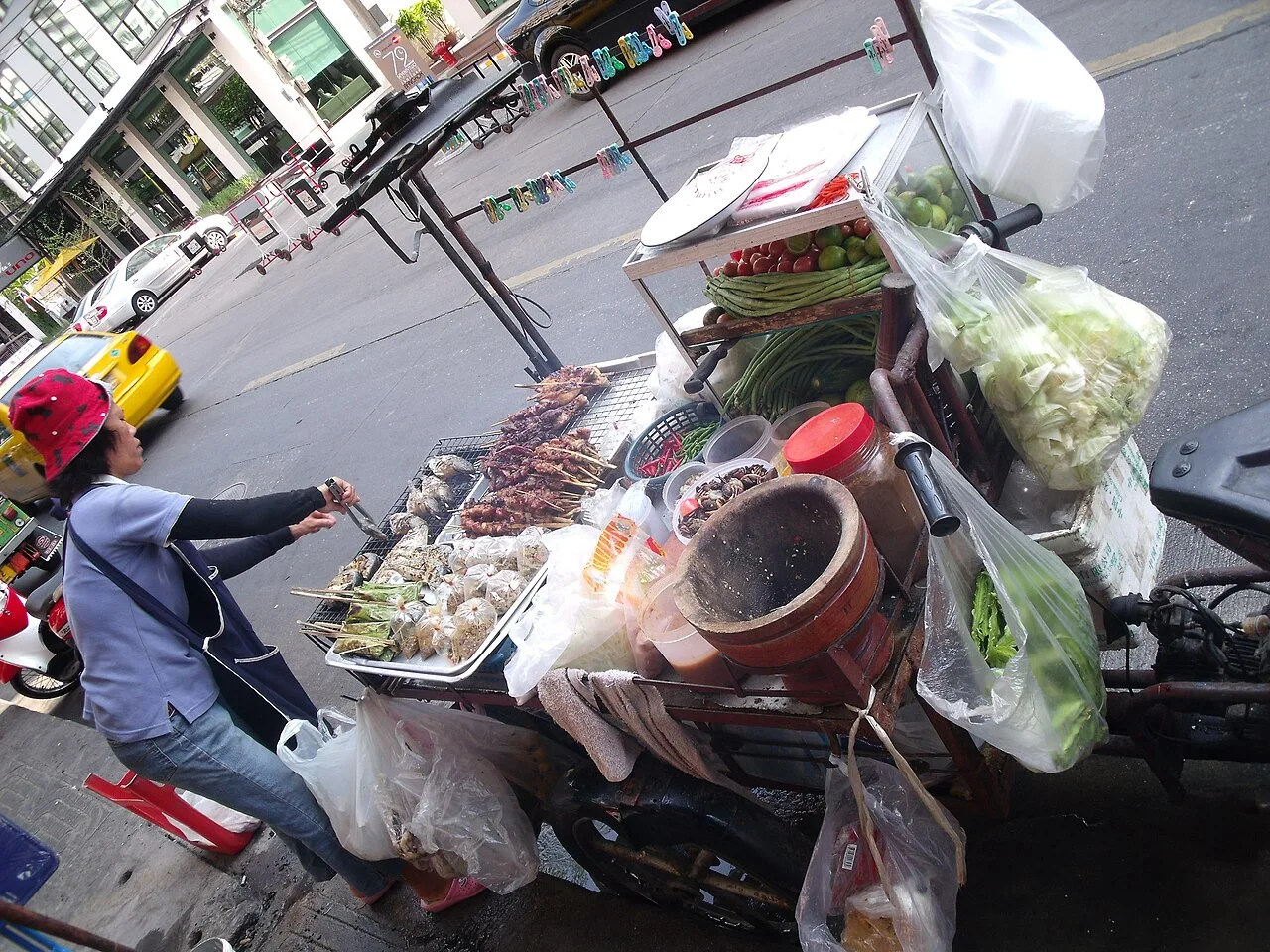
Neon signs, smoke rising from woks and crowds squeezing through narrow streets: this is Bangkok Chinatown, the Yaowarat district, the beating heart of the capital’s Chinese community for more than 200 years. It’s one of those places that can overwhelm and fascinate you at the same time, especially if you’re visiting Bangkok for the first time.
Yaowarat can be difficult to plan on a first visit because the district changes by time of day and individual businesses follow their own schedules. This guide explains where to start, how to arrive and what to verify before ordering from a street stall. AsiaTrip’s approved EN service is for one private, closed group of 4 to 20 guests, with an individual quote in THB; no claim of regular guided visits is used as proof.
This article covers the district’s history, places to consider, street-food categories and transport planning. Vendor availability, prices, ingredients and opening hours change, so confirm them on the day. The guide is reviewed for 2026 but does not present individual stalls as guaranteed or personally tested recommendations.
Why Bangkok’s Chinatown draws visitors

Yaowarat isn’t just another tourist attraction added to the map to draw visitors. It’s a living neighbourhood where people have lived, worked and traded since 1782, when King Rama I moved Thailand’s capital to Bangkok. Chinese merchants were given land along the Chao Phraya River and built a world of their own that has survived to this day in almost unchanged form.
More than two centuries of history in one place
As you walk along Yaowarat Road, the main thoroughfare, you’re in one of the oldest Chinese quarters in Southeast Asia. The district’s history began with a wave of migration from southern China, mainly from the provinces of Guangdong and Fujian. The newcomers brought their trading traditions, cuisine and religion, creating enclaves that resisted assimilation for generations.
Chinese family crests above shop entrances, small incense altars on doorsteps and the names of streets, which ring out when spoken, tell the stories of families who settled here many generations ago. Unlike many Chinatowns around the world, Bangkok’s Yaowarat has never become merely an open-air museum for tourists. Gold shops, traditional medicine sellers and spice wholesalers still operate much as they did a century ago.
Yaowarat is one of the few places in Bangkok where architecture, everyday life and history overlap in a way you can feel as you walk from one street to the next.
Architecture you won’t find in other districts
Buildings in Bangkok’s Chinatown combine Chinese-Portuguese style with local influences. Their distinctive arcaded façades shade pedestrians and shopkeepers even at midday. These shophouses served as both ground-floor shops and homes on the upper floors. Many still work in exactly the same way.

In the neighbouring Talad Noi district, some of Bangkok’s oldest buildings of this kind have survived. Narrow lanes where two motorbikes can barely pass lead to hidden temples, metalworking shops run by generations of craftspeople and courtyards where time seems to stand still. This contrast between old crafts and modern cafés serving pour-over coffee has made Talad Noi one of the city’s most photographed corners in recent years.
The district’s rhythm changes throughout the year
Bangkok’s Chinatown has a different pulse at different times of year. During Chinese New Year, Yaowarat becomes a spectacle of lights, fireworks and lion dances, and the main street turns into the centre of celebrations for tens of thousands of people. The Hungry Ghost Festival in August or September is when piles of paper offerings are burned in honour of ancestors, and the smell of incense drifts from every courtyard.
Even without a festival, everyday life in the district offers plenty to take in. In the morning, shops selling herbs and dried seafood display their goods outside; at midday, workers eat soup at plastic tables; and in the evening, neon lights come on as the whole district becomes the city’s largest street market. Each time of day reveals a different side of Yaowarat, so one visit is rarely enough.
How to plan a visit to Yaowarat in 2026
A good visit to Yaowarat starts with a few simple choices that can make the difference between a frustrating crush and a pleasant walk with a full stomach. Bangkok’s Chinatown follows its own rhythm, and if you plan your day around it, you’ll get much more out of your visit than someone who turns up at a random time.
When to go: time of day and day of the week
The best time to arrive is after 5 pm, when the temperature drops and the street stalls begin opening for the evening. Yaowarat Road and the surrounding lanes come alive again, neon lights switch on, and the streets fill with local residents and visitors. Visiting in the morning between 8 and 11 am has its own appeal: herb and gold shops are open, the crowds are smaller, and many temples are open without queues.
Avoid the middle of the day, especially between noon and 4 pm, when the heat is most uncomfortable and many smaller stalls and restaurants are closed or operating limited hours.
As for days of the week, weekends bring the biggest crowds and widest street food selection. On weekdays, from Tuesday to Thursday, it’s quieter, there’s more room to walk and it’s easier to get into popular restaurants without a long wait.
What to bring and how to prepare
Expect little or no air conditioning in most lanes and at most stalls. Lightweight, breathable clothes, comfortable shoes and a small bottle of water are essential. Cash in Thai baht is much more convenient than a card, as most stalls and small restaurants still don’t accept cashless payments.
It’s also worth bringing a power bank, as taking photos and using maps for several hours can drain your phone quickly. Yaowarat is easy to get happily lost in, and an offline map on your phone will help you find your way back to the main road if you wander deep into the side lanes of Talad Noi.
How to get to Chinatown and get around
Getting to Yaowarat is easier than most visitors think, as Bangkok has several convenient transport options for reaching the district. The best choice depends on where you’re starting from and when you plan to visit, since traffic can turn a short taxi ride into a journey of more than an hour.
Getting there by metro and ferry
The most convenient option is the MRT (metro), changing at Hua Lamphong or going directly to Sam Yot station, which has served the district since 2019. From Sam Yot station, it’s about a five-minute walk to Yaowarat Road. A single ticket costs 16 to 42 baht, depending on the distance, and the metro runs from 6 am to midnight.
Another, less obvious option is the river ferry on the Chao Phraya. Get off at Ratchawong Pier and you’ll be at the edge of the district. The ferry is a great choice in the evening, when traffic in the centre is at its worst. The crossing takes no more than about 15 minutes and costs 15 baht.
Avoid taxis and tuk-tuks to Yaowarat on Friday and Saturday evenings, when traffic around Bangkok’s Chinatown can turn a short trip into a frustrating ride lasting more than an hour.
Getting around the district
Once you arrive, walking is the only practical way to explore Yaowarat and Talad Noi. The lanes are too narrow and crowded for cars or even tuk-tuks to get around without frustrating delays. Comfortable shoes are essential, as a proper visit to the area takes two to four hours, depending on your pace and how often you stop at the stalls.
If you want to travel between places farther apart in the district, the quickest option is a motorbike taxi waiting at the main street corners. Look for the driver’s orange vest. A short ride usually costs 10 to 20 baht. Agree on the fare with the driver before you get on, as meters aren’t used here.
The Grab app works in this area and can be useful for getting back to your hotel after an evening out, when you may not feel like looking for an available taxi on the street.
What to see in Chinatown and Talad Noi
Bangkok’s Chinatown offers much more than food and neon signs. The district has several places that make the visit worthwhile on their own, from golden Buddha statues to the maze of Talad Noi lanes, where craft workshops operate alongside cafés in century-old buildings.
Temples not to miss
The first essential stop is Wat Traimit, home to the world’s largest solid-gold Buddha statue, weighing more than 5.5 tonnes. The statue stands in a new white tower visible from the main road. Admission to the hall is 40 baht, and it’s well worth it: the size and brilliance of the statue impress even people who have seen many Buddhist temples in Southeast Asia.

Nearby is Wat Mangkon Kamalawat, also known as the Dragon Temple. Unlike Wat Traimit, it’s mostly local worshippers you’ll see here, rather than organised tour groups. Incense, paper offerings and families at prayer create an atmosphere that no photo can fully capture.
If you plan to visit both temples, go in the morning before 11 am, when there are fewer crowds and the heat is easier to bear.
Talad Noi: a district worth exploring on its own
Talad Noi is just off Yaowarat’s main thoroughfare and is often overlooked by visitors who don’t realise that a few turns down side streets lead to a completely different world. Old mechanic workshops, brass-parts shops and warehouses from another era stand alongside small galleries and cafés in former shophouses, buildings with shops on the ground floor and homes above.
Look out for murals and street art installations scattered across courtyard walls, which have attracted photographers from around Bangkok in recent years. To find them, leave the main road and follow the lanes towards the Chao Phraya River. Take your time in Talad Noi: a leisurely walking pace is the best way to explore and notice details you’d miss if you hurried through.
Street food in Chinatown: what and where to eat
Yaowarat is undoubtedly one of the best places for street food in Southeast Asia. An evening walk along Bangkok Chinatown’s main street without stopping to eat would be a missed opportunity. The stalls get into full swing after 5 pm and often stay open until 1 am, serving dishes whose recipes have remained unchanged for generations. You can eat for a few dozen baht at a plastic table or spend several hundred at a seafood restaurant with its catch displayed on ice, and both experiences are worth the price.
Classics you should try
The district’s best-known dish is pad see ew, wide noodles stir-fried with vegetables and meat in oyster sauce, but Yaowarat offers much more than one classic. Khao tom, a rice soup cooked with pieces of pork or prawns, is eaten by Thais here from morning until late at night and is available on almost every side street.
Try Hokkien mee, too, a southern Chinese-style fried noodle dish with more sauce and a distinctive wok aroma than Thai versions. At seafood stalls, look for grilled oysters topped with spring onion, sold by the portion for a few dozen baht and snapped up in moments. For dessert, mango with sticky rice and coconut milk is sold on every corner, and it’s hard to have it just once.
If you’re not sure what to order, go where local residents are queuing, rather than tourists. It’s the surest sign that the food is fresh and worth the price.
Where exactly to eat
Soi Texas is a must for seafood lovers. Several restaurants display fresh crabs, lobsters and prawns on ice outside and cook them to order. Prices are higher than at ordinary stalls, but the quality and freshness are excellent, and ordering from the seafood laid out on ice makes an impression in itself.
Smaller places along Plaeng Nam Road near the waterfront serve soups and rice dishes aimed more at local workers than tourists. Portions are generous, prices are low and you get a closer look at everyday life in the district than on the main road. Bring cash in small denominations, as vendors may have trouble making change and card payments generally aren’t an option.

Summary
Bangkok’s Chinatown rewards visitors who arrive with an open mind and a willingness to make unexpected discoveries. You now have the information you need for a great visit: when to go, how to get there, what to see at Wat Traimit and in Talad Noi, and what to try at the street stalls. One visit can easily turn into several, as every time of day and season reveals a different side of Yaowarat.
If you would like to see Chinatown after dark on a planned evening itinerary, take a look at our tour. The itinerary is arranged exclusively for a private closed group of 4 to 20 guests, with the confirmed route coordinated by AsiaTrip. Find out more about our Bangkok after dark tour and request an individual quote.
Read also: Ayutthaya from Bangkok.
No comments