

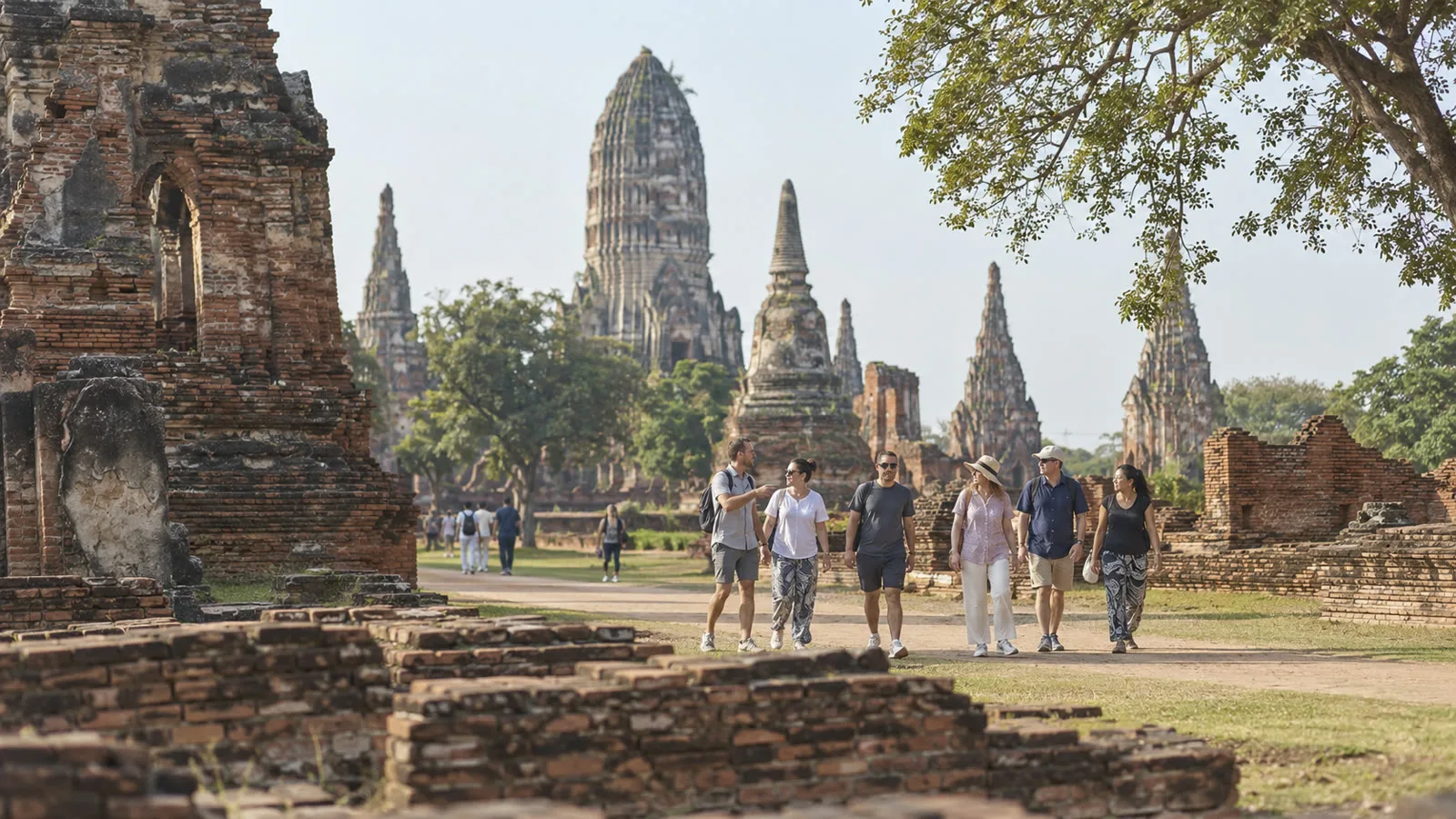
A private Thailand itinerary can be built around the priorities of one closed group, but it still requires realistic travel times and a precise written scope. AsiaTrip EN serves private groups of 4 to 20 guests, does not combine unrelated customers and prepares each quote individually in THB. The accepted proposal should identify the route, transport, coordination, guide service, tickets and exclusions.
Key takeaways:
- AsiaTrip EN serves one private closed group of 4 to 20 guests and does not combine unrelated customers.
- A licensed guide can explain cultural and historical context when that role is listed in the accepted proposal.
- Travelling as one closed group allows the pace and planned stops to reflect the participants’ shared priorities.
- The accepted proposal lists accommodation, meals and other services separately, so the group can see the exact scope.
- Plan the route around the group’s interests, mobility, season and available time.
- The agreed route is quoted individually in THB, without an assumed group discount.
- Compare beaches, natural areas and historic places without trying to fit every region into one trip.
What can a Thailand itinerary include?

Cities, coastlines and historic places
Thailand includes large cities, historic capitals, northern highlands and coastlines on the Andaman Sea and Gulf of Thailand. A route might combine Bangkok with Ayutthaya, Chiang Mai or one coastal base. Phi Phi is an inhabited island group, not a single community attraction, and access to reefs or protected areas depends on current park and marine conditions.
Events such as Loi Krathong follow local calendars and programmes that vary by place. If the dates align, check the official schedule, access arrangements, environmental guidance and local safety rules before adding an event to the itinerary.
Rich culture and history
Thailand’s history and culture include Buddhist, Muslim, Christian and other communities as well as distinct regional traditions. Wat Phra Kaew is an active religious site within the Grand Palace complex. Visitors should follow current dress, photography and conduct rules rather than treating temples as ordinary attractions.
Museums can provide useful context for the route. The Bangkok National Museum is one option, subject to its current opening arrangements and exhibitions. Choose museums and interpretation that relate to the places being visited instead of using an unrelated tour link as a substitute for historical information.
Respectful interaction with residents
Avoid assuming that every resident will behave in the same way or be available to help visitors. Thailand is often promoted as the “Land of Smiles”, but that slogan does not describe every person or situation. Use ordinary courtesy, respect privacy and ask before taking photographs.
Markets are working commercial spaces. Browse without obstructing sellers, ask permission before photographing people and learn a few basic Thai phrases if useful. A short visitor interaction should not be presented as privileged access to local life.
Choosing when to travel
Regional seasons and route planning
There is no single best period for every Thailand route. November to February is often cooler in Bangkok and northern Thailand, but conditions vary by region, coast and elevation. Rainfall, heat, haze and sea conditions should be checked for the actual destinations and travel dates.
Busy periods may affect availability and current supplier rates, but travelling in another season does not guarantee lower prices, fewer visitors or favourable weather. Compare current transport and accommodation terms and leave flexibility for outdoor plans.
Climate and weather
Thailand has a tropical climate with three main seasons: cool, hot and monsoon. The seasons vary by region, so it is advisable to check the forecast for the specific place you plan to visit.
Pack lightweight clothing for heat and suitable rain protection for the route. Temple visits may require covered shoulders and knees. Footwear, sun protection and any activity-specific equipment should reflect the planned conditions rather than a single national season.
Festivals and public events
If Loi Krathong is relevant to the dates, use the current local programme and follow rules for waterways, fire, lanterns and waste. Do not assume that visitors can make or release a krathong in every location.
Songkran takes place in April and includes family, religious and public celebrations that differ by location. Public water play can involve road and crowd risks, so follow local instructions, protect valuables and choose participation appropriate for the group.
Destinations to compare
Bangkok: temples, museums and markets
Bangkok offers temples, museums, river transport, commercial districts and neighbourhood markets. Wat Pho and Wat Arun are active religious sites with their own admission and conduct rules. Street-food options vary by district and vendor, so check ingredients, hygiene and dietary requirements.
Evening options include river services, markets, restaurants and nightlife venues. Chatuchak is primarily a weekend market, so verify its current sections and opening arrangements. Keep nightlife optional and confirm age rules, charges and safe return transport.
Chiang Mai: temples, crafts and northern context
Chiang Mai has historic temples, museums, markets and contemporary neighbourhoods. Wat Phra That Doi Suthep is an active religious site above the city. Check access, steps, lift availability, weather and current visitor arrangements.
Loi Krathong and Yi Peng programmes vary by year and organiser. Craft workshops may be considered when the provider, format, materials and consent for photography are clear. Attendance or hands-on participation should not be promised without confirmation.
Trekking routes around northern Thailand differ in difficulty, weather exposure and access. Any community visit should be invited and community-led. Residents must not be presented as an attraction or described collectively as “hill tribes”.
Islands and coastal areas
Thailand has developed resort areas, quieter beaches and protected marine locations. Maya Bay is subject to park rules and access controls. Diving, snorkelling and boat trips depend on operator credentials, participant suitability, weather and sea conditions.
Kayaking, snorkelling, sailing and other water activities may be available in selected places. Check the operator, equipment, insurance, restrictions and day-specific conditions. Restaurant menus and seafood availability vary by location and season.
Nature, museums and historic parks
National parks and protected areas
Khao Sok National Park includes rainforest, trails and reservoir areas. Wildlife sightings, including elephants, are never guaranteed and should not be pursued or approached. Check park notices, route difficulty, weather, authorised boat or guide arrangements and participant mobility.
Erawan National Park is known for a series of waterfall tiers. Water levels, swimming access and trail conditions can change. Follow park signs and staff instructions and do not describe any pool as automatically safe or suitable for every visitor.
Museums and cultural venues
The Bangkok National Museum and Bangkok Art and Culture Centre provide different historical and contemporary perspectives. Check current exhibitions, opening times, admission and accessibility directly with each venue. Do not link a cultural venue to an unrelated nightlife page.
Some museums offer temporary or interactive exhibitions, while others focus on collections and interpretation. Select venues that fit the route and allow enough time to engage with the material rather than promising that every visit will be fascinating.
Historic parks and former capitals
Ayutthaya was the capital of the Siamese kingdom from the 14th century until 1767. Sites in and around the historical park are spread across a modern city. Cycling is one option, but traffic, heat, route length and participant ability should be assessed before choosing it.
Sukhothai Historical Park preserves monuments associated with the Sukhothai period and forms part of a UNESCO World Heritage property. It is far from Bangkok and Chiang Mai, so include it only when travel time and the route make sense.
Thai food to consider
Common street-food dishes
Pad thai is a stir-fried rice-noodle dish whose ingredients vary by vendor; it is not stir-fried water spinach. Other commonly available dishes include som tam, a green papaya salad, and satay, grilled skewers often served with a peanut-based sauce. Ask about allergens, meat, seafood and spice levels.
Khao pad is fried rice prepared in many variations, while mango sticky rice combines glutinous rice, coconut and mango when the fruit is available. Recipes and serving styles differ, so these should be suggestions rather than promises about every venue.
Regional dishes
Northern Thailand is associated with dishes such as khao soi. Massaman curry reflects several culinary influences and is found in different parts of the country. Larb is strongly associated with the north and northeast, not simply “the east”. Regional labels do not guarantee one fixed recipe.
Ingredients, heat, sweetness and preparation vary between regions, cooks and venues. Ask about dietary requirements and avoid treating one meal as a complete account of a region’s culture.
Coffee and tea
Thai coffee and tea drinks range from locally grown coffee served without milk to sweet iced drinks made with condensed or evaporated milk. Green tea and other teas are prepared in many ways. Do not attribute health benefits to a drink without reliable evidence.
Thai milk tea is often sweet and may contain milk products, colouring or other ingredients. Ask about allergens and sugar if relevant. Bottled water and unsweetened drinks may be more practical for hydration in hot conditions.
Transport planning
Getting around cities
Bangkok transport includes BTS, MRT, buses, boats, taxis, ride-hailing services and tuk-tuks. Coverage, operating hours, payment methods and accessibility differ. For an unmetered journey, confirm the fare before departure and use an identifiable provider.
City buses may be useful on some routes, while motorcycle taxis and rental scooters carry greater road and insurance risks. Ride-hailing pickup points and available vehicle types vary. Choose transport according to the group’s size, luggage and mobility.
Travelling between cities
Intercity trains, buses, road transfers and flights have different timetables, baggage rules, comfort levels and total journey times. An overnight train can reduce daytime travel but does not automatically save money once berth class and transfers are included.
Domestic flights may suit routes with long overland distances. Airlines, schedules and fares change, so compare the total trip, including baggage, airport transfers and change conditions, rather than assuming a particular carrier is affordable.
Reserve transport when the selected operator or busy travel period makes it advisable. Use official or established booking channels, verify station or airport details and keep enough connection time. Online purchase does not guarantee the lowest fare.
Driving and vehicle rental
Driving in Thailand requires the correct licence, suitable insurance and confidence with local traffic conditions. A car or scooter is not automatically the best way to explore. Consider a driver, public transport or pre-arranged transfer when those options better suit the group.
Confirm licence and international permit requirements, insurance cover, deposits, existing damage, helmet standards and exclusions before accepting a vehicle. Driving without the correct entitlement or cover can have serious legal and financial consequences.
Scooters expose riders to significant road risk and should not be recommended as a convenience for narrow streets. Anyone choosing one should use an appropriate helmet, have valid entitlement and insurance, inspect the vehicle and avoid riding beyond their experience or in unsafe conditions.

Accommodation options for a private group
Hotels and resorts
Hotels and resorts vary widely in room layout, location, accessibility, facilities and cancellation rules. Pools, spas, restaurants and connecting rooms must be checked property by property. If accommodation is included in an AsiaTrip proposal, the written scope should identify the property or standard, room arrangement and booking responsibility.
Compare location with the actual itinerary, not just distance to a beach or city centre. Recent independent reviews can reveal practical issues, but they do not replace written room and cancellation terms.
Hostels and lower-cost accommodation
Hostels and other lower-cost properties may suit some groups, but dormitory layout, privacy, security and accessibility need to be checked. No accommodation is included unless it appears in the accepted proposal with the relevant room arrangement and booking responsibility.
Hostel location and activities vary. Booking several beds in a dormitory does not always reduce the total cost or suit a private group. Compare private rooms, entire properties and hotel options using the same dates and conditions.
Some groups may prefer private rooms or an entire property, while others may prioritise price or location. Record the selected arrangement in writing so the quote does not imply a type of accommodation that has not been agreed.
Villas and apartments
A villa or apartment may provide more shared space and privacy for a longer stay. Check legal listing status, occupancy limits, deposits, cleaning, utilities, accessibility, location and cancellation terms. A property near the coast may still have limited beach access or transport.
Kitchen access can be useful, but it does not guarantee savings once groceries, transport, cleaning and property terms are considered. Use a platform or provider with clear payment, support and dispute procedures.
Organising a private itinerary
Evaluating a tour operator
Check the operator’s legal identity, contact details, written terms and recent independent reviews. Confirm whether each service is provided by a coordinator, driver, licensed guide or third-party supplier. These roles are not interchangeable.
Ask about insurance responsibility, emergency contacts, change procedures and cancellation terms. A written answer helps the group evaluate the offer, but no operator can guarantee comfort or eliminate all disruption.
Building the route
Start with the group’s priorities, pace, mobility and available days. Limit the number of distant bases, allow rest after long transfers and check current access for temples, islands, parks and other planned stops.
For each transfer, identify the provider, vehicle, capacity, luggage allowance, pickup point, tolls, waiting time and overtime terms. Public transport, a hired vehicle with driver and self-drive rental create different responsibilities.
Budget and individual quotation
Set a working budget for transport, accommodation, meals, admissions, insurance and personal spending. Supplier rates vary by date and conditions. AsiaTrip EN does not publish a fixed tour price; it prepares an individual THB quote for the agreed private-group scope.
Keep a separate contingency fund for changes or personal expenses. The accepted proposal should state payment and cancellation terms, but a contingency does not make every disruption reimbursable.
Optional activities
Cooking classes
Cooking classes may cover dishes such as pad thai or tom yum, but the content, language, ingredients and instructor qualifications vary. Confirm allergies, dietary requirements, market visits and what participants prepare before booking.
Some classes include a market visit, while others begin at the cooking venue. Treat it as a structured activity rather than guaranteed access to local culture, and ask before photographing sellers or other participants.
Cycling activities
Cycling routes around Chiang Mai and other destinations vary in traffic, surface, distance and heat exposure. Confirm helmets, bicycle condition, guide role, emergency procedure and participant ability. A guide can provide instructions but cannot remove road risk.
Rural and riverside routes may pass homes, farms and working communities. Do not present residents as part of the attraction. Follow access rules, avoid intrusive photography and keep wildlife observation at a safe distance.
Choose a route that matches each participant’s experience and health. Check weather, air quality and hydration needs. Physical activity in heat is not a safe way to “get used to” the climate and should be reduced or stopped when conditions require it.
Water activities
Diving, sailing, kayaking and windsurfing may be available in selected coastal areas. Water clarity, coral condition and suitability vary by season and site. Confirm credentials, equipment, medical requirements, weather and insurance before booking.
Kayaking or personal watercraft rental carries operator, collision and insurance risks. Check the permitted area, briefing, equipment, local rules and contract. A reputable provider reduces uncertainty but cannot guarantee safety.
Match the activity to participant ability and conditions on the day. Beginners may need formal instruction, while certified activities may require proof of qualification. Keep an alternative plan if the operator or authorities cancel for safety reasons.
Practical safety planning
Travel health
Discuss vaccination, mosquito-borne disease risk, regular medicines and planned activities with a qualified travel-health professional. Advice depends on the traveller, route, season and length of stay.
Use insect repellent and other bite-prevention measures according to current professional guidance. Carry personal medicines in their original packaging with any required documentation. A first-aid kit should reflect individual advice rather than a generic list of treatments.
Evening transport
Plan the return route before going out. Use an identifiable taxi, established ride-hailing service, hotel-arranged vehicle or the agreed group transport, and confirm the vehicle and pickup point. No transport option should be described as automatically reliable.
Lighting, footpaths and traffic vary by area. Stay aware of road crossings, alcohol, weather and group communication. A busy place is not automatically safe, and a quieter place is not automatically dangerous.
Misleading offers and scams
Confirm the full price, scope and identity of a provider before paying. Be cautious with unsolicited help, pressure to change destinations or claims that an attraction is closed. Keep receipts where relevant and use official information sources.
Low headline prices can conceal shopping stops, exclusions or additional charges. If an offer is unclear, decline it and verify alternatives through an established provider, accommodation desk or official visitor information channel.
Local conduct and cultural context
Conduct at temples
Follow the rules posted at each temple. Covered shoulders and knees are commonly required, but requirements vary. Remove shoes only where indicated, avoid obstructing worship and do not apply different clothing rules by gender unless the site itself does so.
Keep noise low, observe photography restrictions and avoid posing disrespectfully near religious images. A smile is not a substitute for following the rules, and visitors should not expect special access in return for polite behaviour.
Avoiding broad social generalisations
Family structures and responsibilities differ across Thailand by household, region, generation and circumstance. Do not assume that every person prioritises family in the same way or treat a short visit as evidence for a national social rule.
Festivals and local events may involve neighbourhood, religious, municipal or commercial organisers. Participation and access depend on the specific event. Respect spaces intended for residents and follow the organiser’s guidance.
Monks have religious roles within Buddhist communities, but their activities and institutions vary. Observe temple etiquette and do not approach monks or ceremonies as staged opportunities for visitors.
Festivals and food traditions
Songkran and Loi Krathong have religious, family and public dimensions that vary by location. Krathongs may symbolise respect, gratitude or letting go, but reducing the practice to “evil spirits” is misleading. Use the current local explanation and environmental rules.
Thai food reflects regional ingredients, trade, migration and household practice. Shared meals can be socially important, but avoid presenting one dining style as universal.
Traditions change and are practised differently by different people. Learn through reliable interpretation and invited participation without claiming to have discovered an “authentic” culture after a short visit.
Preparing for the trip
Travel documents
Passport, visa and supporting-document requirements depend on nationality, purpose, route and length of stay. Check the relevant official Thai embassy, e-Visa and immigration sources close to departure. Keep secure copies, but protect them as sensitive personal data.
Confirm passport validity, onward-travel, arrival-form and any financial-evidence requirements for the individual traveller. Carry insurance details and booking records where relevant. Only the competent authority can determine entry.
Health preparation
A qualified travel-health professional can assess vaccination and prevention needs using the traveller’s health history, itinerary, activities and length of stay. Arrange the consultation early enough for any recommended schedule.
Check current official health information before departure. Do not self-prescribe stomach medicines or rely on bottled water as a complete prevention strategy. Discuss personal medication, food and water precautions with an appropriate professional.
Mosquito-borne diseases, including dengue, occur in Thailand. Use current professional advice on bite prevention and seek medical help for concerning symptoms. Do not infer an individual risk level from a general national trend.
Payments, connectivity and navigation
Carry a suitable payment mix because card acceptance and cash needs vary by place. Compare exchange rates and fees at authorised providers rather than assuming that every airport or city exchange counter is favourable or unfavourable.
Offline maps and a suitable mobile-data option can help with navigation. SIM registration and packages change, so use an authorised provider. Public transport can be practical in some cities, but it is not always cheaper or appropriate for every route and group.
Treat residents with ordinary respect, avoid stereotypes and ask before photographing people. Positive interactions cannot be guaranteed or manufactured as part of an itinerary.
Planning at short notice
Checking current availability
Short-notice flights, accommodation and third-party packages can change quickly. A lower headline price may involve restrictive baggage, room, payment or cancellation terms. Compare the complete conditions and do not assume a discount, programme or included service.
Check current supplier websites and written terms, but keep third-party package offers separate from AsiaTrip EN’s private-group service. An optional excursion is included only when it appears in the accepted individual THB quote.
Comparing short-notice options
Comparison sites can help identify options, but verify the final supplier, baggage, transfers, room terms and cancellation rules before paying. Newsletter availability and promotions vary and should not be presented as exclusive or guaranteed.
Changing dates may reveal different availability, but weekdays do not always cost less and flexibility does not guarantee a bargain. Compare like-for-like conditions for the dates the group can actually use.
Keeping the route flexible
If dates or locations can change, document which parts of the route are optional and which bookings are non-refundable. Lower rates are not automatically available on less popular dates.
Compare several realistic date and location combinations. A less central property may reduce the room rate but increase transfer time and cost. Evaluate the total itinerary instead of choosing on price or view alone.
A private Thailand itinerary for one closed group
A private itinerary can reduce planning work when every role and service is stated in the accepted proposal. A licensed guide is included only when explicitly confirmed. The group remains responsible for travel documents, personal decisions and any service outside the written scope.
Travelling only with your own group allows the route and pace to reflect shared priorities. AsiaTrip EN serves closed groups of 4 to 20 guests, does not combine unrelated customers and provides an individual THB quote after the scope has been agreed.
Official information to check before travelling
Conditions, entry procedures and emergency contacts can change. Check the current information for your actual travel dates rather than relying on an old itinerary or an unofficial form.
- Thai Meteorological Department daily forecast for route-specific weather and warnings.
- Thai e-Visa official website for current visa information where the service applies.
- Thailand Digital Arrival Card official website for the current arrival form.
- Thailand Tourist Police for visitor assistance and the 1155 hotline.
FAQ
Q: Which places can be considered for a private Thailand itinerary?
A: Options may include Bangkok, Ayutthaya, Chiang Mai and selected islands or coastal areas. The appropriate route depends on travel time, season, access, mobility and the group’s priorities.
Q: What documents do I need to travel to Thailand?
A: Passport, visa and supporting-document requirements depend on nationality, purpose, route and date. Check the relevant official Thai sources before travel.
Q: How widely is English used in Thailand?
A: English is used in many visitor-facing businesses, but ability varies by person and location. Translation tools and a few basic Thai phrases can help; guide or interpreter service should be confirmed separately when needed.
Q: What typical dishes should I try in Thailand?
A: Options include pad thai, tom yum, som tam and regional curries. Recipes, spice levels and ingredients vary, so confirm allergens and dietary requirements.
Q: What accommodation can be requested for a private trip?
A: Accommodation varies by proposal. Check the exact property, room arrangement, cancellation rules and whether accommodation is included before accepting a quote.
Q: Which months are best for a trip to Thailand?
A: November to February is often comfortable in many regions, but weather patterns differ between the Gulf coast, Andaman coast, north and central Thailand. Check the route-specific forecast and seasonal conditions.
Q: Are private trips adapted for people with disabilities?
A: Accessibility must be assessed for the individual traveller and route. Confirm vehicles, rooms, entrances, toilets, surfaces, assistance and emergency arrangements in writing before accepting the proposal.
Related: Thailand day trips to compare.
Related: Koh Yao Yai: location, population and practical facts.
Related: Tom yum: origin, ingredients and variations.
Related: Ayutthaya: travel options from Bangkok.
Related: Phuket: attractions, beaches, weather and practical planning.
Related: Bangkok hotels: 8 central properties to compare.
Related: Ayutthaya: how much time to allow for the historical park.
Related: Five coastal options near Bangkok.
No comments