

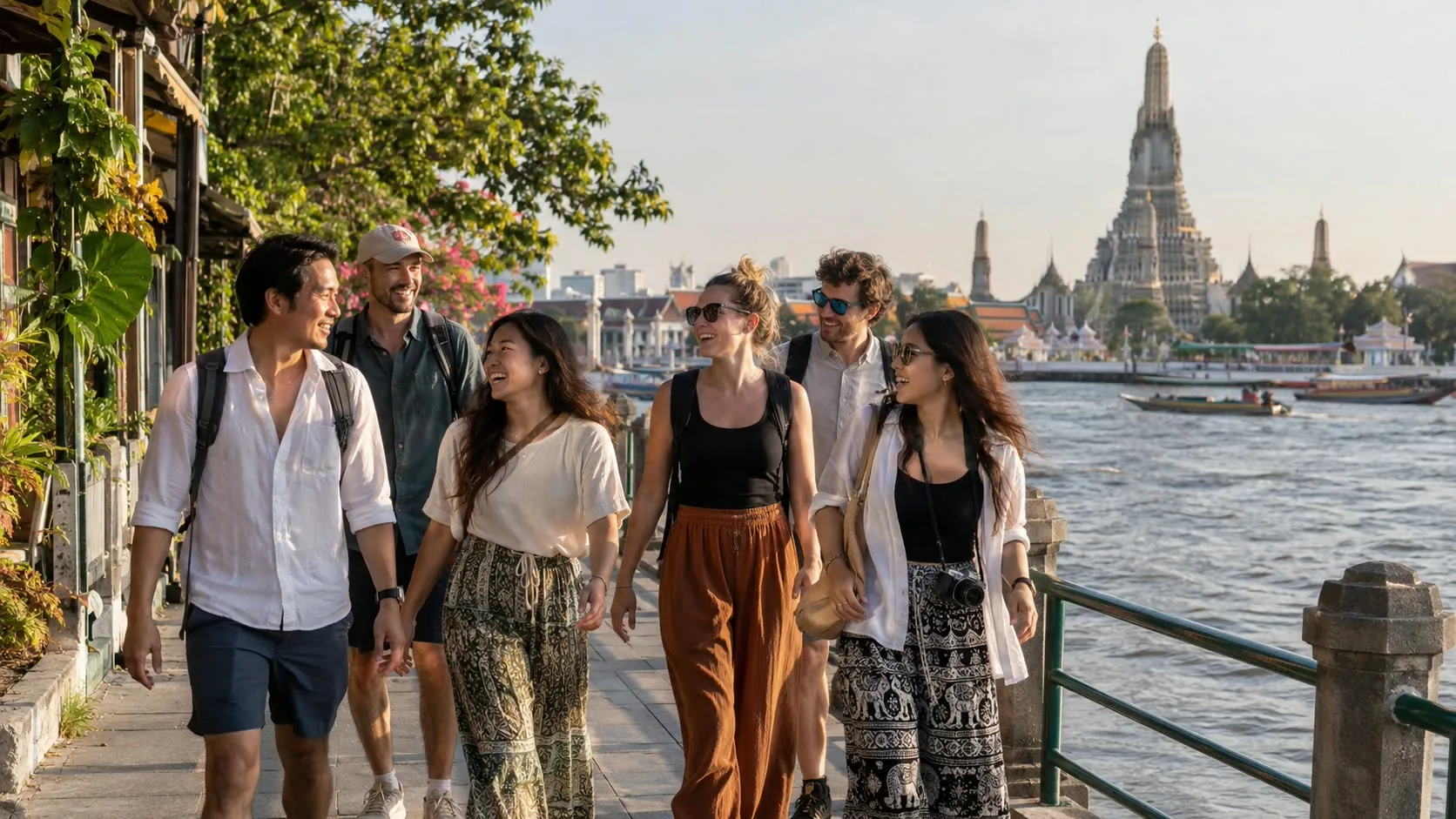
A 10-day route can introduce several regions of Thailand, but it needs realistic travel times and a clear list of included services. This guide provides a planning framework rather than a fixed package. AsiaTrip EN arranges private itineraries for one closed group of 4 to 20 guests, without combining unrelated customers, and prepares each quote individually in THB.
Key takeaways:
- Explore temples, museums, markets and community-led cultural activities with appropriate conduct and permission.
- Admire beautiful beaches and tropical islands such as Phuket and Koh Phi Phi.
- Learn about Thai dishes, including pad thai and tom yum, while checking ingredients and dietary requirements.
- Consider activities such as meditation sessions or Thai massage only when their format, provider and suitability have been confirmed.
- Explore Bangkok, Thailand’s capital, known for its lively nightlife.
- Check the timing, access rules and local programme for Chiang Mai events such as Loi Krathong before adding them to the route.
- Add trekking, climbing or water activities only after checking weather, operator standards, participant ability and insurance cover.
Thailand at a glance

Geographical and cultural diversity
Thailand includes northern highlands, central plains, river systems and coastlines on both the Andaman Sea and the Gulf of Thailand. Conditions, transport and local customs differ by region, so a 10-day plan should focus on a manageable route rather than trying to cover the whole country.
Buddhism has a visible role in many parts of public life, alongside other religions and diverse regional and community traditions. Temples and ceremonies are active cultural and religious settings. Visit respectfully, follow posted rules and choose community visits that are invited and led by the people involved.
Historical significance
Thailand’s history includes the Sukhothai, Ayutthaya, Thonburi and Rattanakosin periods, as well as distinct regional histories. Bangkok contains major historic sites such as the Grand Palace and Wat Phra Kaew, while museums and local guides can provide context appropriate to the places on the route.
Sukhothai Historical Park preserves monuments associated with the Sukhothai period. It is well outside a Bangkok, Chiang Mai and southern-island route, so include it only if travel time and the group’s priorities make the detour practical.
Climate and seasonal planning
Thailand’s weather varies by region, coast and elevation. November to February is often cooler in Bangkok and northern Thailand, while rainfall patterns on the Andaman and Gulf coasts do not follow one identical calendar. Heat, haze, rain and sea conditions should be checked for the exact destinations.
Rainy periods can include short showers, prolonged rain or local disruption. Lower visitor numbers and greener landscapes are possible in some places, but they are not guaranteed. Build flexibility into transfers and outdoor plans.
Planning a 10-day route
Choosing travel dates
There is no single best month for every Thailand itinerary. Compare regional weather, sea conditions, air quality, public holidays and transport demand for the exact route. Festival attendance should be based on the current official programme and access arrangements, not assumed from an annual calendar.
Choose dates around the group’s tolerance for heat, rain and busy periods. Visitor numbers, airfares and accommodation rates change by destination and booking date, so compare current options instead of assuming that a particular month will be quiet or inexpensive.
Budgeting for your trip
Planning a budget for your trip to Thailand is a key step in getting organised. Think about how much you want to spend on transport, accommodation, food and activities. Accommodation and food costs vary by place, season and standard. Build the budget in THB from current supplier quotes and allow a separate contingency for personal spending. Be sure to allow for unexpected expenses, such as souvenirs or extra activities.
Check that your payment cards are enabled for international use and review issuer fees before departure. Many places in Thailand accept Visa and Mastercard, though local currency can also come in handy. Carry a little cash for small purchases or transport as well.
Evaluating a tour operator
Compare the operator’s legal identity, contact details, written scope, cancellation terms and independent reviews. Ask who is responsible for transport, guide service, tickets and emergency coordination. A high rating alone does not establish what is included in a particular itinerary.
A local operator can coordinate services stated in the accepted proposal. A licensed guide is a separate role and should be named when required. Confirm the route, operating hours, meeting points, exclusions and change procedure before accepting the individual THB quote.
Ten-day itinerary: one realistic route
This example combines Bangkok, Chiang Mai and one southern base. It deliberately avoids adding both Krabi and Phuket, because repeated hotel changes and airport transfers would take time away from the places themselves. Flight schedules, weather, sea conditions and the group’s pace must be checked before the sequence is confirmed.
Day 1: Arrival in Bangkok
Meet the pre-arranged transport or follow the airport’s official taxi and rail procedures. Keep the first programme light, especially after a long flight. Check in, rest, exchange or withdraw a practical amount of THB and have a meal near the accommodation.
Day 2: Historic Bangkok
Plan the Grand Palace, Wat Phra Kaew and Wat Pho in one compact area, subject to current opening conditions and dress rules. Cross the river for Wat Arun only if the group still has time and energy. A licensed guide should be stated separately in the accepted proposal when included.
Day 3: Canals, neighbourhoods or a market
Choose one main theme rather than trying to cover the whole city. Options can include a canal route, a food-focused neighbourhood or a market that actually operates on the selected day. Keep the evening flexible and confirm the return transport.
Day 4: Travel to Chiang Mai
Use a current domestic flight, train or bus schedule. Include the journey to the departure point, baggage rules and the transfer at the northern end. After arrival, allow time for the old city or a quiet meal instead of promising a full sightseeing day.
Day 5: Chiang Mai temples and local context
Combine a manageable number of temples or museums with time for meals and rest. Doi Suthep can be considered after checking road access, weather, steps and mobility. Religious sites remain active places of worship and require appropriate conduct.
Day 6: A workshop, nature or an ethical venue check
Select one activity that suits the group. A cooking workshop, nature route or animal venue requires separate confirmation of the provider, safety, accessibility and welfare standards. Avoid programmes based on riding, bathing, performances or forced close contact with elephants.
Day 7: Travel to one southern base
Fly or use the confirmed overland connection to either Krabi or Phuket, not both by default. Account for the airport transfer, hotel check-in and seasonal weather. Keep the remainder of the day free unless the arrival time makes a short activity genuinely practical.
Day 8: Coast or island day
Choose the route only after checking marine forecasts, park rules and the operator. Boat type, passenger limits, life jackets, pickup, inclusions and cancellation arrangements should be clear. A land-based alternative is necessary when conditions are unsuitable.
Day 9: Flexible day at the southern base
Use this day for a beach, a local town, a slower food-focused plan or an activity postponed by weather. Do not place the longest boat trip immediately before an essential flight if disruption would remove the travel buffer.
Day 10: Departure with a realistic buffer
Leave enough time for the airport transfer, check-in and baggage procedures. If the international departure is from Bangkok, the safer design may require returning to Bangkok on day 9 and sleeping near the final airport. The actual flight times determine the correct choice.
Activities and meals
Attractions, restaurants and workshops are options until they are named in the accepted proposal. Menus, ownership, opening hours and dietary suitability can change. The written itinerary should distinguish included meals and tickets from suggestions the group pays for independently.
Arriving in Bangkok
Navigating Suvarnabhumi Airport
After landing at Suvarnabhumi Airport, follow the current signs and official instructions for immigration, baggage reclaim and customs. Have your passport, required supporting documents and completed Thailand Digital Arrival Card ready; the TDAC is not a visa. Queues and procedures vary by arrival time and traveller status.
English signage and information counters are available in the airport. Travellers who need mobility or other assistance should arrange it with the airline or relevant service provider in advance where possible.
Getting into Bangkok
Airport taxis, ride-hailing services and pre-arranged transfers are among the available options. Use the official pickup process, confirm tolls and payment arrangements, and check the current app pickup location rather than accepting unsolicited transport offers.
The Airport Rail Link connects Suvarnabhumi Airport with central interchange points, including Phaya Thai. Check current operating hours, luggage practicalities and the onward connection before relying on it for a particular arrival.
Bangkok has a wide range of transport options, so everyone can find something that suits them. A Rabbit card is primarily used on participating BTS services and selected merchants. Check current coverage before relying on it, and use separate payment for services that do not accept it.
First impressions of the city
Bangkok combines dense commercial districts, residential neighbourhoods, religious sites, markets and modern transport. The scale, heat, traffic and noise can take time to adjust to, so leave room for rest on the first day.
Street activity and food stalls vary by neighbourhood and time of day. Wat Pho and Wat Arun are active religious sites as well as historic places, and visits should follow their current dress, ticketing and photography rules.
Plan the first evening around the group’s energy after the flight. A short walk or meal near the accommodation may be more practical than a fixed programme immediately after arrival.
Exploring Bangkok
The Grand Palace and Wat Pho
The Grand Palace complex dates from 1782 and includes Wat Phra Kaew. Wat Pho is nearby. They can be considered for the route, but current opening times, ticket conditions, closures and dress requirements should be checked before the visit.
Wat Pho is known for its large Reclining Buddha image and its association with traditional Thai medicine and massage education. It remains an active temple. Allow enough time, follow site rules and avoid describing a religious visit as a guaranteed profound experience.
Markets and shopping
Bangkok has large markets and specialised shopping districts. Chatuchak Weekend Market covers an extensive area, but stall numbers, sections and opening arrangements can change. Decide whether it fits the route based on the current day, heat, walking distance and the group’s interests.
Thaling Chan is one of several markets associated with Bangkok’s canals. Confirm its current operating days, access and boat arrangements before visiting. Food availability and hygiene vary by vendor, so the market should not be presented as a guaranteed cultural lesson.
Markets are working commercial spaces. Visit without obstructing sellers or photographing people without permission, and set a clear meeting point if the group separates. Earlier hours may be cooler, but crowd levels are not guaranteed.
Planning an evening in Bangkok
Bangkok offers rooftop bars, live-music venues, clubs and quieter evening areas. Each venue has its own opening hours, dress rules, age restrictions, reservation policy and charges. Check these details and the return transport before setting out.
The riverside includes hotels, restaurants, piers and public areas rather than one uniform entertainment district. Choose a specific venue or route and verify access, operating hours and the journey back to the accommodation.
An evening can be as simple as a riverside walk or a meal, or it can include a ticketed venue. Keep optional nightlife separate from services included in the private itinerary and provide a practical alternative for participants who do not join.
Chiang Mai and northern Thailand
How to get to Chiang Mai
Domestic flights, trains and buses connect Bangkok with Chiang Mai. Journey times, fares and schedules vary, so compare current options, baggage rules and station or airport transfers for the travel date. An overnight journey does not automatically save money once seat class and onward transport are included.
Rail travel can be useful for groups that prefer an overnight journey, but berth availability and comfort depend on the selected service and class. Confirm the timetable and arrival arrangements before building it into a 10-day route.
Temples and local events
Wat Phra That Doi Suthep is an active religious site above the city. Access, weather, steps, lift availability and crowd levels should be checked for the group. Events such as Loi Krathong follow local programmes and dates, so attendance cannot be promised without confirming the current schedule.
If an event is taking place, follow local safety instructions and respect areas used for worship or community activities. Markets can provide opportunities to compare northern dishes such as khao soi, but ingredients and opening arrangements vary.
Doi Suthep and wildlife venue checks
Doi Suthep-Pui National Park has routes and visitor areas with different levels of difficulty. Check park notices, weather, transport, admission rules and participant mobility. Wildlife sightings and waterfall conditions are never guaranteed.
If the group wants to visit an elephant venue, assess it carefully rather than relying on the word sanctuary. Prefer observation-led programmes that avoid riding, bathing, performances and forced close contact. Review current independent animal-welfare information and the venue’s practices before booking.
Chiang Mai offers trekking and nature activities, but route difficulty, weather and permissions should be checked before departure. Any wildlife venue should be evaluated separately for animal welfare and should not be assumed to be part of the itinerary.
Krabi: Coast and islands
Travelling to Krabi
A flight is one way to travel from Bangkok to Krabi. Overland travel takes much longer and rail travel requires a road connection from a suitable station because Krabi has no mainline railway station. Compare current schedules, total transfer time and luggage arrangements.
Krabi Town, Ao Nang and the surrounding coast offer different transport, beach and accommodation settings. Choose the base that matches the planned boat trips, evening arrangements and the group’s mobility.
Beach activities: Snorkelling, diving and island trips
Snorkelling and island trips are available from parts of Krabi, subject to sea conditions, park rules, operator standards and participant ability. Possible destinations include Koh Hong, Koh Poda and Chicken Island, but the final route should be confirmed for the travel date.
Diving and kayaking require separate checks for operator credentials, equipment, medical suitability, certification, weather and insurance. Specific dive sites should be selected by a qualified operator for the day’s conditions rather than promised in a general itinerary.
Food and seafood
Seafood is widely available in parts of Krabi, but freshness, sourcing and preparation vary by venue. Seafood curry and tom yum are two possible choices. Confirm ingredients, allergies, spice levels and hygiene rather than assuming a dish will suit every guest.
Beach and market stalls may offer pad thai, spring rolls, grilled fish, prawns or oysters. Choose vendors using visible hygiene and thorough cooking, and remember that availability changes by market, season and time of day.

Phuket and the Andaman coast
Travelling to Phuket
Phuket has an international airport and domestic connections from Bangkok. Direct international routes vary by season and airline, so check the current timetable rather than assuming a direct flight from a particular European city. Bus and combined rail-and-road options require substantially more time.
Taxis, pre-arranged transfers and local transport are available on Phuket. Anyone considering a scooter should check licence validity, helmet use, rental terms, road conditions and insurance exclusions. A rental should not be presented as suitable for every traveller.
Beaches to compare
Patong is a developed beach area with nightlife, restaurants and water activities. Kata, Karon and other beaches differ in sea conditions, access and atmosphere. Chalong is primarily associated with its bay and piers, so it should not be described as a quiet swimming beach with crystal-clear water.
Kata Noi and Karon offer different accommodation and beach settings. Hotel standard, beach access and spa services must be checked property by property, and no single part of Phuket is ideal for every traveller.
Freedom Beach access can change with sea conditions, land access arrangements and local rules. The land route may be steep. Confirm current access, fees and safe transport before including it.
Water activities and night markets
Diving, windsurfing, kitesurfing and personal watercraft may be available in parts of Phuket. Suitability depends on conditions, operator standards, participant experience, local restrictions and insurance. Do not add an activity solely for an adrenaline claim.
Sunday Walking Street in Phuket Town is one possible market, subject to its current day and operating arrangements. Food choice varies by vendor, and the market should be treated as an optional evening stop.
Som tam and pad thai are commonly available, but recipes and spice levels vary and neither dish is served everywhere. Ask about ingredients and browse handicrafts without assuming that every product is locally made.
Optional Ayutthaya variation
Travel options from Bangkok to Ayutthaya
Trains, buses, vans, taxis and private road transfers can connect Bangkok with Ayutthaya. Timetables, departure points and journey times vary with the service and traffic. Compare the current options and reserve only where the chosen operator requires it.
A road transfer normally travels north from Bangkok, but the route and duration depend on the pickup point and traffic. The accepted proposal should state whether transport, tolls, waiting time and the return journey are included.
UNESCO World Heritage sites
Ayutthaya Historical Park forms the main archaeological area of the UNESCO World Heritage property Historic City of Ayutthaya. Wat Phra Si Sanphet and Wat Chaiwatthanaram are among the major sites, but opening conditions and restoration work should be checked before arrival.
The surviving structures sit within a modern city and require time and transport between sites. Historical context from reliable interpretation or a licensed guide can help the group understand what remains and how the places relate to the former capital.
Guide service or an independent visit
Choosing between a guided tour and exploring on your own can make a big difference to your experience. If you book both transport and a licensed guide, the proposal should list those services separately and state the operating hours. The advantage is a clearer division of agreed logistics, while the group remains responsible for items outside the confirmed scope. Guides are often well informed about the history, which can greatly enrich your experience.
An independent visit offers control over timing but also leaves the traveller responsible for navigation, tickets, site interpretation and transport. It does not guarantee access to lesser-known places or interactions unavailable on a guided visit.
Choose between a licensed guide and an independent visit according to the group’s interest in historical context, pace, mobility and budget. The decision should be recorded in the proposal so guide service is not implied when only transport coordination is included.
Local etiquette
Greetings and social interactions
The wai is used in many Thai greetings, but its form and who initiates it depend on context. Visitors do not need to imitate every gesture. A polite verbal greeting and observant behaviour are appropriate. Avoid touching another person’s head and follow the lead of the people and setting involved.
Use a calm, respectful tone and avoid public confrontation. Do not assume that every Thai person follows the same communication style or hierarchy. If a situation is unclear, ask politely rather than relying on broad cultural rules.
Appropriate clothing
At temples and places of worship, follow the posted clothing rules. These commonly require covered shoulders and knees, but requirements vary by site. Carrying a light cover can be useful, and footwear may need to be removed in designated areas.
For general sightseeing, choose lightweight clothing suited to the weather and planned activities. Clothing advice should focus on site rules, comfort and safety rather than judging a traveller’s body or assigning different standards without a stated requirement.
Tipping practices in Thailand
Tipping is situational rather than governed by one national percentage. Check whether a service charge has already been added. Rounding a taxi fare or leaving a modest amount for good service may be appropriate, but it is optional unless a confirmed service states otherwise.
Hotel, spa and guide tipping practices vary by property, service and group agreement. Ask about local expectations if unsure, and do not use stereotypes about national hospitality to pressure a traveller into tipping.
Health and safety tips
Travel health and insurance
Before travelling to Thailand, check which vaccinations are recommended. Vaccination advice depends on health history, itinerary and current guidance. Consult a doctor for individual recommendations, especially if you plan to spend time in rural or more remote areas.
Review travel insurance before departure, including medical and evacuation limits, declared conditions, activity exclusions, vehicle use and claims procedures. Diving, trekking or other activities may require specific cover. Only the policy wording determines whether a cost is insured.
Personal safety planning
Use normal precautions in crowded places and keep payment cards, documents and valuables secure. Hotel safes differ in availability and terms. Follow current official travel advice for the exact destinations rather than assuming all tourist areas present the same risks.
Use identifiable transport providers and agree how the group will communicate if plans change. Travelling alone after dark is not automatically unsafe, but route, transport, intoxication, local conditions and personal circumstances should be considered.
Common problems can include overcharging, misleading offers or people claiming an authority or guide role they do not hold. Confirm prices and credentials, keep receipts where relevant and contact the appropriate local or tourist police service if assistance is needed.
Food and water hygiene
Street food and restaurant meals should be assessed using practical hygiene signs such as high turnover, clean utensils, protected ingredients and thorough cooking. Reviews do not guarantee food safety, and food described as freshly prepared can still be mishandled.
Travellers should follow individual medical advice about food and water. Consider how produce is washed, how food is stored and whether dishes are cooked thoroughly. Ask about allergens and start with a comfortable spice level, but do not claim that these steps will prevent every illness.
Shopping and souvenirs
Materials and origin
Markets and shops may sell basketry, jewellery, textiles and ceramics. Materials, origin and manufacturing methods vary, so ask who made an item and what it is made from instead of treating it as representative of all Thai craft.
Wood products, ceramics and textiles can be difficult to transport and may be subject to export, import or wildlife rules depending on the material. A handmade appearance does not prove origin or that a purchase benefits a particular community.
Checking sourcing claims
Ask sellers for specific information about materials, maker identity and supply chain. Avoid wildlife products and items that may involve illegal, unsafe or exploitative production. A label or general fair-trade claim should be checked rather than accepted automatically.
Buying from a verified maker, cooperative or small business may support that seller, but the wider effect should not be assumed. Keep receipts and any documentation needed for customs or material claims.
- fair trade
- local craftsmanship
- ethical shopping
Responsible shopping means making a decision from evidence available for the particular item. Ask about origin, compare claims and decline products whose materials or legality are unclear. Do not promise that one purchase will preserve a culture or create a specific community benefit.
Packing and transport guidelines
When preparing to return from Thailand, it is important to pack your purchases properly. Wrap fragile items such as ceramics and silk fabrics in bubble wrap or clothing to prevent damage in transit. Make sure you also stay within your airline’s baggage limits, which may restrict the weight and dimensions of your luggage.
For larger purchases, ask whether the seller offers insured, trackable shipping and who is responsible for customs documents, duties, damage or loss. Verify the carrier and import rules before paying. Shipping does not guarantee that an item will arrive safely.
- safe packing
- shipping souvenirs
- baggage limits
Pack according to the item, airline rules and customs requirements. Protective materials may help, but fragile objects remain at risk. Keep receipts and essential documentation accessible rather than placing everything in checked luggage.
Respectful travel and local context
Respecting local rules and traditions
Learn the rules of the specific temple, event or community space rather than assuming one custom applies everywhere. Songkran includes family, religious and public activities that differ by place. Participation should follow the local programme and should not be described as automatic access to a community.
At temples, wear clothing that meets the site’s rules, keep noise low and ask before photographing people or ceremonies. Respectful behaviour is required in its own right, not as a way to earn approval or obtain better photographs.
Ways to learn from local context
Museums, qualified guides, workshops and community-led activities can provide historical and cultural context. A village or market should not be presented as a display of everyday life. Visit only through an appropriate, invited arrangement and respect privacy and commercial activity.
Cooking or craft workshops may allow conversation with instructors and participants, but their format varies. Confirm who leads the activity, what is included and whether photography is permitted. Do not promise friendships or lasting personal relationships.
A short visit does not make a traveller a participant in another person’s culture. Listen, ask appropriate questions and avoid claiming privileged or authentic access that has not been offered.
Spending and volunteering responsibly
Spending at a family-run restaurant, market or verified local business directs payment to that seller, but broader employment or community effects are difficult to prove. Avoid promising that an ordinary purchase will improve residents’ quality of life.
Treat volunteering as a separate commitment. Check the organisation, safeguarding, skills required, visa and work-permission implications before taking part. Do not assume that a charity drive or short educational activity produces a lasting benefit.
If the group wants to support an environmental or educational organisation, review its governance, requested form of support and evidence of local leadership. Follow the organisation’s stated needs and do not turn participation into an unverified claim about future community outcomes.
Thailand tour summary
A well-paced 10-day private itinerary can combine Bangkok with either northern Thailand or a southern base, depending on travel time and the group’s priorities. The accepted proposal should state the exact route, transport, coordination, guide service, tickets and exclusions. AsiaTrip EN serves one private closed group of 4 to 20 guests, does not combine unrelated customers and quotes individually in THB.
Official information to check before travelling
- Thailand Digital Arrival Card for the current arrival form and official instructions.
- Thai e-Visa for current visa information and the official application channel.
- Thai Meteorological Department for current forecasts and warnings.
- Thailand Tourist Police for official traveller assistance information.
- Airports of Thailand for current airport information and passenger notices.
- UNESCO: Historic City of Ayutthaya for the World Heritage property description.
FAQ
Q: What can a 10-day private Thailand itinerary cover?
A: It can combine Bangkok with either the north or an island region, depending on flight times and pace. Accommodation, transport and guide service are included only when the accepted proposal lists them.
Q: Which attractions can be considered for the itinerary?
A: Possible elements include temples, markets, a river cruise, beach time and food experiences. Only the accepted written proposal defines the final route and included services.
Q: What is the accommodation like during the tour?
A: Accommodation is included only when the accepted proposal identifies the property or standard, room arrangement, booking responsibility and cancellation terms.
Q: Does the tour include meals?
A: Meals are included only when identified in the written proposal. Otherwise, the group chooses and pays for meals independently.
Q: What transport options are available during the tour?
A: Transport is included only when listed in the accepted proposal, which should state the vehicle or boat type, route, operating time and relevant conditions.
Q: Will our group be combined with other travellers?
A: No. AsiaTrip EN serves one private closed group of 4 to 20 guests and does not combine unrelated customers. The itinerary is quoted individually in THB.
Q: How can I book this tour?
A: Contact AsiaTrip through the English form or WhatsApp. The itinerary and individual THB quote are agreed first; no online payment is taken on the website.
Related: Floating market and railway market private tour.
Related: Optional tours in Thailand.
Related: Koh Yao Yai: location, population and practical facts.
Related: Tom yum: origins, ingredients and variations.
Related: Ayutthaya: travel options from Bangkok.
Related: Phuket: beaches, weather and practical planning.
No comments