

Death Railway in Thailand: History, Sights and a Practical Guide to Kanchanaburi
The Death Railway in Thailand is one of the country’s most moving historical sites. For many travelers, it is primarily associated with the Bridge on the River Kwai. However, the true story behind this railway is far deeper, more tragic and more personal.
In this guide, you will discover the history of the Burma-Siam Railway, the most important places to visit in Kanchanaburi and practical travel tips. You will also learn how to plan a train journey, where to go and how to explore these historic sites respectfully.
This article combines historical background with a practical sightseeing itinerary. It will help you understand why the Death Railway in Thailand is not simply another tourist attraction, but an important place of remembrance.
Thailand Death Railway: What Was the Burma-Siam Railway Really?
The Death Railway in Thailand is the commonly used name for a railway line constructed during World War II. The route was intended to connect Thailand with Burma, now known as Myanmar. Its purpose was to support Japanese military operations in Southeast Asia.
Japan needed an overland connection to Burma. Transporting supplies by sea was becoming increasingly dangerous. As a result, the Japanese military decided to build a railway through mountains, dense jungle and challenging river valleys.
Construction took place under extremely harsh conditions. Prisoners of war and forced laborers from numerous Asian countries were made to work on the railway. Food, medicine, tools and protection against tropical diseases were all in desperately short supply.
Why Was It Called the Death Railway?
The name is neither an exaggeration nor a marketing gimmick. Tens of thousands of people died during construction. The most common causes of death included exhaustion, disease, starvation, accidents and violence.
The best-known sections of the railway are located in Kanchanaburi Province. This is where you will find the Bridge on the River Kwai, Hellfire Pass and several war cemeteries. For this reason, most travelers discover the railway’s history in this part of Thailand.
The Death Railway tells more than a story of war. It is also a story about the value of human life, remembrance and the limits of human endurance under forced labor.
Top Places to Visit Along Thailand’s Death Railway
It is worth planning your visit carefully. Sites associated with the Death Railway in Thailand are spread across Kanchanaburi and the surrounding area. Some can be visited in a single day, but staying overnight in the city provides a more complete understanding of the history.
| Place | Why Visit? |
|---|---|
| Bridge on the River Kwai | The most recognizable symbol of the Death Railway and an important landmark in Kanchanaburi. |
| Hellfire Pass | A deeply moving railway cutting carved through solid rock by prisoners of war and forced laborers. |
| Death Railway Museum | A museum exploring the railway’s construction, working conditions and the experiences of those who suffered and died. |
| Kanchanaburi War Cemetery | The burial place of thousands of Allied prisoners of war. |
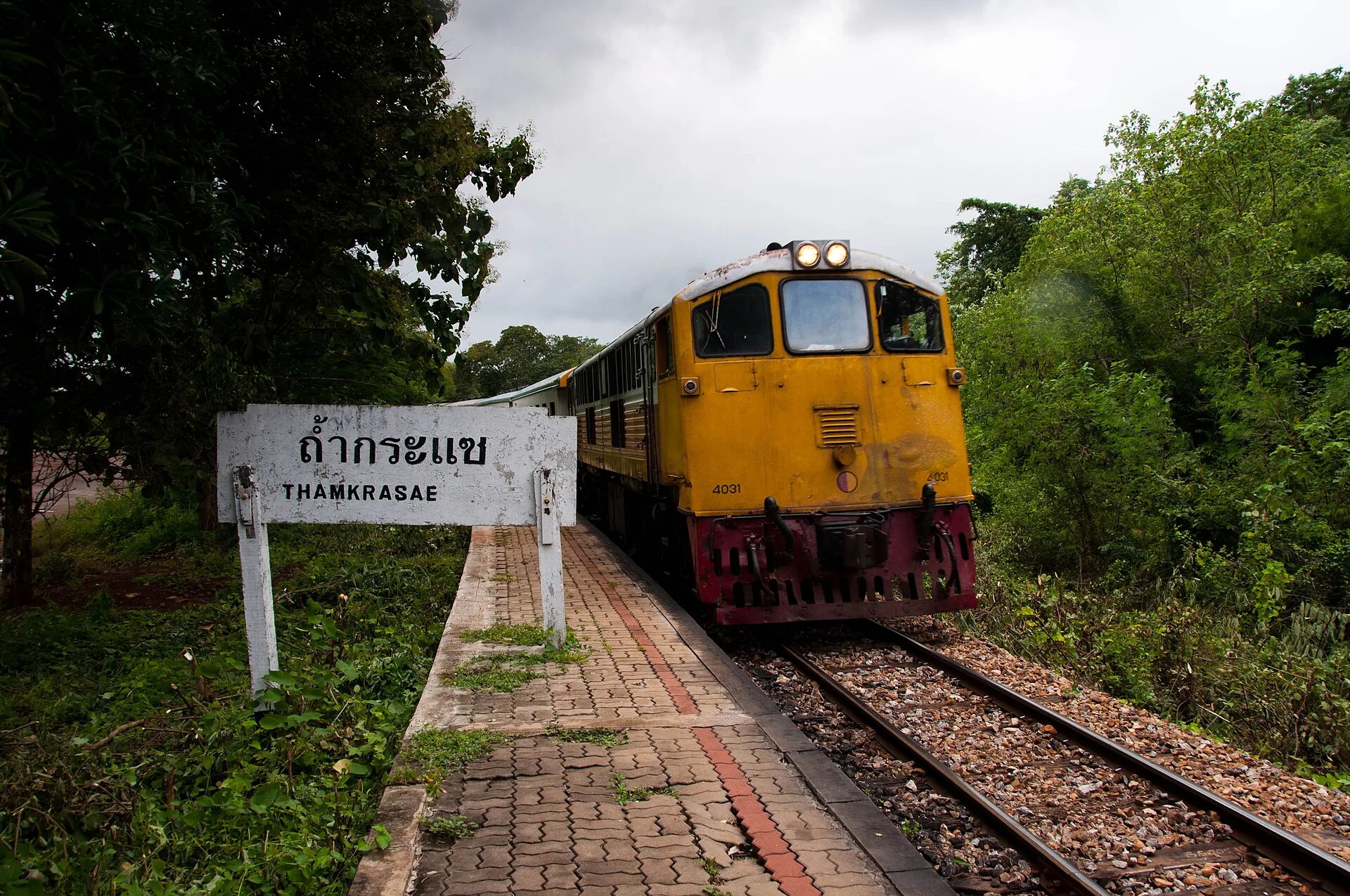
| Tham Krasae Station | A scenic riverside section where trains travel along a wooden viaduct. |
| Nam Tok | A popular final stop for sightseeing train journeys along the Thai section of the railway. |

How to Explore the Death Railway in Thailand Step by Step
The best approach is to combine visits to memorial sites with a train journey. This brings the history beyond the museum walls, allowing you to see the surrounding landscape, rivers, rock formations and the immense challenges involved in building the railway.
- Start at a museum in Kanchanaburi – learn about the wartime background, the railway route and the conditions under which it was built.
- Visit the war cemetery – this peaceful place helps put the scale of the tragedy into perspective.
- See the Bridge on the River Kwai – early morning or late afternoon is a particularly good time to visit.
- Take a train ride along part of the railway – the section around Tham Krasae is especially interesting.
- Include Hellfire Pass – this is an essential stop for anyone interested in the railway’s true history.
What Should You Know Before Visiting Kanchanaburi?
Kanchanaburi lies west of Bangkok. It is a good destination for a day trip, although spending two days here allows for a much more relaxed pace. It also makes it easier to combine historical sightseeing with nature experiences.
- Best time to visit – morning, when temperatures are cooler and the light is better for photography.
- Clothing – choose lightweight, breathable clothes that are also appropriate for visiting memorial sites.
- Footwear – comfortable shoes are important, especially at Hellfire Pass and around the railway tracks at Tham Krasae.
- Water – essential, as the heat can quickly become exhausting.
- Transport – options include trains, minibuses, private transfers and guided tours.
- Respectful sightseeing – these are historic memorial sites, so avoid exaggerated poses and inappropriate photographs.
Bridge on the River Kwai: The Iconic Landmark That Draws Visitors
The Bridge on the River Kwai is the most famous landmark associated with the Death Railway in Thailand. Many visitors first hear about it through its portrayal in film. However, the real history is far more complex than the familiar Hollywood version.
You can walk across the bridge when no train is approaching. There are viewing spots on both sides that offer good views of the structure. This makes it a convenient starting point for exploring Kanchanaburi.
At the same time, it is important to remember that the bridge has become a symbol of immense human suffering. It is more than just a backdrop for photographs. Ideally, combine your visit with a museum and the war cemetery.
The Bridge on the River Kwai is instantly recognizable. Yet it is Hellfire Pass that reveals the true weight of this history, without the distractions of a tourist attraction.
Hellfire Pass: The Most Moving Section of the Death Railway
Hellfire Pass is a railway cutting excavated through solid rock under inhumane conditions. Its name refers to the sight of laborers working at night by torchlight. According to eyewitness accounts, the scene resembled hell itself.
Today, the site features a memorial walking trail and an interpretive center. Visiting is a quiet, deeply reflective experience. It is therefore worth allowing extra time to explore the area.
Walking through the rock cutting creates a very different experience from visiting a conventional museum. You can see evidence of manual labor, the exposed stone and the difficult terrain. This makes it easier to understand why the Death Railway in Thailand carries such powerful emotional significance.
Riding the Death Railway Train: Is It Worth It?
Taking a train journey is one of the best ways to experience the railway route. Rather than viewing it as an ordinary tourist attraction, consider it an opportunity to observe the landscape and imagine the extraordinary scale of the work involved.
The most spectacular section runs through the Tham Krasae area. Here, the train travels close to the river along wooden supports built against the rocky hillside. The scenery is beautiful, but the historical context remains deeply serious.
For this reason, a train journey is best accompanied by commentary from a knowledgeable guide. Without historical context, it is easy for the experience to become little more than an opportunity to take attractive photographs. With a guide’s explanations, the journey takes on an entirely different meaning.
FAQ – Frequently Asked Questions About Thailand’s Death Railway
Where Is the Death Railway Located in Thailand?
The most frequently visited section is in Kanchanaburi Province. This is where you will find the Bridge on the River Kwai, war cemeteries and part of the surviving railway line. Another important site is Hellfire Pass, located farther from the city center.
Is the Death Railway Still Operating?
Part of the railway on the Thai side remains in operation. Visitors can travel by train along selected sections toward Nam Tok. However, the original connection to Burma no longer operates in its former wartime configuration.
How Much Time Do You Need to Explore Kanchanaburi?
The minimum is one full day from Bangkok. However, a better itinerary allows for two days and one overnight stay. This gives you enough time to visit the museum, bridge, cemetery and Hellfire Pass, as well as enjoy a train journey without rushing.
Is a Visit to the Death Railway Suitable for Children?
Yes, although this depends on the child’s age and sensitivity. The bridge and train ride are generally easier for children to appreciate. Museums and Hellfire Pass require thoughtful, age-appropriate explanations of the history.
Is It Worth Visiting the Death Railway With a Guide?
Yes, especially if it is your first visit. A guide can explain the wartime context, the significance of individual locations and the importance of the railway itself. This helps ensure that the Death Railway in Thailand becomes much more than another stop on your travel itinerary.
Summary
- Death Railway in Thailand – a historic World War II railway constructed under devastating conditions.
- Kanchanaburi – the best base for exploring the Bridge on the River Kwai, museums and war cemeteries.
- Hellfire Pass – one of the most moving sites along the route and an essential stop for history enthusiasts.
- Train journey – an opportunity to experience the landscape and gain a better appreciation of the scale of the railway’s construction.
- Respectful sightseeing – this is not simply a tourist attraction, but above all a place of remembrance.
If you are planning a trip to Kanchanaburi, combine the bridge, museum, war cemetery, Hellfire Pass and a train journey in your itinerary. This approach provides a more complete understanding of the history and helps you appreciate what the Death Railway in Thailand truly represented.
No comments