

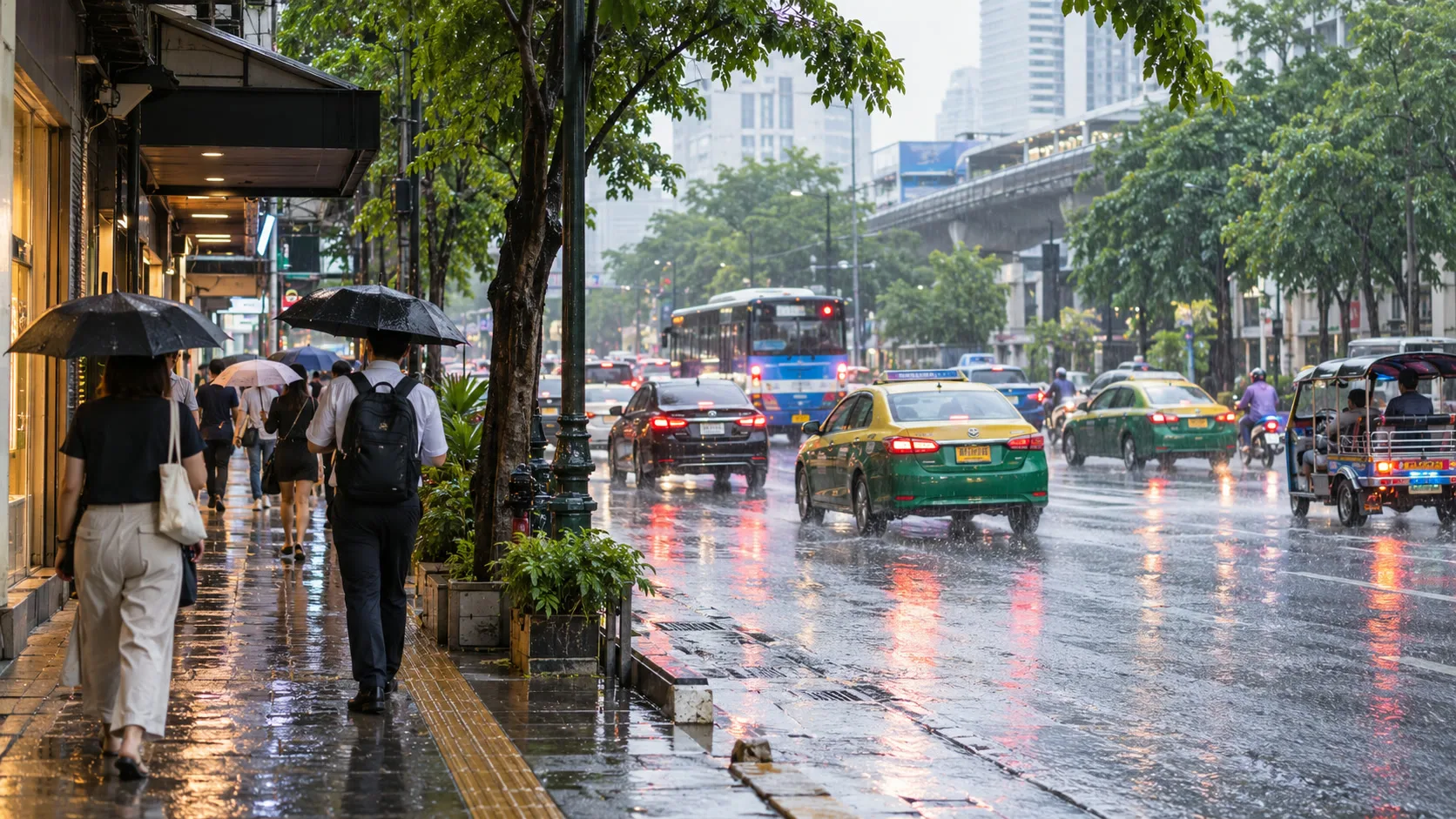
One of the questions most often asked before a trip to Southeast Asia is: when is the rainy season in Thailand? And rightly so: the answer directly affects what you will see, how you will feel, and how much you will pay for your trip. The problem is that most available information boils down to generalities like “from May to October". In reality, Thailand’s weather is much more complex and depends on the region you are visiting.
AsiaTrip’s EN service is designed for one private, closed group of 4 to 20 guests. Unrelated customers are not combined, and every itinerary receives an individual quote in THB. Weather can affect routes and transport, so this guide explains the regional differences and the practical checks to make before travelling.
In this article, you will find approximate dates and regional differences, learn where rainfall is usually heaviest and discover whether the rainy season can suit your trip. You will also find practical guidance for comparing routes, current conditions and booking terms without assuming that every place follows the same calendar.
What the rainy season in Thailand means

When is the rainy season in Thailand? A national summary usually says from mid-May to mid-October, but that is only part of the story. The Thai Meteorological Department divides Thailand’s general climate into three seasons: summer, the rainy season and winter. The south follows a different rainfall pattern, especially on the Gulf coast. These regional differences affect sea conditions, trail access, transport and which outdoor activities are practical.
Where the monsoon comes from and how it works
The word “monsoon" comes from the Arabic “mausim", meaning season or time of year. The mechanism is simple: in summer, land heats up faster than the ocean, creating an area of low pressure above it. Moist air from the Indian Ocean and the South China Sea flows inland, bringing heavy rainfall. In Thailand, this process is highly regular and returns each year with considerable predictability.
The monsoon reaches different regions of the country at different times. The western coast, around Phuket and Krabi, feels its effects earliest and most strongly because it faces the Indian Ocean. The eastern coast, including Koh Samui and Koh Phangan, receives rain from the South China Sea and follows a completely different schedule. This is why answering the question about the rainy season requires specifying the region.
Thailand has two different faces of the monsoon: one facing the Indian Ocean, the other the South China Sea, and each follows its own calendar.
How the rainy season differs from the European idea of it
The rainy season does not always mean uninterrupted grey weather. Many days include short, heavy showers, often later in the day, but prolonged rain also occurs. A sunny morning is not a guarantee that sea conditions, trails or outdoor attractions will remain suitable. Check current local information before setting out.
The key difference is humidity and how suddenly the rain can arrive. Tropical downpours may be intense enough to overwhelm drainage and make roads difficult to use. A light raincoat is useful for ordinary showers, but heavy rain calls for a safer indoor plan and extra time for travel.
Heavy monsoon rain, thunderstorms and tropical cyclones can create serious hazards, including flooding, landslides, rough seas and transport disruption. Conditions may change quickly. Check official warnings, follow local safety instructions and never assume that a boat, trail or swimming area will remain open.
Rainfall calendar month by month
Before you start planning your trip, it is worth looking at the specific months and seeing how rainfall is distributed throughout the year. If you ask when the rainy season is in Thailand, the fairest answer is that it depends on the region, though some patterns apply across the country and can be laid out in a clear calendar.

Transition months: April, May and June
April is still the end of the dry season in most of Thailand, although temperatures reach their highest levels of the year, often exceeding 36 degrees Celsius. The change begins in May. The west of the country, including Phuket and Krabi, gets its first heavier rainfall from the middle of the month. Central Thailand, including Bangkok, usually enters the rainy season in late May or early June.
June is when the monsoon gets fully underway in the west and gradually spreads across more of the country. Rainfall is not yet at its most intense, but the breaks between showers can be shorter than in May, and humidity rises noticeably.
Peak season: July, August and September
These three months bring the heaviest rainfall in central and western Thailand. Rain falls regularly, most often in the late afternoon or evening, though overcast days also occur. Bangkok and the surrounding area record their highest monthly rainfall totals during this period. The sea off the western coast can be rough, and some boats stop operating on longer routes.
August and September are the months with the highest risk of intense storms and local flooding throughout the year.
The eastern coast, including Koh Samui and the surrounding area, has relatively stable weather at this time because the western monsoon passes it by. This is useful to know when choosing where to travel.
The end of the monsoon: October and November
October brings a gradual easing of rain in the west and centre of the country, but the eastern coast is entering its own rainy season, which lasts until December. Bangkok usually returns to sunny weather in the second half of October. November is a good month for most regions, except the east, where rainfall is at its heaviest of the year.
Where it rains most and least
To answer the question when the rainy season is in Thailand, you first need to understand that the country stretches more than 1,600 kilometres from north to south. This geographical span means that different regions have different rainfall schedules, so deciding where to go should take the specific location into account, not just the general season.

West coast: the heaviest rain from May to October
Western Thailand, including Phuket, Krabi, Koh Lanta and the Andaman Sea area, receives the full force of the western monsoon. The rainy season begins here in May and lasts until the end of October. Monthly rainfall can exceed 400 millimetres, and August or September is usually the wettest month in Phuket. The western beaches are less accessible to tourists during this period, and some boat operators suspend trips because of sea conditions.
The west coast receives the heaviest monsoon rainfall in the country, so if you are planning a visit around Phuket, it is best to choose a month between November and March.
Central and northern Thailand: moderate rain with a clear peak
Bangkok and central Thailand have a clearly defined rainy season from June to October, but the rainfall is less intense than on the west coast. Chiang Mai in the north gets most of its annual rainfall from July to September, when water flowing down from the mountains can cause local flooding. Outside this peak, the city enjoys a pleasant, dry climate for much of the year.
In Bangkok, September is statistically the wettest month, but even then, rain usually falls in the afternoons rather than all day. Sightseeing in the morning is generally done in the sunshine.
East coast: a reversed calendar
Koh Samui, Koh Phangan and the lower Gulf of Thailand follow a different schedule. Rain commonly intensifies from October into December, and the Thai Meteorological Department’s long-term climate summary identifies November as the wettest month for Thailand’s southern east coast. Rain can continue into January in some years, so this regional pattern matters when choosing islands.
What the weather is like during the rainy season
When asked when the rainy season is in Thailand, most tourists assume it means several weeks of constant rain and grey skies. The reality is different. A typical day during the monsoon starts with sunshine, a hot morning and blue skies. Rain usually arrives in the afternoon or evening, lasts from a few dozen minutes to several hours, and then passes.
The daily rhythm during the monsoon
During the rainy season, the morning is the most predictable part of the day. Between eight in the morning and one in the afternoon, temperatures are usually 28 to 32 degrees Celsius, and the sky is clear or lightly clouded. This is the best time to visit temples, go trekking and enjoy outdoor activities. Afternoon showers bring brief relief from the heat, followed by warm, humid air.
If you are travelling during this season, adjust your schedule so that more demanding outdoor activities take place in the morning. Lunch or coffee breaks at a local restaurant naturally fit into the time when the rain is heaviest. Once the rain has passed, pavements and streets dry very quickly in the high temperatures.
Tropical rain in Thailand is intense but brief. It rarely ruins an entire day of travel.
Temperature and humidity
Temperatures during the rainy season differ little from those in the dry season. In Bangkok and central Thailand, the average is 28 to 33 degrees Celsius. In the north, around Chiang Mai, it can be a little lower because the mountains hold back some of the moisture. The key difference is the humidity, which rises to 80 to 90 percent and makes the same temperatures feel more oppressive than in the dry season.
High heat and humidity can be tiring, especially if you are not used to tropical conditions. Plan regular breaks, drink water, wear light breathable clothing and carry a compact umbrella or raincoat. Reduce exertion if you feel unwell and seek help for symptoms of heat illness.
Is it worth going, and how should you plan your trip?
The answer to when the rainy season is in Thailand should not end with a list of months and a warning. The rainy season is a full-fledged travel season with genuine advantages, and it works well for tourists who know what to expect and can plan a route around regional differences in the weather.
Benefits of travelling outside peak season
Some accommodation and airfares may be lower outside peak dates, but this varies by route, event and booking date. Popular places can also be quieter than in December and January. Compare current prices and cancellation conditions instead of assuming that every rainy-season trip will be cheaper.
The rainy season is one of the best times to see Thailand without crowds or overspending.
Nature looks completely different during the monsoon season than it does in standard promotional photos. Waterfalls are especially impressive, rice fields turn an intense green, and national parks such as Khao Sok look spectacular after rainy nights. For tourists who love nature and landscape photography, this is an especially underrated time to travel.
How to plan a route during the rainy season
When planning a trip during the monsoon months, match specific regions to your travel dates. In June and July, the Andaman coast is exposed to the southwest monsoon, while Bangkok and Chiang Mai also receive rain and may experience local disruption. In October and November, conditions often improve on the Andaman coast as rain increases around Koh Samui and the lower Gulf. Always check the current forecast before committing to transfers or boat trips.
Here is a simple breakdown to help you plan your route:
| Month | Good regions | Regions to avoid |
|---|---|---|
| June, July | Bangkok, Chiang Mai, Ayutthaya | Phuket, Krabi |
| August, September | The north, national parks | West coast |
| October, November | Phuket, Krabi, Koh Lanta | Koh Samui, Koh Phangan |
When putting together an itinerary for several days, leave one or two flexible days in the schedule that you can move if the weather brings heavier rain on a particular day. This time buffer means that a sudden storm will not ruin your whole trip.

Key takeaways before your trip
When the rainy season falls in Thailand depends mainly on which region you plan to spend time in. The west coast gets the monsoon from May to October, the east from November to January, while Bangkok and the north see peak rainfall between July and September. None of these periods rules out a successful trip if you tailor your route to the time of year.
Many tropical showers are intense and brief, and mornings are often the more practical time for outdoor plans. This is a pattern, not a guarantee. Prolonged rain and severe weather do occur, so leave flexibility in the itinerary and follow official warnings.
Before travelling, check the current Thai Meteorological Department forecast and warnings. If you want a private itinerary suited to your dates, see our Thailand tours. AsiaTrip prepares an individual THB quote for one closed group of 4 to 20 guests.
If you are just starting to plan your trip, also see a trip to Thailand and Thailand with children.
When the weather is not good for the beach, consider adding a day trip from Bangkok to Ayutthaya to your plans.
If you want a broader overview of the season, also read our practical guide to the rainy season in Thailand.
Related: When to visit Thailand? The best month for Bangkok,.
Related: Private multi-day tours in Thailand.
Related: Koh Samet, an island near Bangkok: a practical guide.
Related: Tours from Pattaya.
Related: Krabi hot springs: a practical guide to the hot springs.
No comments