

Thailand brings together historic cities, islands, forests, mountain regions and modern urban centres. This guide compares 13 places to see, from well-known landmarks to destinations that require more route planning. The right choice depends on the season, access, available time and your group’s interests.
AsiaTrip’s EN service is designed for one private, closed group of 4 to 20 guests. Unrelated customers are not combined, and each itinerary receives an individual quote in THB. The destinations below are planning options rather than universal recommendations. Confirm access, weather, supplier conditions and official guidance for your travel dates.
Whether this is your first trip to Thailand or a return visit, the list below can help you shape a realistic route. It covers specific places in different regions of the country, from Bangkok and the mountainous north to the islands of southern Thailand.
1. Bangkok on a Private Itinerary
Bangkok is a practical starting point for many trips to Thailand. The city is more than a place to change planes. It is a destination in its own right, with historic districts, temples, markets, food areas and contemporary architecture.
Why it is worth starting here
Bangkok has extensive domestic and international transport connections, which makes it a useful base for a wider itinerary. Its attractions range from historic temples and markets to river districts, street food areas and modern architecture.
Allowing enough time in Bangkok makes it easier to combine historic sites, river travel and neighbourhoods without rushing between them.
What to see in 1-2 days
In one or two days, a route may include the Grand Palace, Wat Pho and a river crossing to Wat Arun. Whether all three fit depends on opening hours, ticketing, heat, mobility and the desired pace. Other options include Chatuchak Market when it is operating and Chinatown’s Yaowarat Road, subject to the group’s interests and current conditions.
How to plan your sightseeing without getting tired
Heat, traffic and walking distances can make a tightly packed day tiring. Start early where opening hours allow, plan shaded or air-conditioned breaks, and group nearby places together. River boats can be useful on suitable routes, but journey times and accessibility should be checked for the day of travel.
Practical tips for your visit
AsiaTrip can prepare one-day or multi-day private Bangkok itineraries for a closed group. The written proposal should confirm the route, language, service roles and inclusions. Dress rules apply at the Grand Palace and many temples, so check the official requirements before visiting and carry suitable clothing. Keep some THB available for places that do not accept cards.
2. Ayutthaya
Ayutthaya is the former capital of Siam, which was the centre of a powerful Southeast Asian kingdom for more than 400 years. Today, it is one of the best-known tourist attractions in Thailand and was added to the UNESCO World Heritage List in 1991.
What sets the former Siamese capital apart
Ayutthaya combines an active modern city with an extensive archaeological landscape. Temple ruins, prang towers and Buddha images are spread across and beyond the historic island, so the order of stops and local transport matter.
Ayutthaya gives useful historical context for the temples and royal sites visitors later encounter in Bangkok and elsewhere in Thailand.
The most interesting temples and UNESCO sites
Key sites include Wat Mahathat, known for the Buddha head among tree roots; Wat Phra Si Sanphet, with three prominent chedis; and Wat Ratchaburana, whose crypt contains surviving murals. Opening conditions can change, so check the historical park information before deciding how many sites to include.

How to get there from Bangkok and how much time to allow
Ayutthaya can be reached from Bangkok by rail or road. Departure points, schedules and journey times change, so confirm the current option before travel. A day trip is possible, while a full day in the city allows more time for the principal ruins and museums.
Practical tips and common mistakes
The ruins offer limited shade and can become very hot around midday. An early start, water, sun protection and suitable footwear make the visit easier. Clothing that covers shoulders and knees is needed when entering active temples.
3. Kanchanaburi and the Bridge over the River Kwai
Kanchanaburi, west of Bangkok, is known for the Bridge over the River Kwai and the history of the Thailand-Burma Railway. The town and surrounding province also include museums, memorial sites, rivers and national parks, so a realistic route needs more than a single short stop.
What you will see beyond the “bridge from the film”
The bridge is a starting point, but the wider history is explained more fully in Kanchanaburi’s museums, cemeteries and memorial sites. Treat places connected with prisoners of war and wartime deaths as sites of remembrance, and allow time to read the historical interpretation rather than using them only as photo stops.
The bridge can be visited quickly, but the museums and memorial sites are essential for understanding the railway’s human cost.
A day plan: history, nature and the river
A balanced day can begin with a museum and war cemetery, continue to the bridge, and then include a river or railway stop if time and current operating conditions allow. Keep the historical sites together rather than adding distant attractions that make the schedule unrealistic.
How to get there and when to go
Kanchanaburi can be reached from Bangkok by rail or road. Stations, timetables and travel times vary by service, so check the current schedule before choosing between a day trip and an overnight stay. Weather and park conditions should be reviewed separately if the route also includes nature attractions.
What to watch out for when planning your trip
A day trip can work when the stops are carefully limited. Weekends and public holidays may be busier, so allow extra time and confirm opening hours. Carry some cash in THB, but use normal security precautions and do not rely on a specific ATM or payment method being available at every stop.
4. Chiang Mai and Doi Suthep
Chiang Mai is the main urban centre of northern Thailand and has a different history, landscape and pace from Bangkok and the southern islands. It works best as a base for the Old City, local markets and carefully selected trips beyond the centre.
Why northern Thailand offers a different experience
Mountains and forests shape travel in northern Thailand. Chiang Mai was a major centre of the Lanna Kingdom, and this history remains visible in its architecture, religious sites, food and crafts. Distances outside the city can be substantial, so avoid treating every northern attraction as a short city stop.
Two or more days give a first-time visitor a more realistic balance between the Old City, Doi Suthep and time outside the centre.
Temples, the Old City and local markets
The moated Old City contains many temples, including Wat Chedi Luang and Wat Phra Singh. Chiang Mai also has evening markets on different days and streets. The Sunday Walking Street is centred on Ratchadamnoen Road, while Wualai Road hosts the Saturday market. Confirm dates and operating arrangements locally.
Doi Suthep: how to get up and when to arrive
Wat Phra That Doi Suthep stands on the mountain west of Chiang Mai. Visitors reach the upper temple area by a long staircase or a funicular service, subject to current operation. Morning visits may be cooler, but opening hours, ceremonies and crowd levels should be checked before departure.
Practical tips for first-time visitors
Doi Suthep can be reached by road using a songthaew, licensed driver or arranged transport. Fares and departure arrangements vary, so agree them in advance. The temple may be cooler than the city, and clothing must be suitable for a Buddhist religious site.
5. Chiang Rai and the White Temple
Chiang Rai is a city in Thailand’s far north, near the borders with Myanmar and Laos. It can be visited from Chiang Mai, but the road journey and the number of sites make an overnight stay worth considering.
What makes it a must-see trip in the north
Chiang Rai combines contemporary religious art, established temples and the wider history of Thailand’s northern border region. A useful route distinguishes between the city’s artistic landmarks and the Golden Triangle area, which requires additional travel.
The White Temple and other unusual places nearby
Wat Rong Khun, or the White Temple, is a contemporary art and temple project created by Thai artist Chalermchai Kositpipat. Mirrored mosaics and symbolic sculptures form part of an evolving complex. Wat Rong Suea Ten, commonly called the Blue Temple, is another distinct site in Chiang Rai and should be treated as a separate visit.

The White Temple is a contemporary artwork as well as a religious site, so visitors should respect site rules while viewing its unusual design.
How to get there and combine it with Chiang Mai
Chiang Rai is connected with Chiang Mai by road. Timetables, journey times and stopping patterns vary, so confirm them before travel. A one-day return is possible but long; an overnight stay gives more flexibility for the city and surrounding sites.
Tips on photos, visiting times and crowds
Arriving near opening time can reduce heat and leave more time for the rest of Chiang Rai, but crowd levels are not guaranteed. Check the official opening hours, admission terms, photography rules and any temporary closures before visiting.
6. Khao Sok National Park
Khao Sok National Park in Surat Thani Province protects tropical forest, limestone formations, waterways and wildlife habitat. Its landscape differs markedly from Thailand’s cities, historic sites and beach resorts, but access depends on weather, trail conditions and park rules.
What you will see in the Thai jungle, without exaggeration
Khao Sok contains dense forest, rivers, caves and limestone cliffs. Wildlife may be present, but sightings are never guaranteed. Choose routes that match the group’s fitness and the current conditions rather than assuming every trail will be open or suitable.
Cheow Lan Lake: boat trips, viewpoints and accommodation
Cheow Lan is a reservoir surrounded by limestone cliffs. Boat trips and licensed floating accommodation are available through different operators, subject to weather and park rules. Standards, mobile coverage and environmental practices vary, so check the exact property and transfer arrangements before booking.
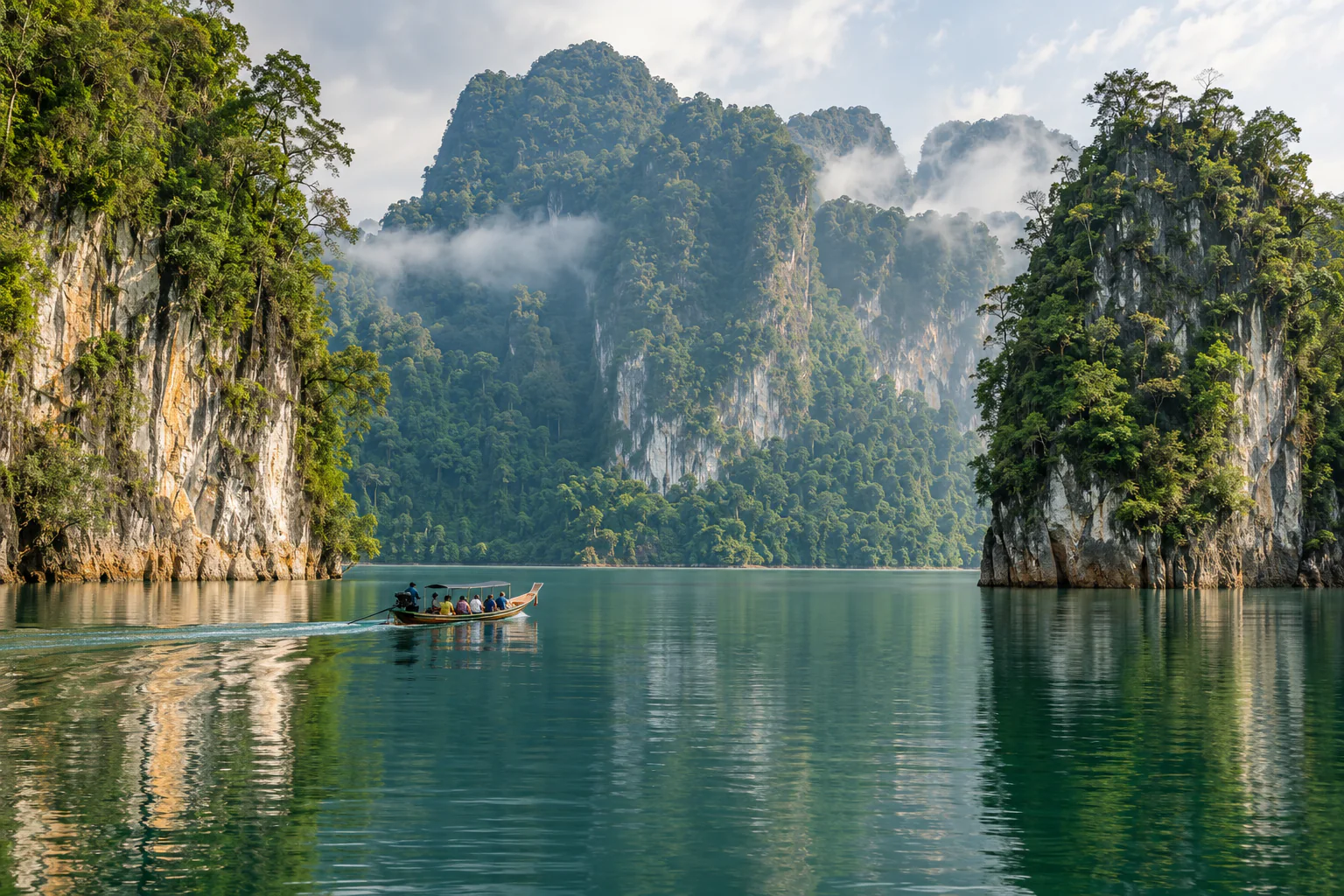
An overnight stay on Cheow Lan Lake changes the logistics of a Khao Sok visit and needs separate checks for transport, accommodation and park access.
Logistics: getting there from the south and how long to stay
Khao Sok can be reached by road from Phuket, Krabi and Surat Thani, but journey times depend on the starting point and service. Allow enough time for transfers and do not combine a lake trip and a long jungle walk unless the confirmed schedule genuinely supports both.
Safety and preparation for tropical conditions
Bring a waterproof bag, insect repellent, drinking water and footwear suited to wet paths. Use authorised guides where the park requires them and follow closure notices, especially after heavy rain when trails, caves and waterways can become unsafe.
7. Krabi and Railay Beach
Krabi is a province on Thailand’s Andaman coast, combining beaches, islands and limestone cliffs. Ao Nang is a common transport base, while Railay and the offshore islands require boat transfers whose operation depends on sea and weather conditions.
What sets Krabi apart from other regions
Krabi and Phuket offer different transport patterns and resort areas. Krabi is known for limestone scenery and established climbing locations around Railay and Tonsai, while the wider province also includes busy beaches and developed tourism centres. Choose a base according to the planned activities rather than expecting every area to be quiet.
Railay: beaches, cliffs, caves and viewpoints
Railay is a peninsula reached by boat because limestone cliffs separate it from the road network. Railay West, Railay East and Phra Nang serve different purposes, from swimming areas to piers and walking access. Trails to viewpoints can be steep, muddy and unsuitable in poor weather, so check conditions before attempting them.
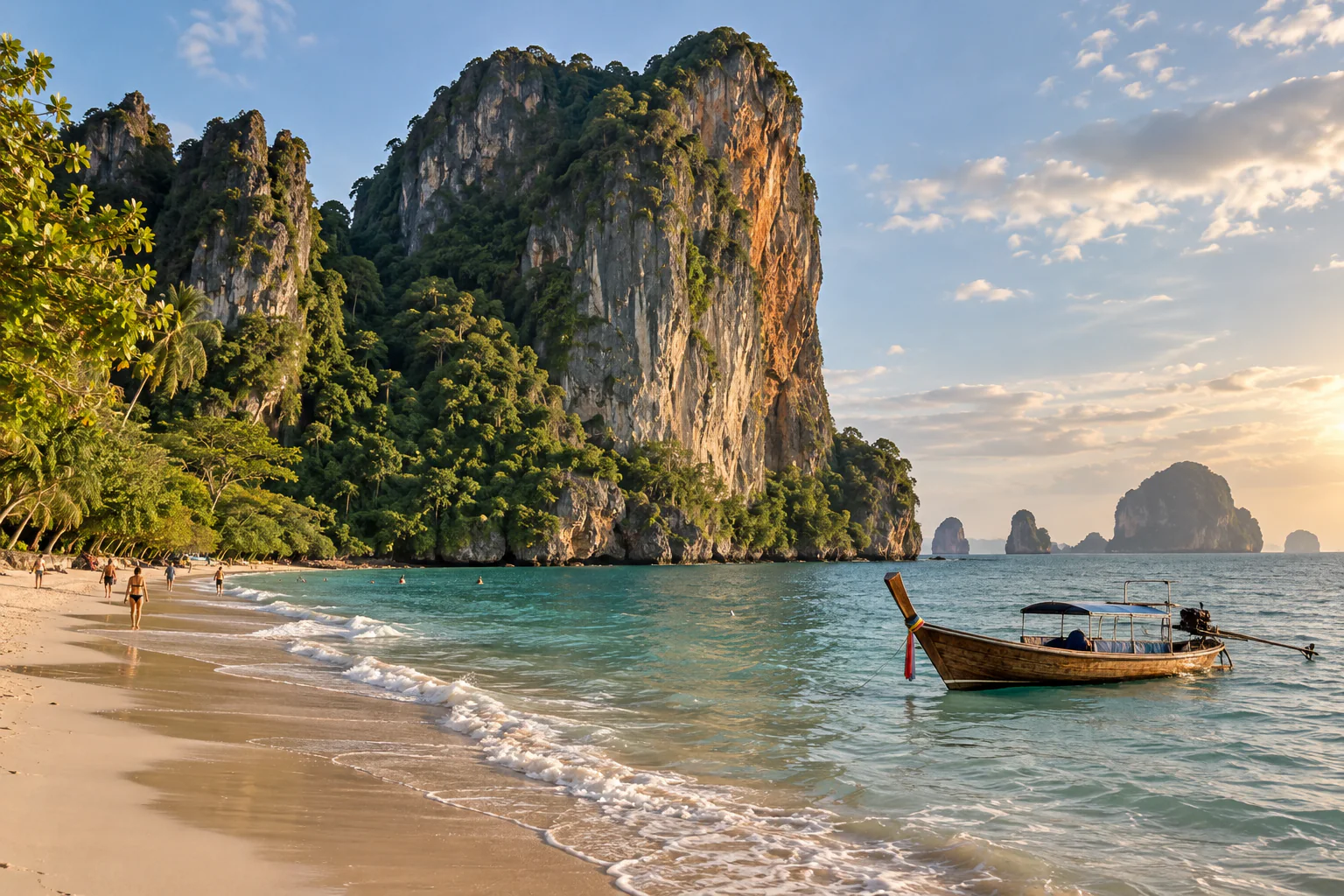
Railay has no road connection, so every visit depends on boat conditions, landing points and the ability to walk between the beaches.
How to get there by boat and get around
Longtail boats connect Ao Nang and other nearby piers with Railay. Fares, landing points, waiting times and operating conditions change with demand, tide and weather, so confirm them locally. Once ashore, the main areas are connected by walking routes.
Tips for the beach and activities
Wear footwear that can handle wet landings and uneven paths. Climbing should be arranged only with a reputable operator that provides suitable equipment and explains insurance and safety procedures. Snorkelling visibility and safe entry points vary with tides, weather and boat traffic.
8. Koh Phi Phi and Maya Bay
Koh Phi Phi is an archipelago in Krabi Province. Phi Phi Don is the inhabited island and main accommodation base, while Phi Phi Leh contains Maya Bay, made internationally known by the film “The Beach”. Visitor controls and marine conditions shape how the area can be explored.
Why it’s worth visiting, even though it’s popular
The archipelago is known for steep limestone cliffs, sheltered bays and clear-water views in suitable conditions. It is also heavily visited. An early departure may help with timing, but it cannot guarantee an uncrowded visit.
What to do on the islands: views, snorkelling and boat trips
Phi Phi Don has viewpoints above the two main bays. Boat trips may include snorkelling stops around the archipelago, but routes, visibility, currents and marine access rules vary. Choose an operator that gives a clear safety briefing and does not encourage contact with wildlife or coral.
For Maya Bay and other protected marine areas, current park rules and sea conditions matter more than a fixed “best” departure time.
How to plan a responsible visit to Maya Bay
Visitors normally approach Maya Bay through Loh Samah Bay and continue on foot along the designated route. Boats do not land on Maya Bay beach, and swimming in the bay is prohibited under the protection rules. Seasonal closures, daily controls and access procedures can change, so check the official national park guidance before travel.
Practical tips: crowds, prices and timings
Ferries and speedboats operate from several mainland and island piers. Schedules and routes vary by season and weather. During busy periods, reserve transport and accommodation early enough to keep the itinerary workable, but verify cancellation terms before paying.
9. Phuket and the Phang Nga Bay area
Phuket is Thailand’s largest island and one of the country’s most developed visitor regions. Beyond the major beach resorts, the island includes historic urban areas, viewpoints, local communities and transport links to the wider Andaman coast.
Who Phuket is a good choice for
Phuket is best suited to people who value good infrastructure and a wide range of water activities. There’s everything from quiet beaches to diving, surfing and boat trips. It’s also a convenient base for the wider region, as flights from the local airport make it easy to continue your journey.
What to see beyond the beach: Phuket Town and viewpoints
Phuket Old Town is known for Sino-Portuguese architecture, cafés, shrines and street art around roads including Thalang Road. Viewpoints and religious sites elsewhere on the island may have temporary access restrictions, so verify current conditions before adding them to a route.
Phang Nga Bay: how to choose a tour and route
Phang Nga Bay is known for limestone karst formations, mangroves, caves and sheltered waterways. Different trips use larger boats, smaller craft or sea kayaks. Compare group size, route, safety equipment, environmental practices and transfer time rather than choosing only by the promotional photographs.
Sea-kayak routes in Phang Nga Bay depend on tides, cave conditions and the operator’s safety procedures.
How to avoid disappointment and overpaying
Use a reputable, licensed operator and confirm the route, vessel, safety equipment, insurance, transfers and cancellation terms. Patong is busy in peak travel periods, so travellers seeking a quieter base should compare other parts of the island rather than assuming all Phuket beaches have the same atmosphere.
10. Erawan National Park
Erawan National Park is in Kanchanaburi Province and is a well-known nature destination in western Thailand. Combining it with Kanchanaburi in one day requires an early start and a realistic route, especially when travelling from Bangkok.
What you’ll see at Erawan and why it’s a popular day trip
Erawan has seven named waterfall tiers connected by a forest trail. Water levels, colour, swimming access and trail openings change with weather and park management. The upper route is physically more demanding than the first tiers, so allow time for the return walk.
Decide how far to climb according to the group’s fitness, heat, trail conditions and the park’s closing procedures.
How to plan your route through the waterfalls, step by step
Start early enough to walk at a comfortable pace and turn back within the park’s current time limits. Do not assume the upper tiers will always be open. Follow ranger instructions and stop if heat, rain or slippery paths make the route unsafe.
Getting there, tickets and the best time of day
The park is reached by road from Kanchanaburi. Public and private transport options, journey times and return departures can change, so confirm them in advance. Arriving earlier usually leaves more time for the trail, but it does not guarantee low visitor numbers.
What to bring and safety rules
Wear footwear with good grip and follow signs around wet rocks and pools. Swim only where the park permits it, keep food and waste controlled, and obey ranger instructions when water levels or weather affect access.
11. Koh Samui
Koh Samui is Thailand’s second-largest island and a major destination in the Gulf of Thailand. Its location gives it a different seasonal pattern from Phuket and Krabi on the Andaman coast, so weather should be checked for the specific month rather than generalised across southern Thailand.
How it differs from the Andaman Sea islands
Koh Samui’s rainfall pattern differs from the Andaman coast, but conditions still vary from year to year. The island has an airport, ferry connections and developed resort areas, which can make it a practical base when those transport links suit the wider itinerary.
Best beaches and places for a relaxing day
Chaweng is one of the island’s busiest resort areas. Maenam, Bophut and Lipa Noi offer different settings, but beach depth, waves and swimming conditions vary by season and exact location. Na Muang Waterfalls are inland, and access should be checked after heavy rain.
Choosing the right base on Koh Samui can reduce unnecessary driving because the island’s beaches and inland sights are spread out.
Getting around and where to stay to save time
Songthaews, taxis, licensed drivers and rental vehicles are available, with different levels of convenience and risk. Anyone considering a scooter should have the correct licence, insurance and riding experience. Agree fares or booking terms before travel and choose accommodation near the area most relevant to the itinerary.
Practical tips for families and couples
Bophut, Maenam and other northern areas may suit travellers who prefer a different pace from Chaweng, but families should check beach conditions, room access and transport for their dates. Fisherman’s Village has restaurants and scheduled market activity, whose days and arrangements should be confirmed locally.
12. Koh Lipe
Koh Lipe is a small island in Thailand’s far south, close to the Malaysian maritime border. Its compact size and access to the Tarutao island area are key attractions, but peak-season demand, boat transfers and limited infrastructure need careful planning.
Why many consider it the prettiest “small island”
Koh Lipe has three main beach areas and a compact central walking street. It is more developed than some marketing images suggest, so choose accommodation by location, noise level, beach access and transfer arrangements rather than expecting complete isolation.
Koh Lipe works best when boat schedules, seasonal conditions and the island’s limited road transport are planned together.
What to do: beaches, reefs and trips to nearby islands
Sunrise Beach is a common base for swimming and snorkelling when conditions are suitable. Trips to nearby islands operate under marine park and weather restrictions. Do not touch coral, feed wildlife or assume every advertised stop will be accessible on the day.
How to get there and when to go for good weather
Koh Lipe has no airport. The usual Thai mainland route uses Pak Bara pier, while some seasonal services connect other islands and Langkawi. Timetables, sea conditions and cross-border immigration requirements can change, so verify the complete route before booking separate tickets.
What to keep in mind when booking and arranging transport
Accommodation and boat capacity can tighten during busy periods, so reserve early enough to coordinate transfers. Confirm luggage rules, payment methods and cancellation terms. Carry some THB, but use secure storage and check what payment and cash-withdrawal options your chosen accommodation confirms.
13. Sukhothai
Historic Sukhothai was the capital of the first Kingdom of Siam in the 13th and 14th centuries. The World Heritage property includes Sukhothai and associated historic towns, with monuments spread across a broad landscape rather than one compact temple complex.
What Sukhothai offers that Ayutthaya doesn’t
Sukhothai and Ayutthaya offer different layouts rather than a simple better-or-worse comparison. Sukhothai’s ruins are set within a spacious historical park with central and outer areas. Bicycles, electric carts and other local transport options may be available, subject to current rules.
Sukhothai needs enough time for both the central monuments and any outer zones included in the route.
Historical Park: how to see as much as possible
The Historical Park has central and outer areas containing different monuments. Ticketing, opening hours and transport arrangements can change, so check the current park information. Wat Mahathat is a logical central-area starting point, but the full route should reflect heat, mobility and available time.
How to get there and fit it into a Thailand itinerary
Sukhothai can be reached by road, and the wider region is also served by an airport. The best option depends on the previous and next stops in the itinerary. An overnight stay can reduce rushing when the route continues between Bangkok and northern Thailand.
Practical tips: bicycles, heat and timing
A bicycle can be practical for some visitors, while others may prefer an electric cart or arranged transport. Start during the cooler part of the day, carry water and sun protection, and choose a route that matches the group’s mobility.

Before you set off
Thailand offers far more than any single list can cover, but these 13 places provide a useful basis for comparing regions. A workable itinerary depends on the order of stops, realistic transfer times, seasonal access and the needs of the people travelling.
For a structured route, see our private multi-day tours and shorter tours from Bangkok. Every EN itinerary is prepared for one closed group of 4 to 20 guests, with no unrelated customers added. The written proposal should confirm the route, suppliers, service roles, language, inclusions, exclusions and individual quote in THB.
Seasonal events also need advance planning. If you will be in Thailand in mid-April, see our guide to Songkran in Thailand.
A broader list of places to visit is also covered in our guide to what to see in Thailand.
Related: Koh Chang: getting there, beaches and attractions.
Related: Thailand map: regions, cities, islands and main sights.
Related: Phuket: practical visitor information and tours.
Related: Grand Palace Bangkok: complete guide to the Grand Palace.
Related: Sky bars in Bangkok: a guide to the best bars.
Related: Private multi-day tours in Thailand.
Related: Terminal 21 Bangkok: a guide to the shopping centre.
Related: Khao San Road Bangkok: a guide.
Related: Chatuchak Market Bangkok: complete guide.
Related: Thailand trip: a complete guide for travellers.
Related: Bangkok river cruise: a trip on the Chao Phraya.
Related: Koh Samui attractions: complete guide to the best sights.
No comments