

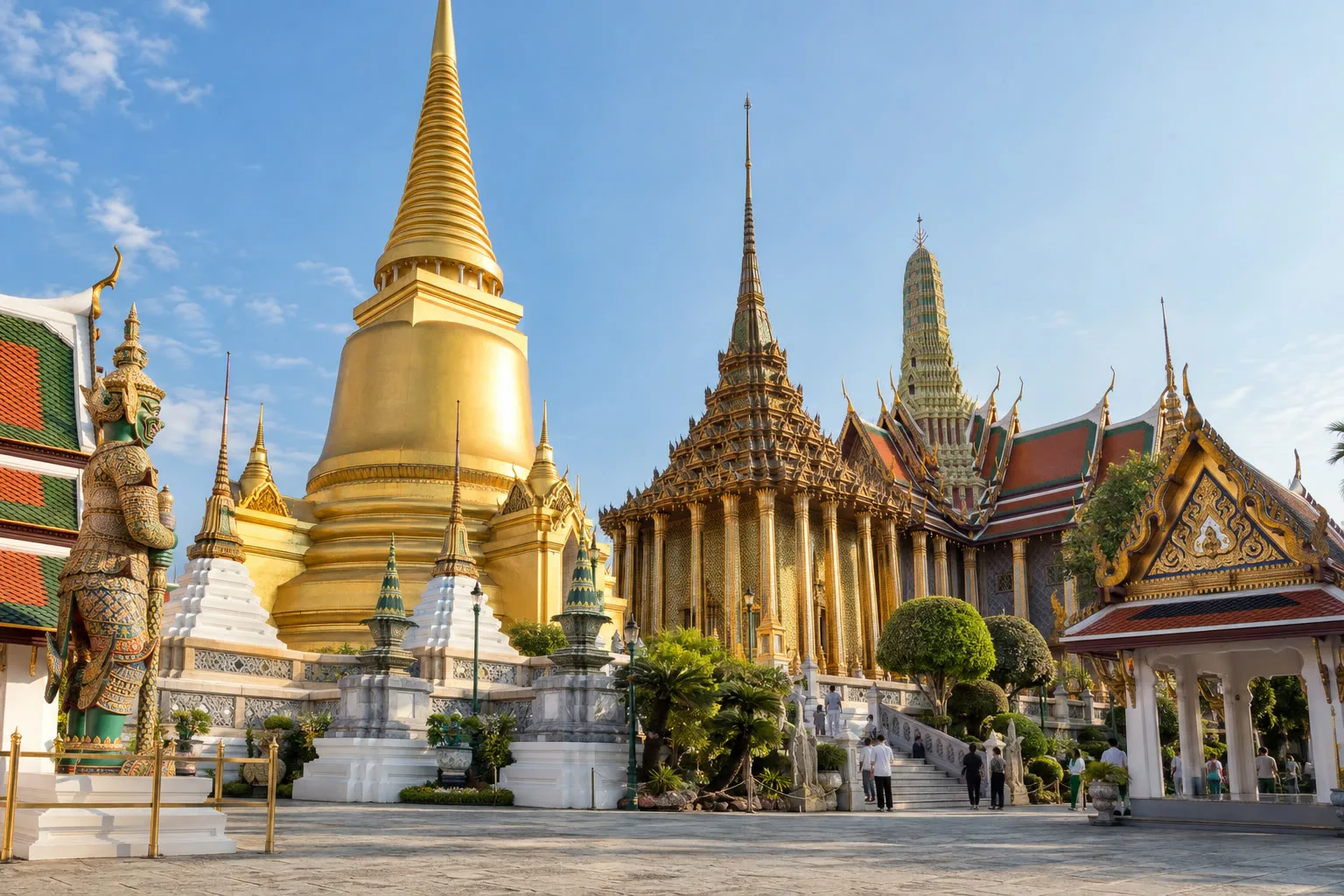
Grand Palace Bangkok is the most important palace and temple complex in Thailand’s capital. For many visitors, it is their first real encounter with royal Bangkok. In one place, you can see golden stupas, the Temple of the Emerald Buddha, throne halls, and details that reflect the stature of ancient Siam.
This guide explains what to see, how to plan your visit, and what to avoid. You’ll find practical information about tickets, dress, the order of your visit, and how much time to allow for a relaxed visit. That way, you won’t waste energy dealing with confusion at the entrance.
The greatest value of this place lies in more than its gold and architecture. It brings together history, religion, the monarchy, and Thai identity. That’s why Grand Palace Bangkok is worth exploring with an understanding of its significance, rather than simply walking around with a camera.
Grand Palace Bangkok and its significance to Thailand
Construction of the Grand Palace began in 1782, when King Rama I established Bangkok as the capital. The Tourism Authority of Thailand overview describes the complex as a former royal residence and a major architectural symbol of the Thai royal family. The complex became the centre of the new city and the heart of the Rattanakosin district. From the beginning, it served royal, religious, and administrative purposes.
The palace is not a single building. It is an extensive complex of courtyards, gates, pavilions, temples, and ceremonial halls. That’s why it can feel overwhelming at first. Gilding, mosaics, guardian statues, and the sharp lines of Thai roofs are visible all around you.
Why is the Grand Palace a symbol of Bangkok?
Bangkok’s Grand Palace was the official residence of Thailand’s kings for many decades. Today, it no longer functions as a regular residence, but it still has great ceremonial importance. Major state events and royal rituals take place here.
For Thai people, the palace is more than a tourist attraction. It is a place connected with the monarchy, Buddhism, and the country’s history. Visitors are therefore expected to follow specific rules of conduct. It’s best to know them before you enter.
Wat Phra Kaew and the Emerald Buddha
The holiest place in the complex is Wat Phra Kaew, the Temple of the Emerald Buddha. Inside is a small, highly revered Buddha image. Despite its name, it is made of green stone, not emerald.
The Emerald Buddha is one of Thailand’s most important religious symbols. The statue has seasonal robes that are changed during a royal ceremony. This reflects how closely religion is connected with state tradition here.
The Grand Palace is more than a palace. It is a visual story of Thailand, its monarchy, faith, and the city’s former order.
Tickets, opening hours, and practical information before your visit
The official Grand Palace website currently lists opening hours of 8:30 AM to 4:30 PM, with tickets sold from 8:30 AM to 3:30 PM. The listed admission price for foreign visitors is 500 THB and includes Wat Phra Kaew and the Queen Sirikit Museum of Textiles. Schedules and access can change for royal or state events, so check the official practical information and the official schedule shortly before travelling.

It’s worth checking the day’s schedule before you set out. Grand Palace Bangkok usually welcomes visitors daily from morning until afternoon. Tickets are sold only until a set time. State ceremonies may, however, affect access to parts of the complex.
It’s best to arrive early in the morning. Temperatures are lower and queues are shorter. The light also brings out the details in the roofs, mosaics, and golden decorations. The afternoon heat can be exhausting.
| Visit detail | Practical information |
|---|---|
| Location | Na Phra Lan Road, in Bangkok’s historic Rattanakosin district |
| Attraction type | Palace, temple, and ceremonial complex |
| Main temple | Wat Phra Kaew, the Temple of the Emerald Buddha |
| Typical visit duration | About 2-3 hours at a relaxed pace |
| Visitor ticket | 500 THB for foreign visitors at the time of review. Check the official website before visiting. |
| Best time | Morning, ideally just after opening |
| Dress | Shoulders and knees covered, no beachwear |
| Photography | Allowed in many areas, but not inside the main chapel |
How much time should you allow for the Grand Palace?
Allow at least two hours for the palace itself. If you’re interested in its history, three hours is better. That gives you time to see the main courtyards without rushing.
There’s little point in trying to combine the palace with five other attractions in one morning. The heat, crowds, and dress checks slow you down. A well-planned itinerary will serve you better than a long list of stops.
How do you get to the palace?
The easiest ways to get there are by taxi, ride-hailing service, or boat along the Chao Phraya River. Traffic in the area can be heavy, so taking a boat often means a more enjoyable and less stressful journey.
A popular place to get off is near Tha Chang. From there, you can walk to the entrance. On the way, watch out for people falsely claiming that the palace is closed.
How to explore Grand Palace Bangkok, step by step

A good plan can transform your visit. Grand Palace Bangkok is full of details, but you don’t need to explore everything in a random order. It’s best to start with the most important sacred site.
The route below works well for a first visit. It helps you conserve your energy and understand the place better. It also reduces the chance of missing the most interesting sights.
- Arrive early in the morning and head straight to Wat Phra Kaew. It is the most important place in the entire complex.
- Stop by the yaksha guardians, the giant demons that protect the temple. Their colours and details showcase Thai craftsmanship.
- Walk along the galleries with Ramakien murals. They depict the Thai version of a story inspired by the Ramayana.
- See Phra Si Rattana Chedi, the golden stupa visible from many parts of the complex.
- Enter the Emerald Buddha chapel respectfully. Keep quiet inside and do not take photos.
- Continue to the palace section and view the throne halls and ceremonial pavilions from outside.
- End your visit with a relaxed walk by the walls and gates. You’ll find it easier to notice details that may have escaped you at the start.
What should you do as soon as you enter?
Once inside, don’t spend too long in the first courtyard. Crowds build quickly, and the main sights soon get busy. Start with the temple instead.
You can return to the architectural details later, once you’ve seen the main highlight. This makes for a more relaxed pace and better photos.
How can you make sense of your visit?
A common mistake is to focus only on the gold. The palace is strikingly decorated, but every detail has a purpose. The guardians protect, the murals tell stories, and the stupas mark sacred spaces.
It’s worth learning a few names before your visit. Rattanakosin, Wat Phra Kaew, Chakri Maha Prasat, and the Emerald Buddha are good places to start. Knowing them makes the visit easier to follow.
Key sights in the Grand Palace Bangkok complex

The complex is extensive, but a handful of places form its core. They are the ones you’ll most often see in photos and guidebooks. It’s worth looking beyond their familiar views, though.
The places below show different sides of the palace. Some are religious, others royal or ceremonial. Together, they give you a fuller picture of power in ancient Thailand.
- Wat Phra Kaew: the holiest temple in the complex. The Emerald Buddha is housed here.
- Phra Si Rattana Chedi: a golden stupa that stands out in the temple area.
- Chakri Maha Prasat: a throne hall combining a Thai roof with a European-style building.
- Dusit Maha Prasat: an elegant ceremonial pavilion with a classic Thai silhouette.
- Ramakien galleries: long murals depicting scenes from the Thai royal epic.
- Yaksha: enormous temple guardians full of colour and protective symbolism.
- Queen Sirikit Museum of Textiles: a textile museum that helps explain traditional Thai court dress.
Chakri Maha Prasat and European influences
Chakri Maha Prasat stands out immediately. The lower part of the building has a European character, while the top is crowned with distinctly Thai roofs.
This contrast is no accident. It reflects a period when Siam was building relations with the West while preserving its own identity and royal symbolism.
Ramakien murals tell a story in pictures
The mural galleries are easy to miss. Many people walk past them too quickly, even though they are among the most fascinating parts of the entire complex.
The scenes depict the struggle between good and evil, royal loyalty, and the order of the world. It’s worth taking your time as you walk through. Even without knowing the full story, you can see the artists’ extraordinary work.
Dress, etiquette, and common visitor mistakes
Grand Palace Bangkok has some of Bangkok’s stricter dress rules. Shoulders and knees must be covered. Beachwear, short shorts, and see-through clothes may cause problems at the entrance.
The safest choice is long trousers or a long skirt, with a top that covers your shoulders. Wear comfortable shoes too, as you’ll be walking around the grounds for quite a while.
How should you behave in a temple?
Speak quietly and move calmly inside temples. You must remove your shoes before entering certain areas. Do not sit with your feet pointing towards images of the Buddha.
Show particular respect in the Emerald Buddha chapel. Photography is prohibited inside, so put your camera away before entering.
The most common scam at the entrance
People near the palace sometimes claim that it is closed. Then someone may offer to take you on a different tour, to a shop, or for a tuk-tuk ride. This is a classic tourist scam.
Always check the entrance for yourself. Don’t rely on a stranger you happen to meet on the street. The official gate and ticket office are the best places to confirm the information.
The best Grand Palace visit starts before you enter: wear the right clothes, bring water, and have a relaxed plan.
Grand Palace Bangkok on your own or with a licensed guide?
You can explore on your own and enjoy plenty of flexibility. Go at your own pace, take breaks, and focus on photography. It’s a good option if you like to read up beforehand.
Where the confirmed offer includes a licensed guide, the guide can explain the symbolism and historical context of the palace.
When is an independent visit enough?
Visiting on your own works well when you’re short on time. In that case, focus on Wat Phra Kaew, the golden stupa, and the throne halls. This itinerary gives you a strong first impression.
It’s still worth learning the basic rules beforehand. Without them, it’s easy to rush through the place, leaving the palace as little more than a backdrop for photos.
When is it better to choose a guide?
A guide can help you understand the history of the monarchy and Buddhism. They explain the symbols, the order of the courtyards, and the differences between the buildings. They can also help with pacing and logistics.
This is especially useful for families and visitors on a short stay. It’s easy to lose time getting around Bangkok. A good guide can combine the palace with other attractions in a logical itinerary.
How to combine Grand Palace Bangkok with Wat Pho, Wat Arun, and the river
Grand Palace Bangkok is in one of the best areas of the city to explore on foot. Wat Pho, the Chao Phraya River, and the ferry crossing to Wat Arun are nearby. That means you can fit a rewarding itinerary into one day.
There’s no need to rush through everything, though. The best plan starts with the palace in the morning. Then you can walk to Wat Pho and take a boat across to Wat Arun afterwards.
A half-day plan for a first visit
Start your morning at the Grand Palace and Wat Phra Kaew. After leaving, walk to Wat Pho, where you’ll see the famous Reclining Buddha and quieter courtyards.
Then head to the pier and cross the river. Wat Arun looks best in the afternoon, when the light catches its ceramic decorations beautifully.
A full-day plan with the atmosphere of old Bangkok
If you have a full day, add Pak Khlong Talat, the flower market. Then you can head to Chinatown. The Yaowarat district has a completely different atmosphere in the evening.
This day combines royal Bangkok, Buddhist temples, the river, and street food, making it a great itinerary for your first trip to Thailand. It shows you the city without an artificially rushed schedule.
How should you plan your breaks?
The heat in this part of Bangkok can wear you down quickly, so breaks are part of a good plan. Bring water and a hat, and allow time for lunch.
Avoid planning an intensive walk for the middle of the day. That’s a better time to visit a restaurant or museum. After a short break, you’ll enjoy exploring much more.
FAQ: Frequently asked questions about “Grand Palace Bangkok”
How much does a ticket to Grand Palace Bangkok cost?
The official website lists admission for foreign visitors at 500 THB at the time of review. It includes the Grand Palace, Wat Phra Kaew and the Queen Sirikit Museum of Textiles within the compound. Check the official ticket information before visiting because prices, inclusions and access can change.
What should I wear to the Grand Palace in Bangkok?
You need to cover your shoulders and knees. Long trousers, a long skirt, and a short-sleeved top are good choices. Avoid tank tops, short shorts, and beachwear. A loose wrap may not be enough to pass the dress check.
Can you take photos at the Grand Palace?
Photography is allowed in many outdoor areas, but not inside the main Emerald Buddha chapel. Always check the signs. In sacred places, make sure your camera doesn’t disturb others.
How much time do you need to explore Grand Palace Bangkok?
Allow about 2-3 hours for a relaxed visit. You can make a shorter visit, but it will be superficial. Choose a longer visit if you want to take photos and read the descriptions.
Is Grand Palace Bangkok worth visiting with children?
Yes, but plan the time of day carefully. Mornings are easier than the midday heat. Crowds, sun, and a long walk can quickly tire children, so take short breaks.
Is the Grand Palace near Wat Pho?
Yes, Wat Pho is close to the Grand Palace. You can walk there if the weather allows. They make a very good combination for one morning. Afterwards, it’s worth crossing the river to Wat Arun.
What is the best time to visit Grand Palace Bangkok?
Morning is best, ideally just after opening. It’s cooler and usually quieter then. The afternoon light can be beautiful, but the heat makes sightseeing much harder.
Can the Grand Palace be closed to tourists?
Yes, some areas may be temporarily inaccessible. This may happen during royal or state ceremonies. It is therefore worth checking the schedule before your visit. Do not believe random people on the street.
Summary
- grand palace bangkok: a must-see on your first visit to Thailand’s capital.
- Wat Phra Kaew: the most important temple in the complex and home of the Emerald Buddha.
- Best time: in the morning, before the biggest crowds and the heat arrive.
- Clothing: shoulders and knees must be covered to enter.
- Day plan: it is worth combining the Grand Palace with Wat Pho, Wat Arun and the river.
The Grand Palace Bangkok is best explored at an unhurried pace, with a good plan and some basic context. Then the palace is more than just a beautiful setting. It becomes a gateway to Thailand’s history, spirituality and royal symbolism. If you want more context, ask for an itinerary that identifies whether a licensed guide is included, the working language and every confirmed service. AsiaTrip arranges tours for one existing closed private group of 4 to 20 guests. Unrelated customers are not combined. An individual quote is prepared in THB after the route and services are confirmed. There is no public package price on this page.
No comments