

Golden Triangle Thailand – A Guide to the Golden Triangle in Chiang Rai
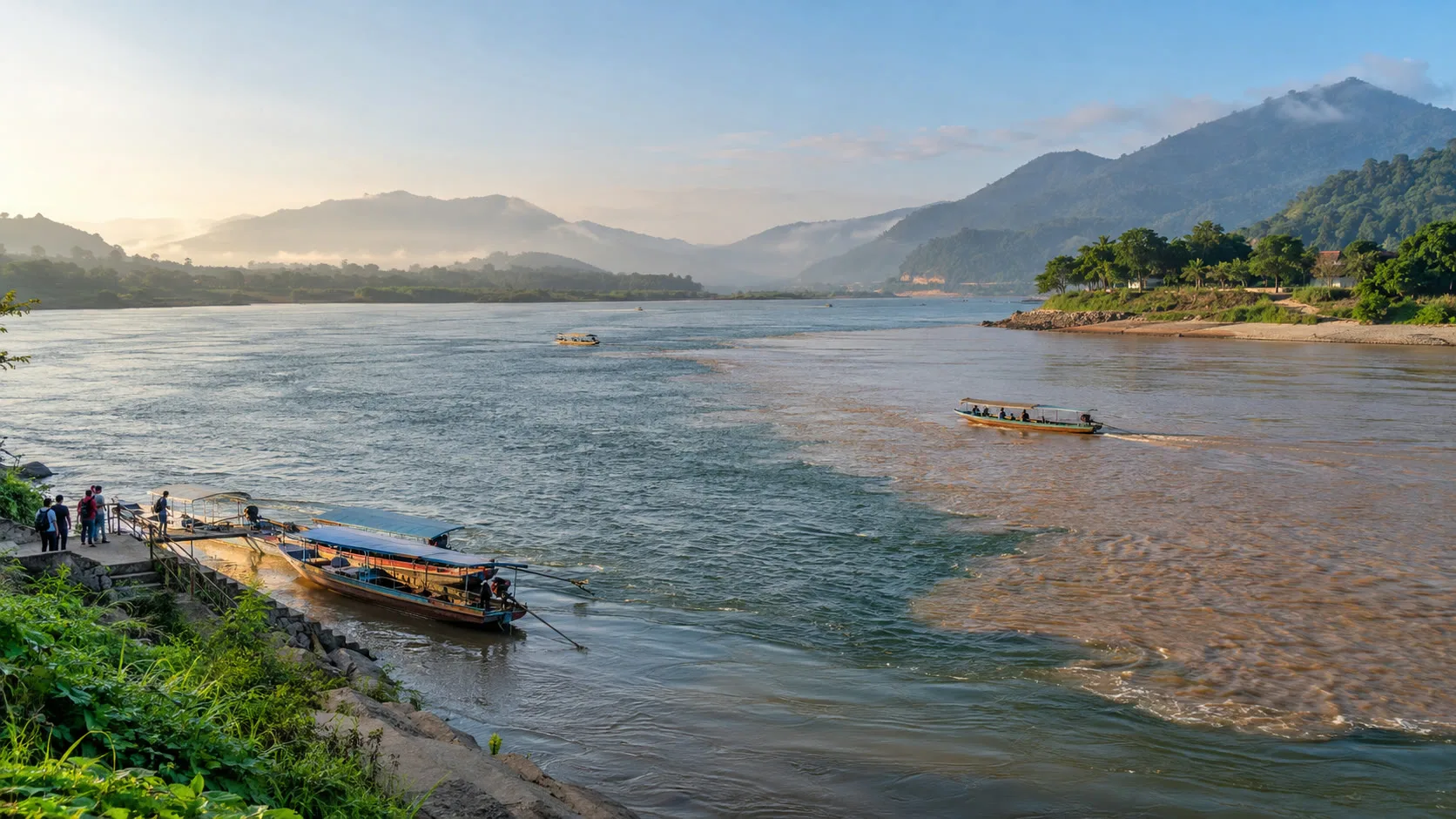
Golden Triangle Thailand is one of the most iconic destinations in northern Thailand. From a single viewpoint, you can see Thailand, Laos and Myanmar, separated by the Mekong and Ruak rivers. This destination offers a fascinating historical background, beautiful scenery and a completely different atmosphere from Bangkok, Phuket or Pattaya.
In this guide, you will find a practical overview of the region, its main attractions, a suggested sightseeing itinerary and useful travel tips. You will learn the difference between the Golden Triangle region and the Sop Ruak viewpoint, how much time to allow and which attractions to combine with a trip to Chiang Rai.
What makes this route special is its combination of scenery, history and geography. That is why Golden Triangle Thailand is much more than a photo stop. It is an excellent choice for travelers who want to explore northern Thailand beyond its famous temples.
Golden Triangle Thailand – Where Exactly Is the Golden Triangle Located?
Golden Triangle Thailand is located in Chiang Rai Province, in the far north of the country. The most frequently visited viewpoint is near Sop Ruak, where the Ruak River flows into the Mekong. Across the water, you can see Laos and Myanmar.
In practice, travelers use the name Golden Triangle to describe two different things. First, it refers to the wider region historically associated with the opium trade. Second, it describes a specific viewpoint overlooking the Mekong River. It is therefore useful to distinguish between the historical region and the tourist attraction.
The drive from Chiang Rai usually takes around 1.5 hours. The journey from Chiang Mai is considerably longer. As a result, a day trip from Chiang Mai requires an early departure and careful planning.
Sop Ruak, the Mekong River and the Three-Country Border
Sop Ruak is the main visitor destination on the Thai side. Here you will find observation terraces, statues, a boat pier and scenic photo spots. There are also opium museums, small restaurants and souvenir shops nearby.
The geography itself is what makes the strongest impression. You stand in Thailand, look across to Laos and see Myanmar on the other side of the river. That is why Thailand’s Golden Triangle is worth visiting even if you do not have much time for sightseeing.
The Golden Triangle is best experienced as a lesson in the geography, history and culture of northern Thailand, all in one place.
What to See in Golden Triangle Thailand: Top Attractions and Places to Visit
Golden Triangle Thailand offers several attractions that are best explored as part of a well-planned route. The main viewpoint itself does not take long to visit, but the surrounding area deserves a more leisurely exploration.
| Place | What You Will See | Recommended Time | Best For |
|---|---|---|---|
| Sop Ruak viewpoint | Views of Thailand, Laos and Myanmar | 30-60 minutes | All travelers |
| Mekong River cruise | Views of the river and international borders from the water | 45-90 minutes | Travelers who enjoy relaxing activities |
| House of Opium | A smaller exhibition about the history of opium | 30-60 minutes | Travelers with limited time |
| Hall of Opium | A larger museum offering deeper historical context | 1.5-2.5 hours | History enthusiasts |
| Chiang Saen | Ancient ruins, temples and an atmospheric old town | 1-2 hours | Travelers interested in Lanna culture |
| Wat Phra That Doi Pu Khao | A temple and elevated scenic views | 30-60 minutes | Viewpoint enthusiasts |

If you are short on time, focus on Sop Ruak, a short river cruise and the House of Opium. If you have a full day, consider adding the Hall of Opium and Chiang Saen. This itinerary provides a more complete picture of the region.
House of Opium or Hall of Opium?
The House of Opium is smaller, simpler and easier to visit. It is a good option for a short excursion. It is also located close to the main tourist viewpoint.
The Hall of Opium is a larger and more comprehensive museum. It explores opium as a historical, social and political issue. It is therefore a better choice for visitors who want a deeper understanding of the subject.
How to Plan a Golden Triangle Trip from Chiang Rai
Chiang Rai is the most convenient base for exploring the region. The city has an airport, hotels and good access to northern Thailand’s main attractions. That is why a visit to Golden Triangle Thailand is best combined with the White Temple, Blue Temple and Black House.
- Leave Chiang Rai in the morning – depart around 8:00 AM to avoid rushing.
- Drive to the Golden Triangle – the journey usually takes around 1-1.5 hours.
- Explore Sop Ruak – take photos and visit the viewpoint overlooking the meeting point of the three countries.
- Take a Mekong River cruise – choose a shorter option if your schedule is tight.
- Visit an opium museum – choose between the quicker House of Opium and the larger Hall of Opium.
- Stop in Chiang Saen – include ancient temples and ruins along the Mekong River.
- Return to Chiang Rai – head back before evening or add dinner in the city.
First, avoid trying to fit too many stops into one day. Northern Thailand may feel relaxed, but traveling between attractions takes time. Second, schedule breaks, as the day can be quite long.
Is a Day Trip from Chiang Mai Worth It?
A day trip from Chiang Mai is possible, but it is very demanding. The drive takes several hours each way. I would therefore recommend this option only with private transportation or a well-organized tour.
A better solution is to stay overnight in Chiang Rai. This allows you to see more while avoiding unnecessary fatigue. It also makes it easier to include less touristy places along the route.
Why Does Golden Triangle Thailand Have Such a Significant History?
The name Golden Triangle did not originate as a tourism slogan. For decades, the region was associated with poppy cultivation and the opium trade. It covered mountainous areas of Thailand, Laos and Myanmar.
- Opium – historically, it was the most important commodity associated with the region.
- Mekong River – the river served as both a natural border and a transportation route.
- Northern mountains – the challenging terrain contributed to the isolation of local communities.
- Ethnic groups – the region is home to various communities living along the borders.
- Tourism – today, the Thai side of the region focuses on history, scenic views and museums.
That is why a visit should not end with a photograph by the river. It is worth exploring a museum to understand the region’s background. This makes Golden Triangle Chiang Rai a much more rewarding destination.
From Opium-Producing Region to Tourist Destination
The Thai side of the Golden Triangle has undergone a major transformation. Today, visitors will find well-maintained viewpoints, museums and tourist facilities. However, the area’s history remains an essential part of its identity.
For this reason, the Golden Triangle should not be presented as just another scenic attraction. It tells a story of borders, trade, politics and social change. It also reveals a different side of Thailand.
Mekong River Cruise and Views of Laos and Myanmar
A Mekong River cruise is one of the most popular activities in the Golden Triangle. Traveling by boat offers a different perspective from the viewpoint. From the river, you can better appreciate how close the three countries are to one another.
Most visitors choose a short cruise near Sop Ruak. Some itineraries include a stop on the Lao side. The conditions governing such stops may change, so it is important to check the current arrangements locally.
For many travelers, the cruise is more interesting than simply taking a photograph next to the landmark sign. It is therefore worth adding if the weather is good. However, rain and poor visibility can make the experience less enjoyable.
When Is the Best Time for a River Cruise?
It is best to take a cruise in the morning or before late afternoon. The light is softer and the heat is less tiring. These conditions also make it easier to capture beautiful photographs of the river and surrounding hills.
Visibility is generally better during the dry season. In the rainy season, the landscape is greener, but unpredictable weather can affect your plans. Flexibility is therefore important.
The most memorable moment in the Golden Triangle comes when you look across the Mekong and realize that this river represents a border, a route and a history all at once.
When to Visit the Golden Triangle and What to Bring
Golden Triangle Thailand can be visited throughout the year. The most pleasant conditions are usually during the cooler season, from November to February. Temperatures are milder, especially in the mornings and evenings.
March to May can be extremely hot. Northern Thailand may also experience periods of poor air quality. Travelers who are sensitive to air pollution should therefore check conditions before their trip.
The rainy season generally lasts from May to October. This does not mean that it rains all day, every day. However, it is wise to allow some flexibility in your schedule and bring lightweight rain protection.
Practical Packing List for Your Trip
Bring comfortable shoes, a hat, sunglasses and sunscreen. A lightweight jacket or sweatshirt can also be useful if you leave very early in the morning. Carry some cash as well, since smaller establishments do not always accept cards.
If you plan to visit temples, wear clothing that covers your shoulders and knees. This is particularly important for women, although men should also dress modestly. It is a simple way to show respect for local customs in Thailand.
FAQ – Frequently Asked Questions About Golden Triangle Thailand
Is Golden Triangle Thailand Worth Visiting?
Yes, it is worth visiting, especially if you are staying in Chiang Rai. Golden Triangle Thailand combines scenic landscapes, fascinating history and a unique geographical location. However, it is neither a beach destination nor a typical entertainment attraction. It is best suited to travelers who enjoy culture, history and relaxed sightseeing.
How Much Time Do You Need to Explore the Golden Triangle?
Around one hour is enough for the main viewpoint. However, a well-paced visit usually takes half a day. If you add a river cruise, a museum and Chiang Saen, allow a full day. This way, you can properly enjoy each stop rather than simply ticking attractions off a list.
Can You Visit the Golden Triangle from Chiang Mai in One Day?
Yes, but it makes for a very long day. Traveling from Chiang Mai involves many hours in the car. Staying overnight in Chiang Rai is therefore a better option. This allows you to explore Thailand’s Golden Triangle at a more relaxed pace and without unnecessary pressure.
Can You Cross the Border into Laos or Myanmar at the Golden Triangle?
Standard sightseeing takes place on the Thai side. Short river cruises may travel near the Lao side. Entry requirements and border procedures can change. Always check the current conditions locally before boarding a boat.
What Is the Difference Between the Golden Triangle and Sop Ruak?
The Golden Triangle is the broader name for the region spanning three countries. Sop Ruak is a specific location on the Thai side. It is where most tourists go when visiting the area. As a result, the two names are often used interchangeably in tour descriptions.
Summary
- Golden Triangle Thailand – a unique location where Thailand, Laos and Myanmar meet.
- Sop Ruak – the main viewpoint on the Thai side of the Mekong River.
- Mekong River – the river gives this destination its atmosphere, significance and natural border.
- Opium museums – help visitors understand the region’s complex history.
- Chiang Rai – the best base for a relaxed sightseeing trip.
- Full-day visit – the best option if you want to experience more than just a scenic photo stop.
If you are planning a trip to northern Thailand, include the Golden Triangle in your Chiang Rai itinerary. It is an excellent choice for travelers who want to discover a different side of the country. Combine a visit to Golden Triangle Thailand with a local guide, temple visits and a relaxed itinerary to make the experience even more rewarding.
No comments