

Chiang Rai attractions: a complete guide to the most interesting places in northern Thailand
Chiang Rai attractions are for people who want to see another side of Thailand. Chiang Rai is quieter than Chiang Mai, with less noise, less rush and more space. That makes it a great fit for a trip focused on culture, art, nature and local life.
In this guide, you’ll find the most important temples, viewpoints, museums, tea plantations and places beyond the city centre. I’ll also show you how to plan your sightseeing. That will make it easier to decide whether one day is enough or whether you should stay longer.
Chiang Rai’s greatest strength is its variety. In one day, you can see the futuristic White Temple, the intensely blue interior of Wat Rong Suea Ten and the stark works at the Black House. The next day, you can head towards the Golden Triangle, the mountains of Doi Tung or a tea plantation. This isn’t a city to rush through and tick off a list. It’s a place best explored with care.
Chiang Rai attractions: why visit this city
Chiang Rai lies in Thailand’s far north. It is sometimes treated as an add-on to Chiang Mai. That’s a mistake, because Chiang Rai’s attractions have their own character. They are more artistic, quieter and often rich in symbolism. Many places bring together Buddhism, contemporary art and the history of the Lanna region.
Chiang Rai also gives you quick access to the mountains, borders and Mekong Valley. In a few days, you can combine temples, tea plantations and old trade routes. That makes it a good destination for anyone who wants to explore northern Thailand in greater depth. It’s not just about the photos. It’s about the context too.
A city of artists, temples and an unhurried pace
Many of Chiang Rai’s best-known attractions were created by local artists. The White Temple reflects Chalermchai Kositpipat’s vision. The Black House showcases Thawan Duchanee’s bold style. The Blue Temple captivates with its colour and detail. Meanwhile, the city centre still moves to a simple, local rhythm.
The combination works very well. You can visit famous sights in the morning, then stop for coffee or a bowl of khao soi in the afternoon. In the evening, head to the night bazaar. This makes Chiang Rai less tiring than larger cities.
Chiang Rai is best appreciated by people looking for more than attractions, people who also want to experience the atmosphere of northern Thailand.
Chiang Rai’s main attractions at a glance
The table below makes it easy to compare the main sights and plan your route. Keep in mind that some attractions are outside the city centre, so transport matters.
| Attraction | What you’ll see | Best for | Best time to visit |
|---|---|---|---|
| White Temple, Wat Rong Khun | A contemporary temple and work of art, white details, a bridge and symbolic sculptures | Architecture, art and photography fans | Morning, before the busiest hours |
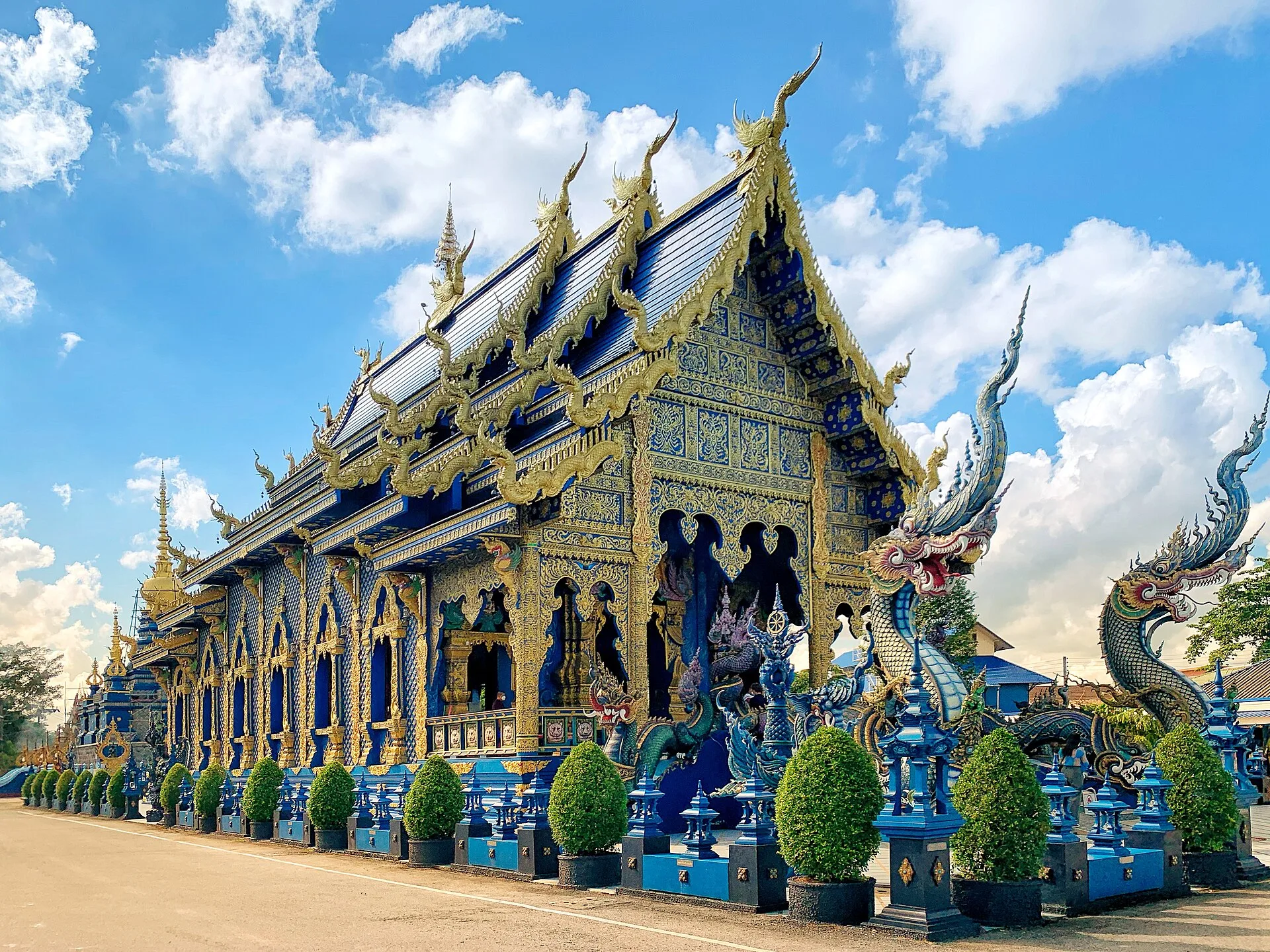
| Blue Temple, Wat Rong Suea Ten | An intensely blue interior, gold decorations and a peaceful courtyard | People who enjoy colour and a spiritual atmosphere | Morning or late afternoon |
| Baan Dam Museum | Black wooden buildings, art, sculptures and striking symbols | People who enjoy unusual places | Before lunch or after lunch |
| Wat Huay Pla Kang | A giant figure of Guan Yin, a pagoda and views over the surrounding area | Families and people who enjoy scenic views | Late afternoon |
| Golden Triangle | The meeting point of Thailand, Laos and Myanmar along the Mekong | History and landscape enthusiasts | A full-day trip from Chiang Rai |
| Doi Tung | Royal Villa, gardens, mountains and a local development project | People who enjoy nature and culture | A cool morning |
| Choui Fong Tea Plantation | Tea terraces, views and a café | Couples, families and photographers | Morning or before sunset |
| Wat Phra Kaew | A historic temple associated with the discovery of the Emerald Buddha | People interested in Thai history | A quiet morning in the city centre |
| Chiang Rai Night Bazaar | Food, souvenirs, music and a local evening atmosphere | Everyone, after a day of sightseeing | Evening |

The table highlights one important point: Chiang Rai’s attractions aren’t all in one central area. Some are south of the city, while others are north or farther towards the border. A good plan will save you time and energy.
Chiang Rai attractions in one day: the best sightseeing order
Many people ask whether you can see Chiang Rai’s attractions in one day. You can, but you’ll need to choose your route carefully. One day is enough for the main temples and art sites, but not for a relaxed exploration of the region.
The easiest route starts south of the city. First, visit the White Temple. Then head back through the city centre towards the Blue Temple. Baan Dam Museum fits well after that. Finish at Wat Huay Pla Kang or the night bazaar.
A suggested itinerary from morning to evening
- Wat Rong Khun: start at the White Temple while there are fewer tour groups.
- Blue Temple: take your time exploring the interior and details.
- Baan Dam Museum: walk through the black pavilions and art rooms.
- Wat Huay Pla Kang: go up for panoramic views of the city.
- Clock Tower: stop by the golden clock tower in the city centre.
- Chiang Rai Night Bazaar: end the day with food and a stroll.
This itinerary is practical if you’re staying in Chiang Rai. A day trip from Chiang Mai will be much more demanding, as the drive each way takes several hours. If you’re travelling from Chiang Mai, you’ll need to set off early.
When one day isn’t enough
One day isn’t enough if you want to visit the Golden Triangle, Doi Tung and the tea plantations. These places are farther away and require longer drives and a more relaxed pace. Two or three nights is a better plan.
First, you’ll have time to take photos without the crowds. Second, you can head into the mountains without feeling rushed. Third, an evening in the city centre gives you a different view of the city. Chiang Rai is peaceful after dark, but still pleasant.
Temples and art: the White Temple, Blue Temple and Black House
Chiang Rai’s main attractions are best known for their religious and contemporary art. Not all of them are traditional temples, so it’s worth looking at them more broadly. They offer a conversation between tradition, symbolism and an artist’s vision.
- Wat Rong Khun: the contemporary White Temple, with a strong moral message.
- Wat Rong Suea Ten: the Blue Temple, with hypnotic colour and a serene interior.
- Baan Dam Museum: the Black House, featuring works by Thawan Duchanee.
- Wat Huay Pla Kang: a complex with a pagoda and a giant figure of Guan Yin.
- Wat Phra Kaew: an important historic temple in the city centre.
The White Temple, a symbol of purification
The White Temple lies south of the city centre. Its official name is Wat Rong Khun. The building looks like a snowy fantasy, but its meaning is serious. White symbolises purity. Glass details reflect the light and heighten the effect.
The best-known feature is the bridge leading to the main part of the temple. Around it, you’ll see hands, faces and figures full of tension. They aren’t ordinary decorations. They tell a story of desire, suffering and the path towards a better life.
The Blue Temple and the power of colour
The Blue Temple has a different feel from the White Temple. Its interior is a deep blue, with gold details creating a striking contrast. The effect is peaceful yet highly photogenic. It’s easy to take in, but still rich in symbolism.
Wat Rong Suea Ten often appeals to people who don’t enjoy crowded attractions. The courtyard is pleasant and a visit doesn’t take long. Still, it’s worth staying longer. You’ll see the details best when you’re not in a hurry.
The Black House isn’t a temple
Baan Dam Museum is sometimes called the Black Temple, but that’s misleading. It’s a museum and an art complex, made up of dark buildings, sculptures, skins, horns, bones and wooden forms.
The atmosphere is intense and stark, and it won’t appeal to everyone. That’s part of the reason to visit. The Black House shows another side of northern art. It isn’t simply beautiful. It’s powerful and memorable.
The Golden Triangle, Doi Tung and tea plantations beyond the city
The best sights outside the city centre reveal the region’s wider context. Chiang Rai lies close to mountains and borders, so it’s easy to combine culture, history and scenery. This is where the journey takes on a more distinctly northern character.
The Golden Triangle is one of the province’s best-known places. The borders of Thailand, Laos and Myanmar meet there. You can also see the Mekong and the Ruak River. Today, the area is a tourist and historic destination. In the past, it was associated with the opium trade.
Doi Tung and Mae Fah Luang Garden
Doi Tung is a great choice if you want a break from the city. The mountains are home to the Royal Villa and Mae Fah Luang Garden. The gardens are well kept and colourful, and make for a relaxed stroll. The area also has important social significance.
Doi Tung is associated with a local development project aimed at improving life for people in mountain communities. So a visit is about more than looking at flowers. It can also help you understand how the region has changed.
Tea plantations and the green landscapes of the north
Tea plantations make a great addition to a trip beyond the city. The best known is Choui Fong Tea Plantation, with its neat green terraces and hills. Photographers, couples and families enjoy this spot.
At the café, you can try tea or matcha desserts. The views are easy to enjoy without a long trek, making this a good attraction for anyone who wants to experience nature without too much effort.
Beyond the city centre, Chiang Rai reveals what makes it special: its proximity to mountains, borders and old trade routes.
Planning your stay: how many days, transport and the best season
The ideal stay in Chiang Rai lasts two to three days. One day lets you see the main attractions near the city. With two days, you can take a more relaxed approach. Three days gives you time to add the Golden Triangle, Doi Tung and a tea plantation.
It’s worth planning transport in Chiang Rai in advance. The city doesn’t have public transport as convenient as Bangkok. The easiest options are a private driver, taxi, ride-hailing app or scooter. A scooter gives you freedom, but you need experience. Traffic outside the city can be fast.
The best time to explore Chiang Rai
The most pleasant time is usually the cooler dry season, from November to February. Mornings and evenings can feel cool then, so bring a light sweater if you’re heading into the mountains. Visibility is often good.
March and April can be hot. Smoke and poor air quality can also affect northern Thailand. The rainy season brings greener scenery and less dust. On the other hand, you’ll need to be prepared for rain.
Where to stay in Chiang Rai
Staying near the city centre is most convenient. You’ll have easy access to the Night Bazaar, cafés and restaurants. The area around the Clock Tower and the main streets in the centre are good options. For a quieter stay, you could choose a hotel outside the city.
If you’re planning trips into the mountains, check the travel times. A city-centre hotel is practical, while a resort outside the city offers peace and views. The best choice depends on your travel style.
FAQ: frequently asked questions about “Chiang Rai attractions”
Is Chiang Rai worth visiting on your first trip to Thailand?
Yes, if you enjoy culture, temples and quieter places. Chiang Rai doesn’t offer beaches or big-city energy. Instead, you’ll find great art, mountains and local character. It’s a good fit for people who want to explore northern Thailand.
How many days do you need to see Chiang Rai’s main attractions?
At least one full day. You can see the White Temple, Blue Temple, Black House and city centre. Two days is a better choice. Three days gives you time to add the Golden Triangle, Doi Tung and tea plantations.
Is it better to visit Chiang Rai from Chiang Mai or stay overnight?
Staying overnight is more convenient. The journey from Chiang Mai is long and tiring. A day trip makes sense if you’re short on time, but an overnight stay in Chiang Rai allows for a more relaxed pace and a quieter evening.
Which Chiang Rai attractions are best for photos?
For the best photos, visit Wat Rong Khun, Wat Rong Suea Ten and the tea plantation. Wat Huay Pla Kang also offers great shots. The Golden Triangle has sweeping views of the river and borders too.
Is Baan Dam Museum suitable for children?
That depends on the child’s age and sensitivity. The museum has a dark aesthetic and striking symbols. You’ll see bones, skins and stark forms. Older children may find it interesting, but it can be too intense for younger ones.
Is there a dress code for Chiang Rai’s temples?
Yes, modest clothing is a good idea. Your shoulders and knees should be covered, especially at temples and royal sites. A light scarf can help, but dressing respectfully matters too.
Is Chiang Rai a good destination if you don’t have a car?
Yes, but you’ll need to plan your journeys carefully. You can explore some of the city centre on foot, but you’ll need transport to reach the main attractions. The most convenient option is a private driver for a few hours.
Which is the most important attraction in Chiang Rai?
The White Temple is the most widely recognised. But Chiang Rai is about more than that. For a fuller picture, add the Blue Temple, Black House and Doi Tung.
Summary
- Chiang Rai attractions: best suited to people looking for culture, art and the peaceful north.
- Northern Thailand: Chiang Rai brings together mountains, borders, temples and the history of the Lanna region.
- Golden Triangle: worth adding if you’re staying longer than one day.
- Doi Tung: a good choice for garden, mountain and local project enthusiasts.
- Wat Phra Kaew: a reminder that Chiang Rai has important history as well as contemporary art.
Chiang Rai is worth treating as a full stage of your trip, not a quick stop. If you have one day, choose the temples and town centre. If you have two or three days, add the mountains, tea and the Golden Triangle. This way, you will discover a place that reveals Thailand in a quieter, deeper and more local way.
No comments