

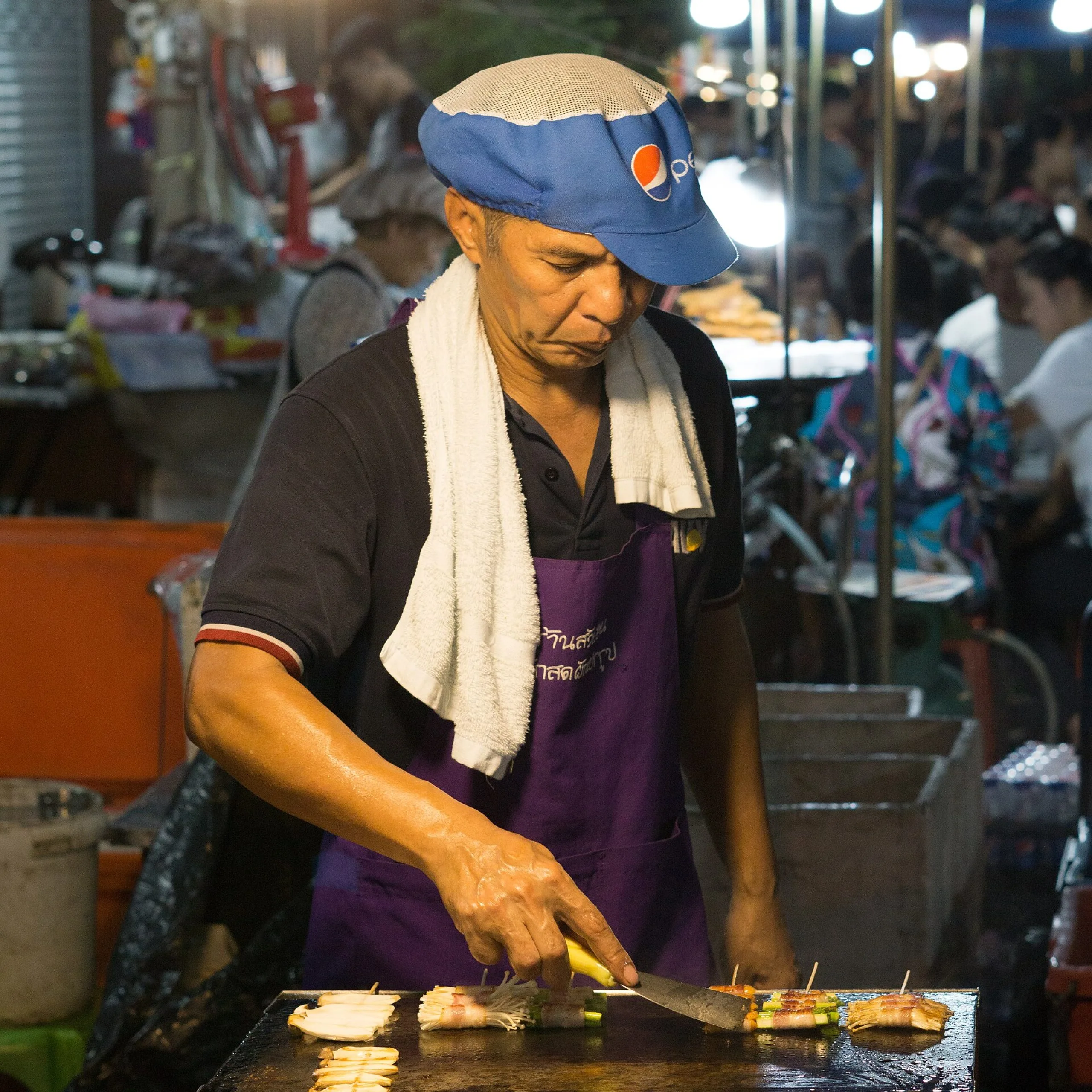
Thailand on a budget does not have to mean uncomfortable rooms, rushed meals or missing the places you came to see. The most useful approach is to reduce costs that add little value while protecting the parts of the trip that affect safety, time and enjoyment.
This guide explains how to plan flights, accommodation, local transport, food and activities without turning every decision into a search for the lowest price. It also shows where a cheap headline price can hide extra transfers, baggage fees or wasted hours. The goal is a trip that feels well organised and still leaves room for memorable experiences.
Prices and exchange rates change, so this article uses planning principles rather than fixed daily amounts. It covers general third-party travel spending and is not a public price list for AsiaTrip services. For current currency information, check the Bank of Thailand daily exchange rates before you travel.
Start with the route, not a list of cheap deals
The biggest budgeting mistake is often poor geography. Thailand is large, and Bangkok, Chiang Mai, Phuket, Krabi, Pattaya and the islands all involve different transport patterns. A low fare between two cities may stop looking cheap after you add airport travel, checked baggage, a ferry, a private transfer or a lost day.
Choose two or three sensible bases for a typical holiday and group nearby activities together. Staying longer in each place reduces repeated check-in time, transfer costs and the temptation to pay for last-minute shortcuts. It also gives you enough flexibility to change a day when the weather or your energy changes.
The cheapest ticket is not always the cheapest journey
Compare each route from door to door. For a flight, include transport to and from both airports, baggage, waiting time and any onward boat or van. For a train or bus, consider the departure point, arrival time and whether you will need a safe late-night transfer.
The same rule applies to accommodation. A room far from the places you want to visit may have a lower nightly rate, but daily taxis can erase the saving. A well-located room near useful public transport can be better value overall, even if its headline rate is higher.
A good-value itinerary is not built from the cheapest separate bookings. It is built from complete journeys that fit together without wasting time.
Build a realistic Thailand travel budget
Plan by day and by destination rather than dividing one total evenly across the holiday. A beach transfer day has different costs from a walking day in Bangkok. Include accommodation, transport, food, activities, insurance and a contingency for changes.
| Category | Lower-cost approach | Balanced approach | Common hidden cost |
|---|---|---|---|
| Accommodation | Simple guesthouse or hostel in a practical area | Well-reviewed hotel near useful transport | A remote location that requires daily taxis |
| Food | Busy food stalls and food courts | Local restaurants plus selected special meals | Choosing only venues beside major attractions |
| City transport | Rail, public boats and walking | Public transport plus ride apps when useful | Unclear fares or unnecessary cross-city journeys |
| Long-distance transport | Train, bus or shared van where suitable | Domestic flight when it saves substantial time | Baggage, airport transfers and awkward arrival times |
| Activities | Independent neighbourhoods, markets and viewpoints | Selected organised experiences where logistics matter | Booking before checking what is included |
| Islands and beaches | One base with independent beach days | One base plus carefully chosen boat trips | Repeated ferries, transfers and unverified operators |

A simple spreadsheet is enough. Add a row for each day and columns for the city, accommodation, main journey, meals and planned activities. Keep a separate contingency rather than assigning every baht in advance. This makes it easier to see whether one complicated transfer is distorting the whole plan.
Eight practical ways to spend less
- Choose fewer destinations. Stay longer in each base and reduce repeated transfers.
- Compare door-to-door journeys. Add baggage, airport travel, ferries and waiting time.
- Stay near transport you will actually use. A map is more useful than a vague claim that a hotel is central.
- Group sightseeing by area. Avoid crossing a large city several times in one day.
- Eat where there is steady local turnover. Busy stalls, food courts and local restaurants offer variety without depending on tourist zones.
- Choose organised activities selectively. Pay for help where transport, timing or interpretation adds real value.
- Check inclusions before comparing prices. Two similar offers may include very different transport, tickets or meals.
- Leave some time unplanned. A flexible day reduces the cost of changing a tightly packed itinerary.
The common thread is simple: remove avoidable complexity. A poorly sequenced route can cost more than a better hotel, while a calm day in one neighbourhood can be both cheaper and more rewarding than racing between distant attractions.
Where to save and where not to cut corners
Saving works best when the risk is low. It is reasonable to choose a simpler room, eat local food or spend a day exploring independently. It is not sensible to compromise on travel insurance, safe transport, sea conditions or a provider’s legitimacy.
- Local food: choose busy venues with good turnover and food cooked or served safely.
- Accommodation: pay attention to location, recent reviews, access and the route you will use after dark.
- Night transport: favour a clear booking record and a known pick-up point over an informal bargain.
- Boats: check the operator, weather, safety equipment and what happens if conditions change.
- Insurance: make sure the policy covers your destinations, activities and realistic emergency costs.
- Currency exchange: compare the displayed rate and any fee, and use authorised providers.
The Thailand Tourist Police Trust Portal provides tools for checking participating providers and reporting suspicious activity. It is still your responsibility to read the booking conditions and confirm what a service includes.
Avoid false comparisons
A cheap room without breakfast is not directly comparable with one that includes it. A low-cost flight without checked baggage is not the same product as a flexible fare. A boat trip that excludes transfers or park fees is not automatically cheaper than a more complete option.
Compare like with like. Write down the inclusions, cancellation terms, meeting point and expected extra payments. If the details are unclear, ask before paying. A transparent, slightly higher total can be better value than a low headline figure followed by several additions.
Affordable accommodation without a poor location
For most budget-conscious travellers, a useful room needs to be clean, secure and well connected. A rooftop pool or dramatic view may be optional. Recent guest feedback, a sensible late-arrival route and access to the places on your plan are more important.
In Bangkok, check the walking route to a BTS or MRT station rather than relying only on the distance shown on a booking site. A short distance can still involve a difficult road crossing or an uncomfortable walk with luggage. Use the official BTS route and fare planner and the Bangkok MRT information site when comparing areas.
On an island, look at the distance to the beach, pier and evening food options. A secluded room can be good value if you want quiet time, but not if every meal and transfer requires a separate ride. Check whether a scooter is genuinely suitable for your licence, insurance and experience rather than assuming it is the cheapest solution.
Eat well without spending every meal in tourist zones
Thailand offers food at many price levels. Food courts are an accessible starting point because menus are visible and the payment system is usually clear. Local restaurants and busy stalls can add variety while keeping the budget under control. The Tourism Authority of Thailand guide to local food describes the range from street stalls and made-to-order restaurants to department-store food centres.
Use normal food-safety judgement. Look for clean preparation areas, good turnover and food that is cooked thoroughly and served at a safe temperature. If you have allergies, prepare the relevant Thai wording and confirm ingredients rather than relying on appearance alone.
Plan one special meal instead of chasing every trend
A budget does not have to remove all premium experiences. Choose the meals that matter to you, then keep other days simple. This is usually more satisfying than paying tourist-zone prices repeatedly without a clear reason.
Use transport strategically in Bangkok
Bangkok is easier to budget when each day focuses on one area. Combine the riverside temples, old-town streets or a group of Sukhumvit stops instead of moving between opposite sides of the city. Rail and public boats can be predictable choices where their routes match your plan.
Ride-hailing can be useful with luggage, after dark or where rail does not help. Compare the complete journey and allow for traffic. For a tuk-tuk or another informal ride, agree on the fare and destination before departure. Avoid detours to shops or attractions you did not choose.
Our separate Bangkok transport guide explains BTS, MRT, boats, taxis and airport connections in more detail.
Choose activities according to logistical value
Many markets, neighbourhoods, beaches, temples and viewpoints can be visited independently. Organised help becomes more useful when public transport is awkward, the day involves several timed stops, local interpretation matters or a private vehicle avoids excessive backtracking.
Before booking, check the route, duration, admission fees, meal arrangements, pick-up area and cancellation terms. Do not assume that every activity needs a guide, but do not treat your limited holiday time as worthless either.
AsiaTrip’s EN service model
AsiaTrip arranges each EN itinerary for one private closed group of 4 to 20 guests. Unrelated customers are not combined. Each request is reviewed and quoted individually in THB after the route and arrangements are understood. There is no public EN price list.
This service model is separate from the general spending examples in this guide. To discuss a private trip, browse the English tour catalogue and request a tailored quote. No availability, date or price is confirmed until the details have been agreed directly.
Plan island time without paying for constant transfers
The best-known islands are not automatically the best fit for every budget. Accommodation, ferries, airport links and local transport can vary substantially by place and season. Pick one base that suits the experience you want, then add selected day trips rather than changing hotels every night.
Leave room for an independent beach day, a local market or a sunset close to your accommodation. Paid boat trips should be chosen for their route and safety arrangements, not simply because they appear on every itinerary. Conditions can change, so keep the schedule flexible and follow operator or authority instructions.
Use the season to shape the plan
Demand, weather and regional conditions can affect both cost and practicality. Flexible dates may help, but the lowest rate is not useful if it places the wrong activity in the wrong season. Thailand’s coasts do not always follow the same weather pattern.
Check current forecasts and warnings close to travel, then confirm flights, boats and activities with the relevant operator. Do not build a budget around perfect weather or a perfectly fixed ferry schedule. A small time and money buffer is more realistic.
A sensible first-trip structure
For a first visit, Bangkok plus either the north or one southern base is often easier to manage than trying to cover the entire country. If you have more time, a third region can add variety without making every other day a transfer day.
The right route depends on your interests, arrival airport, pace and season. Use nights and transport connections as planning tools, not targets to copy blindly from another traveller.
FAQ about travelling in Thailand on a budget
Can a first-time visitor travel around Thailand affordably?
Yes. Keep the route simple, choose practical accommodation and compare complete journeys rather than isolated prices. A first trip usually benefits from fewer regions and more time in each base.
What tends to increase the total cost most?
Repeated transfers, poor hotel locations, late changes and bookings with unclear inclusions often create avoidable costs. Baggage, airport travel and island connections can also make a seemingly cheap route more expensive.
Is street food always the cheapest option?
It can be good value, but the best choice depends on hygiene, location and what you want to eat. Busy local restaurants and food courts can be equally practical. Choose food you are comfortable eating rather than buying from a stall only because it looks cheap.
Should I travel independently or arrange local help?
A combination often works well. Straightforward city days can be independent, while more complex routes may benefit from planned transport or local coordination. Compare the value of your time as well as the cash cost.
When is Thailand cheapest?
There is no single answer for every region. Demand, holidays, weather and transport capacity all matter. Compare dates for the exact places you plan to visit and check what conditions are normally like there.
How much cash should I carry?
Carry enough Thai baht for small purchases and places that do not accept your preferred payment method, but avoid keeping all your money in one place. Check your card and cash-withdrawal fees before travel. Use the Bank of Thailand rate page as a reference, then compare the actual rate and fee offered by the provider you use.
A final checklist for better-value travel
- Keep the route coherent: fewer bases usually mean fewer transfer costs.
- Check the full journey: include baggage, local connections and waiting time.
- Choose location over unnecessary extras: a practical room can reduce daily travel.
- Eat locally with normal safety checks: variety does not require premium venues every day.
- Protect safety and insurance: these are not useful places for extreme cost-cutting.
- Compare like with like: read inclusions and cancellation terms before paying.
- Keep a contingency: do not allocate the entire budget before the trip begins.
Thailand on a budget works best when you spend deliberately rather than simply spending as little as possible. A coherent route, good locations and selective activities protect both your money and your holiday time. For broader planning, read our practical Bangkok guide and Thailand travel safety guide.
No comments