

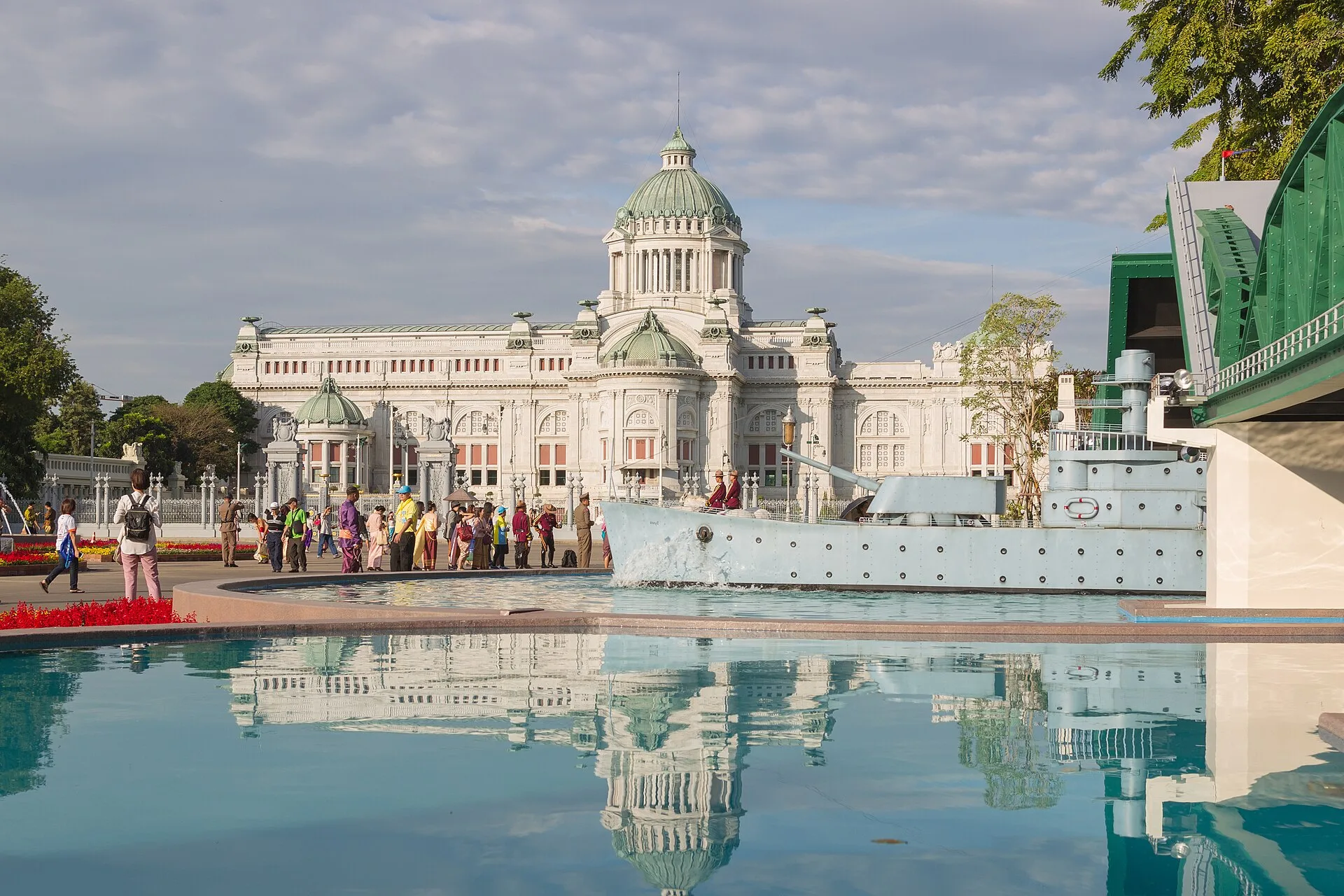
Dusit Palace Bangkok is best understood as a royal compound and a wider historic district, not as one attraction with a single entrance. The area developed around the reign of King Chulalongkorn, Rama V, and contains royal residences, ceremonial buildings, government sites, monuments and an active temple. Some places can be seen from permitted public areas, while access to individual buildings can change or remain restricted.
This guide explains what the name Dusit Palace covers, which landmarks help visitors understand the district and how to plan a flexible route. It does not assume that every building is open. That distinction is important because older guidebooks and articles often describe former museum access as if it were still guaranteed.
Dusit also tells a larger story about Bangkok. Broad avenues, landscaped grounds and European-influenced ceremonial architecture sit alongside Thai royal and Buddhist traditions. The result is very different from the dense lanes and temple courtyards of Rattanakosin.
What Does Dusit Palace Bangkok Mean?
Dusit Palace is a royal compound in Bangkok’s Dusit district. Work on the area began during the reign of Rama V at the end of the nineteenth century. The king sought more space beyond the crowded Grand Palace area, and the new district became part of a wider period of administrative, urban and architectural change.
The term can be confusing because it is used in several ways. It may refer to the palace compound itself, to prominent buildings such as Ananta Samakhom Throne Hall or Vimanmek Mansion, or more loosely to the royal and administrative district around Royal Plaza. These are related places, but they do not share one visitor policy or one set of opening hours.
A royal compound and a wider city district
Some buildings within the compound serve royal or official functions. Other landmarks stand near public roads or squares and may be viewed only from permitted areas. Wat Benchamabophit, commonly called the Marble Temple, is a separate active place of worship nearby. It can be combined with a Dusit route, but it should not be presented as a building inside one palace museum.
The safest way to plan is to separate three questions. First, which landmarks are visible from public space? Second, which sites currently admit visitors? Third, which nearby places have their own rules and hours? Answering those questions shortly before the visit prevents an outdated article from determining the entire day.
Think of Dusit as a historic royal district with several distinct sites. Do not plan it as one museum with a guaranteed entrance route.
What Can Visitors See in the Dusit Royal District?
The value of a Dusit visit comes from understanding the district as a whole. Even when interior access is unavailable, the urban plan and prominent exterior landmarks explain how Bangkok expanded beyond the old royal centre. The table below separates the main sites and the kind of visit each may support.
| Place | Why it matters | Planning note |
|---|---|---|
| Royal Plaza and the Rama V monument | A ceremonial space associated with King Chulalongkorn and the formal layout of the district. | Observe boundaries, temporary controls and instructions on site. |
| Ananta Samakhom Throne Hall | A monumental domed throne hall that reflects European architectural influence in the late Rama V period. | Do not assume public interior access. Check current official information. |
| Vimanmek Mansion | A teak royal residence associated with Rama V and an important part of Dusit’s history. | Public access may be restricted. Treat it as historical context unless current access is confirmed. |
| Wat Benchamabophit | The Marble Temple, known for its Italian marble, Thai design and collection of Buddha images. | It is a separate active temple with its own visitor rules. |
| Government and royal areas | They show that Dusit remains a working administrative and ceremonial district. | View only from permitted public areas. Do not enter controlled grounds. |

A Flexible Half-Day Route Through Dusit
A half day gives enough time to understand the area without relying on entry to one restricted building. The route below is deliberately flexible. It should be adjusted to current notices, ceremonies, road controls, weather and the mobility needs of the group.
- Begin near Royal Plaza: use the public side of the square to understand the scale and geometry of the district. Follow barriers and local instructions.
- Identify Ananta Samakhom Throne Hall: study the domed exterior from a permitted viewpoint. Confirm current access before expecting an interior visit.
- Place Vimanmek Mansion in context: understand its connection with Rama V, but do not build the itinerary around entry unless an official source confirms it.
- Continue to Wat Benchamabophit: treat the Marble Temple as a separate religious visit. Dress respectfully and check its current visitor information.
- Leave time for transport: traffic and controlled roads can change the practical route. Arrange the next journey before the group becomes tired.
This order avoids the common mistake of arriving with a rigid list of interiors. It also keeps the trip useful if access changes on the day. If the group wants a broader overview of the capital, our practical Bangkok guide explains how Dusit fits alongside the old town, riverside and modern districts.
Key Stops and What They Represent
Royal Plaza and the Rama V monument
Royal Plaza is closely associated with the equestrian statue of King Chulalongkorn. The space helps visitors read Dusit’s ceremonial plan, with broad approaches and prominent sight lines. It is not an invitation to cross barriers or enter official grounds. Conditions around a working royal and government district can change, so the on-site situation takes priority over any published walking route.
Ananta Samakhom Throne Hall
Ananta Samakhom is the district’s most recognisable monumental building. Its dome, marble exterior and European-inspired composition contrast with the forms seen at Bangkok’s major Buddhist temples. Construction began in the Rama V period and was completed in the reign of Rama VI.
The building has served ceremonial and representative functions. That history does not mean it operates as an ordinary public museum today. A responsible guide should distinguish architectural appreciation from confirmed admission and should never promise entry without current official evidence.
Vimanmek Mansion
Vimanmek is associated with Rama V and is widely described as a teak royal residence. It appears in many older Bangkok itineraries because it formerly received museum visitors. Historical visibility in guidebooks is not proof of present access. Check its current status before departure and retain an alternative plan.
Wat Benchamabophit, the Marble Temple
Wat Benchamabophit is one of the most practical cultural stops to combine with a Dusit walk. The Tourism Authority of Thailand describes the marble used in the ordination hall and identifies the temple’s location on Rama V Road in Dusit. It is an active place of worship, so respectful clothing and conduct matter more than the desire to complete a photo checklist.
- Keep shoulders and knees covered when entering temple areas.
- Follow signs concerning shoes, photography and access to religious spaces.
- Speak quietly and avoid blocking worshippers or ceremonies.
- Verify current hours and any admission arrangements before the visit.
Why Dusit Matters in Bangkok’s History
Dusit developed during a period when Siam was reforming its administration, infrastructure and international relationships. The district’s layout reflects a move beyond the confined royal centre of Rattanakosin. Wider roads, gardens and freestanding ceremonial buildings created a different urban setting.
King Rama V and a changing capital
The reign of King Chulalongkorn brought extensive reforms and a more visible engagement with foreign powers. Official material from Thailand’s Fine Arts Department records the establishment of Dusit Palace in the Rama V period. The district should therefore be presented as part of a complex Thai modernisation process, not as a simple copy of a European capital.
Architecture, government and royal representation came together here. That combination explains why some places remain active official sites rather than conventional tourist attractions. It also explains why access can be more limited than visitors expect from photographs in old guidebooks.
European architectural influence and Thai meaning
Ananta Samakhom uses architectural language associated with European historicism, while its role belongs to Thailand’s monarchy and state. Wat Benchamabophit expresses another kind of exchange: imported marble is integrated into a Thai royal temple designed within local religious traditions.
Dusit’s importance lies in the relationship between form and function. European-influenced architecture appears within a specifically Thai royal, ceremonial and Buddhist setting.
Practical Planning Before You Go
Check access on the day
Do not rely on a single old blog post for opening information. Look for a current official notice for the exact site, then check again close to the visit. A building may be visible from a public road while its interior remains closed. Temporary ceremonies, security arrangements or maintenance can also affect nearby access.
If no current official visitor information is available, plan the stop as an exterior and district-history visit. That is more honest than promising a museum experience that may not exist.
Clothing, conduct and photography
Modest clothing is a sensible default because the route includes a temple and passes royal or official areas. Follow all posted instructions. Photography rules may differ between public streets, temple grounds and controlled sites, and a photograph taken by someone else in the past does not establish permission today.
Getting around
Dusit’s landmarks are spread across a working city district. A taxi or ride-hailing service can be useful, but journey times depend on traffic and road controls. Public transport may cover part of the approach without delivering the group directly to every stop. Check the current map and allow time for walking in heat or rain.
- Carry drinking water and sun protection.
- Use a live map rather than an old printed route.
- Build in a rest stop, especially for children or older travellers.
- Keep the return plan flexible if roads or entrances are controlled.
Dusit Palace and the Grand Palace Are Different Visits
The Grand Palace is a defined historic complex in Bangkok’s old royal centre and is usually a higher priority for a first-time visitor. Dusit is a wider royal and administrative district whose value lies in urban history, architecture and context. The two places are connected by the history of the monarchy, but they should not be marketed as interchangeable attractions.
A visitor with one day in Bangkok will normally gain more from prioritising the Grand Palace, Wat Pho and the old town. With additional time, Dusit adds a second chapter: the expansion and modernisation of the capital during the Rama V period. The route works particularly well for people interested in architecture, planning and political history.
For a private closed group, the order of stops should reflect confirmed access, walking ability and weather. AsiaTrip can prepare an individual itinerary and quotation in THB for a closed group of 4 to 20 guests. Unrelated clients are not combined, and admission to restricted royal buildings is not promised.
FAQ About Dusit Palace Bangkok
Is Dusit Palace one building?
No. Dusit Palace is a royal compound, while the broader Dusit route also includes public squares, monuments, official areas and the nearby Marble Temple. Each location can have different access rules.
Can visitors enter Ananta Samakhom Throne Hall or Vimanmek Mansion?
Do not assume so. Public access can be restricted or changed. Look for current official information for the exact building shortly before the visit. If access is not clearly confirmed, plan only an exterior or contextual stop from a permitted public area.
How much time should the route take?
About half a day is a useful planning frame for Royal Plaza, exterior viewpoints, Wat Benchamabophit and transport between stops. The actual time depends on access, traffic, walking pace and weather. A shorter route is better than rushing through controlled or religious spaces.
Is Dusit suitable for a first visit to Bangkok?
It can be, but the Grand Palace and the old town are usually more important for a first short stay. Dusit becomes especially valuable when the visitor wants a deeper understanding of Rama V, Bangkok’s expansion and European-influenced royal architecture.
What should be combined with Dusit?
Wat Benchamabophit is the clearest nearby addition because it is culturally significant and part of the same district story. Avoid attaching an unrelated floating market or aquarium merely because it appears elsewhere on the website. For more suitable route ideas, see our private Bangkok tour planning page.
Summary
- Dusit Palace Bangkok is a royal compound and historic district: it is not one museum with a single entrance.
- Access must be checked: Ananta Samakhom and Vimanmek should not be advertised as guaranteed interior visits.
- Royal Plaza provides context: observe current boundaries and instructions from permitted public areas.
- Wat Benchamabophit is a separate active temple: visit respectfully and confirm current arrangements.
- A half-day flexible route is more reliable: allow for traffic, weather and access changes.
Dusit rewards visitors who value context more than a checklist. It shows how Bangkok expanded and how the Rama V era expressed change through planning, architecture and ceremony. Use current official information, respect controlled areas and keep the route flexible.
Continue with our Bangkok visitor guide, browse the private tour catalogue, or review the private Bangkok itinerary options. Every AsiaTrip EN tour is arranged for one closed group of 4 to 20 guests and quoted individually in THB.
No comments