

Pai, Thailand: A Guide to the Quiet Valley of Northern Thailand
Pai, Thailand, is one of those places that does not suit rushed sightseeing. The town lies in a mountain valley in Mae Hong Son Province. It draws visitors with its nature, peaceful atmosphere, cafés, waterfalls and views of green hills.
This guide gives you practical information about getting there, attractions, accommodation and planning your stay. You will also learn when to visit Pai, how long to stay and what to avoid. The article will help you plan your route without the hassle.
Pai is not a classic resort with beaches and large hotels. Its appeal lies in a slower pace of travel. It is therefore best suited to people who enjoy nature, local character and a flexible daily schedule.
Pai, Thailand: Where Is It and What Is It Like?
Pai in Thailand lies in the north of the country, in Mae Hong Son Province. It is most often visited as part of a stay in Chiang Mai. The route winds through mountains and forests, with numerous bends along the way.
The town has an intimate feel. The centre is made up of small guesthouses, restaurants, cafés and an evening market. Rice fields, a river, hills and quiet roads begin just beyond the centre.
Pai is often associated with backpackers, yoga and an alternative atmosphere. These days, however, couples, families and people looking for peace and quiet also come here. The town is more diverse than older descriptions suggest.
Why Is Pai Different from Chiang Mai?
Chiang Mai is a large city with historic sites, an airport and a wide choice of hotels. Pai is smaller, slower-paced and more closely connected to nature. You can feel the difference after your first evening.
In Chiang Mai, the day often revolves around temples, markets and excursions. In Pai, the pace is set by the views, sunsets and short scooter rides. The two places therefore complement each other well.
Who Will Enjoy Pai?
Northern Thailand will appeal to people looking for a break from big cities. Pai suits travellers who enjoy cafés, viewpoints and unhurried evenings. It also makes a good stop on a longer journey.
It will not be the ideal choice for everyone, though. If you are looking for beaches, luxury resorts and lively nightlife, the south of the country is a better fit. Pai offers a very different kind of trip.
Pai is best explored without rushing. It is not a place for ticking off attractions, but for settling into the slower rhythm of the mountains of Thailand.
When to Visit Pai and How to Plan Your Stay
The time of year you visit has a big impact on how Pai feels. The mountains look different in the dry season than they do after the rains. It is therefore worth planning around the weather and your tolerance for heat.
The most pleasant period is usually from November to February. Mornings can be cool, and days are sunny. On the other hand, accommodation tends to be in greater demand during this period.
| Period | Conditions in Pai | Best for |
|---|---|---|
| November to February | Cooler mornings, good visibility and comfortable sightseeing. | First-time visitors and those with an active itinerary. |
| March to May | Hot and dry, with air quality sometimes less favourable. | People who can handle the heat. |
| June to October | Green landscapes, rain, fewer tourists and slippery roads. | Relaxed stays and nature photography. |
| Local weekend | More visitors from Chiang Mai and busier streets in the centre. | People who enjoy a livelier atmosphere. |
How Many Days Should You Spend in Pai?
For a first visit, plan to stay at least two nights. One full day is enough to see the main attractions, but three nights make for a much more relaxed pace.
With three nights, you can comfortably combine the canyon, waterfalls, hot springs and night market. You will also have time for a café, a massage or a lazy morning. That suits Pai perfectly.
Adding Pai to a Northern Thailand Itinerary
The simplest itinerary is Chiang Mai, Pai, then back to Chiang Mai. A more ambitious option is the Mae Hong Son Loop, with Pai as one stop on a longer route.
The loop offers beautiful views and a chance to experience Thailand’s mountain landscapes. However, it takes time and requires experience and good planning. It is not worth squeezing into a very short holiday.
What to See in Pai, Step by Step
One of Pai’s biggest advantages is how close the attractions are. Many places are just a short ride from the centre. You can explore without long journeys or a packed schedule.
The itinerary below works well for a first visit. You could fit it into one busy day, but it is better spread over two more relaxed days.
- Pai Canyon: Start at one of the area’s main viewpoints. It is at its best before sunset.
- Bamboo Bridge: Walk across the rice fields on the wooden bridge. It looks best after the rains.
- Tha Pai Hot Springs: Set aside time to relax in the hot springs. They are a welcome break after a scooter ride.
- Mo Paeng Waterfall: Visit when there is enough water in the area. It can be less impressive during the dry season.
- Yun Lai Viewpoint: Head to the viewpoint in the morning. In good weather, you can see mist over the valley.
- Santichon Village: Visit this village with its Chinese cultural influences. It makes for a short, easy stop along the way.
- Lod Cave: Plan a half-day trip outside Pai. The cave is especially impressive for people who enjoy nature.
Pai Canyon: Enjoy the Views Safely
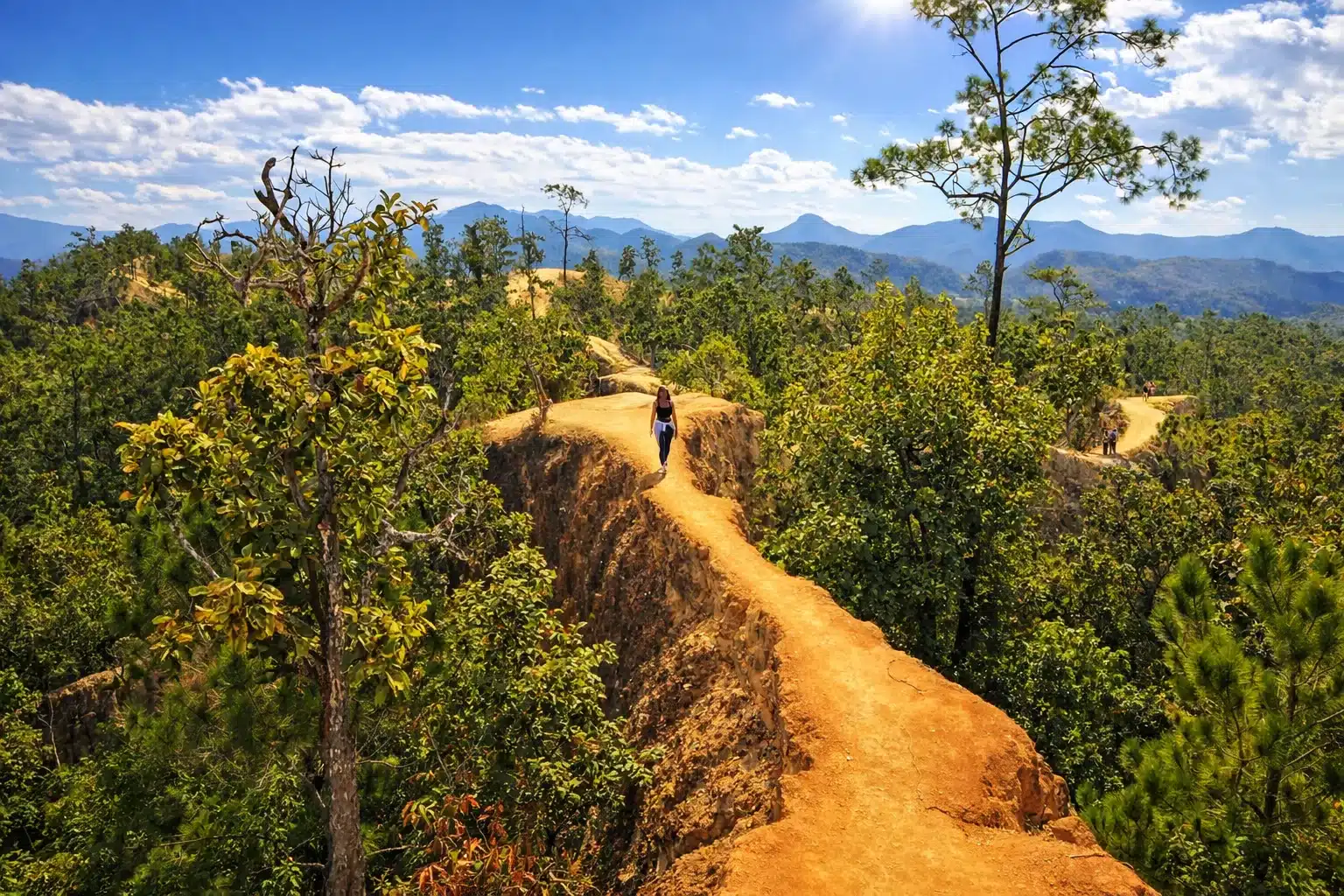
Pai Canyon looks spectacular in photos. Narrow paths run along orange-coloured ridges, and some sections call for caution.
You do not need to walk the entire route to enjoy the views. It is enough to reach the main viewpoint and stay for sunset. The attraction is suitable for less active visitors, too.
Waterfalls and Hot Springs
The waterfalls around Pai depend on the season. They have more water and look their best after the rains. In the dry season, they may be less impressive.
The hot springs are more reliable. They are a good option in the morning or late afternoon. The combination of nature and warm water makes for a very relaxing stop.
Best Things to Do in Pai for Active and Relaxed Travellers
You can explore Pai actively or take things very easy. One day, you might visit the canyon and a cave. The next, all you need is coffee, a massage and the night market.
So tailor your plans to your own style. You do not have to spend all day riding around the area. Pai rewards those who do less, too.
- Scooter rides in Pai: A scooter gives you plenty of freedom, but you need experience. The roads can be winding, steep and slippery.
- Pai Night Market: The easiest option for dinner and a stroll. You will find street food, juices, pancakes and local snacks.
- Cafés with a view: A good choice for a slow morning. Many have terraces, hammocks and relaxing music.
- Yoga and massage: They suit the town’s slower pace and are a good idea after travelling from Chiang Mai.
- Viewpoints: Visit in the morning or before sunset for soft, pleasant light.
- Short trek: Consider a local route with a guide, especially if you want to learn about nearby villages.
How to Avoid Overloading Your Itinerary
The most common mistake is trying to see everything in one day. That does not make much sense in Pai. The rides are short, but the attractions are best enjoyed at a relaxed pace.
It is better to choose three highlights and leave time between them. That way, you will avoid getting tired and have more time to appreciate the valley’s atmosphere.
What to Do in the Evening
Pai’s centre comes alive in the evening. The main spot is Walking Street. It is a good time for dinner, shopping and a leisurely stroll.
However, it is not a party hub on the scale of the islands. There are bars and music, but the atmosphere stays relaxed. You can enjoy a quiet evening, too.
Your best day in Pai does not have to be packed with attractions. Sometimes all you need is a view, a good coffee and a walk around the night market.
How to Get to Pai from Chiang Mai
The most popular route runs from Chiang Mai through the mountains. It is known for its many bends, so anyone prone to motion sickness should prepare in advance.
You can get to Pai by minibus, private car or motorbike. The easiest option is a minibus from Chiang Mai. A private transfer with stops along the way is the most comfortable.
Minibus from Chiang Mai to Pai
The minibus is the most common choice for tourists. The journey usually takes a few hours, depending on traffic and stops. The route is scenic, but can be hard on your stomach.
It is worth sitting near the front of the vehicle. Avoiding a heavy meal before departure can help, too. Water and a light sweater are also useful.
Motorbike or Scooter on the Route to Pai
Some people ride from Chiang Mai to Pai on a motorbike or scooter. This option is only for experienced riders. The road has many bends and changes in elevation, and traffic can move quickly.
Renting a scooter once you arrive is a safer compromise. You still need to be cautious. A helmet, a valid driving licence and a sensible speed all matter.
Private Transfer for a More Comfortable Journey
A private transfer costs more, but is more comfortable. You can stop along the way and travel at a more relaxed pace. It is a good option for families and people with luggage.
Choose a driver who knows the mountain route. That can make the journey less tiring, though you will still encounter plenty of bends.
Where to Stay, What to Eat and How to Get Around Pai
Accommodation in Pai varies widely. In the centre, you will find simple guesthouses, hostels and small hotels. Outside the centre, there are cottages, resorts and places with a view.
The best location depends on your plans. The centre makes evening walks and meals easier. Areas by the river and rice fields are quieter, but you will need transport.
Best Area to Stay for Your First Visit
For your first visit, staying close to the centre is convenient. You will not need to ride a scooter in the evening, which matters after dark and after dinner.
If peace and quiet are your priority, choose accommodation farther from Walking Street. Check the route and transport options, though. Distances can look shorter on the map than they are in Pai.
Food and Local Character
Northern Thai cuisine is aromatic and hearty, and often milder than food in the south. Try khao soi, soups, grilled snacks and fresh fruit. The night market makes it easy to find an affordable variety of food.
Pai also has plenty of international restaurants. You will find vegetarian food, Western breakfasts and good cafés. Food should not be a problem, even on a longer stay.
Getting Around the Area
A scooter gives you the most freedom, but it is not for everyone. If you have no experience, it is better to use transfers or local tours.
The roads around Pai can be surprising and get slippery after rain. That is why travel insurance and good judgement matter more than speed.
FAQ: Common Questions About “Pai, Thailand”
Is Pai in Thailand Worth Visiting on Your First Trip?
Yes, if you enjoy nature, mountains and a slower pace of sightseeing. Pai in Thailand offers a different perspective from Bangkok, Phuket or Krabi. It does not replace the beaches, but it is a great addition to a trip in the north of the country.
How Much Time Do You Need in Pai?
Two nights is the minimum, but three is better. One day is enough for the main attractions. Three nights give you time to rest and avoid rushing.
Is the Road from Chiang Mai to Pai Difficult?
The road is winding and tiring for some people, so be prepared for the bends. A minibus is easy to arrange, while a private transfer offers more comfort.
Do You Need to Rent a Scooter in Pai?
A scooter makes it much easier to explore the surrounding area, but it is not essential for everyone. If you have no experience, it is better to use local transport, a transfer or a tour.
When Does Pai Look Its Best?
The landscape is greenest after the rains and during the rainy season. The most comfortable weather is usually from November to February. Days are more pleasant then, and visibility is often good.
Is Pai Good for Families?
Yes, but you will need a relaxed itinerary and suitable accommodation. Families should avoid taking too many long rides in one day. It is also worth choosing a transfer instead of riding a scooter yourself.
Summary
- Pai, Thailand: Best for people looking for nature, mountains and a more relaxed pace of travel.
- Ideal stay: Plan three nights if you want to avoid rushing.
- Main attractions: Pai Canyon, hot springs, Bamboo Bridge, waterfalls and the night market.
- Best way to get there: The easiest option is a minibus or private transfer from Chiang Mai.
- Biggest appeal: Close to nature, a relaxed atmosphere and beautiful views without the pace of a big city.
- Key safety consideration: Winding roads, scooters and the weather call for caution.
Add Pai to your itinerary if you want to see a quieter side of Thailand. It is a good place to rest after Chiang Mai and before continuing your journey. Plan a relaxed stay and Pai will show you its best side.
No comments