

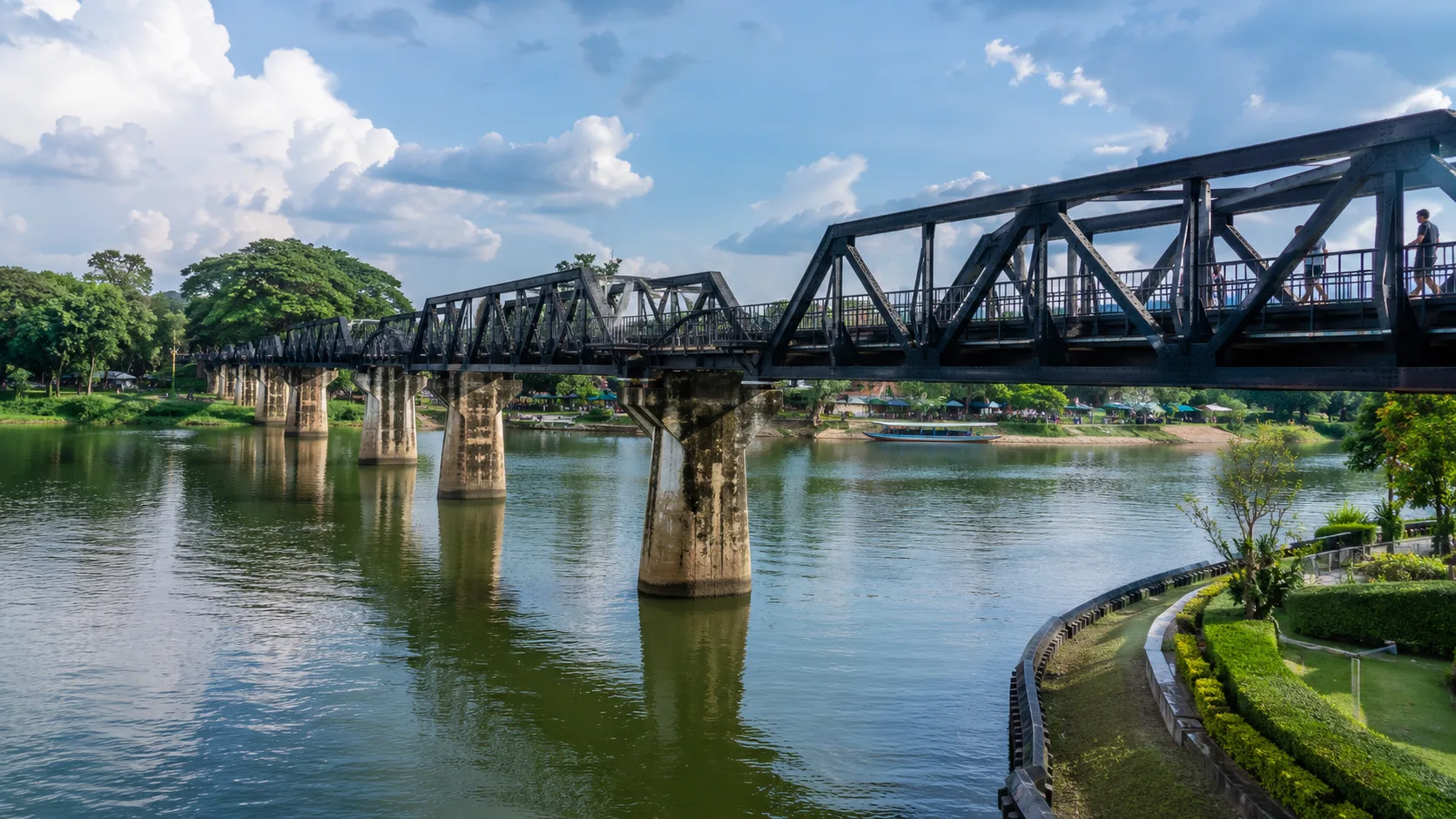
Kanchanaburi and the Bridge over the River Kwai: A Guide to Its History, Visiting, and a Trip from Bangkok
Kanchanaburi and the Bridge over the River Kwai is one of the best-known places in Thailand. It brings together the history of the Second World War, colonial memories, a cinematic legend, and the peaceful landscape of western Thailand. For many people, it is more than a place to take a photo. It helps visitors understand a difficult chapter in Asian history.
This guide covers the bridge, the city of Kanchanaburi, the journey from Bangkok, the Death Railway, war cemeteries, and the main attractions nearby. You’ll also learn how to plan your day, how much time to set aside for sightseeing, and when it’s worth staying overnight.
The greatest value of this trip is the combination of several experiences. You can walk across the steel bridge, take a train above the river, visit a war museum, and see a province that feels very different from Bangkok. That’s why Kanchanaburi and the Bridge over the River Kwai are best treated as a full-day excursion, rather than a quick stop.
Kanchanaburi and the Bridge over the River Kwai in Thai history
Kanchanaburi and the Bridge over the River Kwai are part of the famous railway known as the Burma Railway. It was built during the Second World War. The route was intended to connect Thailand with Burma and support Japanese military logistics. The work was carried out in extremely difficult conditions.
Prisoners of war and forced labourers from many Asian countries worked on the railway. Conditions were severe. Food, medicine, and rest were in short supply. The line therefore became known by the grim name Death Railway. The bridge became its best-known symbol.
Today, the bridge is open to visitors. You can walk across it, though trains still run on the tracks. A visit should not be treated as just another attraction. This is also a place of remembrance, so take your time and show respect.
Why is the Bridge over the River Kwai so well known?
The bridge became widely known through literature and cinema. The film made the name River Kwai familiar around the world. The real history, however, was more complex than its on-screen version. During your visit, it’s worth distinguishing the legend from the facts.
The bridge’s setting is a major part of its appeal. The steel structure, river, mountains in the background, and railway tracks make a striking scene. The surrounding area has also retained a peaceful character. This makes it easier to feel the contrast between today’s quiet and the drama of wartime history.
The Bridge over the River Kwai is worth seeing as more than a tourist. It is best understood by combining a walk across the bridge with a visit to a museum and war cemetery, and a train ride.
Visiting the Bridge over the River Kwai: Key places and how long to allow

Visiting the Bridge over the River Kwai doesn’t take long if you only want to walk along the tracks and take photos. A full trip to Kanchanaburi, however, should take longer. It’s worth combining the bridge with a museum, a cemetery, and a train ride.
The table below offers a practical sightseeing plan. It can help you choose what to see if you have just one day from Bangkok. It can also help you decide whether staying overnight in Kanchanaburi makes sense.
| Place | What you’ll see | Time to allow | Who it’s worth visiting for |
|---|---|---|---|
| Bridge over the River Kwai | The steel structure, railway tracks, views of the river, and a train | 45-90 minutes | Anyone visiting Kanchanaburi for the first time |
| Death Railway Museum | The history of the railway’s construction, maps, photos, and accounts from prisoners of war | 60-90 minutes | People interested in the history of the Second World War |
| Kanchanaburi War Cemetery | The graves of Allied soldiers and a peaceful place of remembrance | 30-45 minutes | People who want to understand the scale of the tragedy |
| Ride on the Death Railway | Bridges, rocks, the river, and sections of wooden track | 2-3 hours | Visitors looking for a more immersive experience |
| Hellfire Pass | A section of railway cut through rock and a memorial museum | 2-3 hours | People staying in the region longer |
The shortest option includes the bridge, cemetery, and museum. This plan works for a day trip from Bangkok. A more complete visit, on the other hand, calls for an overnight stay. You can then add Hellfire Pass, Erawan Waterfalls, or a relaxing river cruise.
How to plan a trip from Bangkok to Kanchanaburi and the Bridge over the River Kwai

A trip from Bangkok to Kanchanaburi is popular, but it takes planning. The city lies west of the capital. The journey usually takes a few hours each way, so the day starts early.
The most convenient option is private transport or an organised trip. This saves time on transfers and makes it easier to combine the bridge, museum, and train ride. Travelling independently is also possible, but calls for more flexibility.
- Leave Bangkok early in the morning: it’s best to set off before traffic gets heavy. That gives you more time at your destination.
- Visit the war cemetery: this is a good place to start. It helps you understand the scale of the history before you walk onto the bridge.
- Visit the Death Railway Museum: the exhibition helps put the facts in context. The maps and descriptions of how the route was built are especially worth seeing.
- Walk across the Bridge over the River Kwai: take your time. If the schedule allows, wait for a train to pass.
- Take a train along the historic route: this is the most striking part of the trip. The river and rock scenery gives you a sense of how challenging it was to build the line.
- Return to Bangkok in the evening: after a full day, it’s best not to plan any major activities in the capital.
If you’re travelling with children, it’s better to limit the number of stops. The bridge, museum, and a short train ride are enough. If you enjoy history, allow more time for the exhibitions. It’s best to tailor the plan to your group’s pace.
What to see in Kanchanaburi beyond the Bridge over the River Kwai

Kanchanaburi and the Bridge over the River Kwai are the region’s main symbol. There’s much more to see nearby, though. You can combine history, nature, and the slower pace of provincial life. It’s a welcome contrast after busy Bangkok.
- Death Railway Museum: the best place to learn about the background to the Burma Railway’s construction. The museum presents the history without unnecessary sensationalism.
- Kanchanaburi War Cemetery: a well-maintained and peaceful place of remembrance. It’s worth visiting before the bridge or after the museum.
- Ride on the Death Railway: an important part of the trip. The views are beautiful, and the history of the route gives them deeper meaning.
- Hellfire Pass: a powerful place of remembrance farther from the city. It’s best included in a longer stay.
- Erawan Waterfalls: one of the region’s most beautiful natural attractions. The turquoise pools are a lovely addition to a history-focused itinerary.
- The River Kwai and floating hotels: a good choice if you want to rest after sightseeing. An evening by the river has a completely different feel from Bangkok.
The best plan depends on how much time you have. One day is enough for the main sights. Two days let you see more of the region. Three days give you time for the waterfalls, Hellfire Pass, and a relaxing overnight stay by the river.
You can fit Erawan Waterfalls and the bridge into one day if your transport is private and planned in advance. That’s the format of the day trip to Kanchanaburi with local support from the AsiaTrip team: pickup from your Bangkok hotel in the morning, a car just for your group, admission to Erawan National Park, and lunch during the day. We provide a quote based on the number of guests and the date, after you contact us on WhatsApp or through the form.
The Bridge over the River Kwai and the Death Railway: What you should know
The Bridge over the River Kwai often appears in brochures as a romantic symbol of Thailand. Its history, however, is harrowing. The structure was part of a military project that cost thousands of people their lives. A tourist photo should not overshadow the memory of the victims.
The railway was of strategic importance to Japan. The route through mountains, jungle, and rivers was technically very challenging. Even so, work proceeded at a tremendous pace. Workers suffered from disease, hunger, heat, and violence. The name Death Railway is therefore not a marketing metaphor.
When visiting, it’s easy to focus only on the steel bridge. It’s better to look at the wider picture. Cemeteries, museums, and preserved sections of track show the real context. Then Kanchanaburi and the Bridge over the River Kwai become part of a much bigger story.
The greatest impression comes not from the bridge itself, but from understanding how much human suffering lies behind the peaceful landscape of the River Kwai.
Be considerate while you’re there. Avoid taking inappropriate photos at the cemetery. Don’t treat the tracks as an ordinary backdrop either. This is an active railway line and a place of remembrance. Care and respect are very important here.
Practical tips before visiting the Bridge over the River Kwai
The best time to visit is in the morning or later in the afternoon. The light is more pleasant and the temperature is milder. Midday can be hot, so bring water, a hat, and lightweight clothing.
Watch out for the tracks and side walkways on the bridge. When a train approaches, move to a safe place. Staff and local guides usually help keep things orderly, but every visitor should stay alert.
Wear comfortable shoes. Walking across the bridge and around the area isn’t difficult, but the heat can be tiring. A day that includes a museum, cemetery, and train ride can also be long, so avoid planning an overly tight schedule.
If you want to take photos, allow some time by the river. Some of the best shots are from the side of the bridge and from the riverbank. The middle of the bridge can be crowded. On the other hand, that’s where you feel the character of the place most strongly.
It’s also worth checking the train schedule. Timetables and departure times can change. For a private trip, it helps to have a driver or guide who knows the local conditions. That reduces the risk of wasting time.
FAQ: Frequently asked questions about the “Kanchanaburi and the Bridge over the River Kwai”
Is Kanchanaburi and the Bridge over the River Kwai worth seeing on your first trip to Thailand?
Yes, if you’re interested in history and want to see somewhere beyond Bangkok. Kanchanaburi and the Bridge over the River Kwai show a different side of Thailand. The area is quieter, more reflective, and historically significant. If you only have three days in Bangkok, you’ll need to prioritise. With a longer stay, the trip makes a lot of sense.
How much time do you need for a trip from Bangkok to the Bridge over the River Kwai?
You’ll need a full day for a basic itinerary. The return journey takes quite a while. At the destination, it’s worth seeing the bridge, museum, and war cemetery. Add a train ride and it will be a full day, so it’s best to set off early in the morning.
Can you walk across the Bridge over the River Kwai?
Yes, visitors can walk across the bridge. Take care, though, as trains still run on the tracks. There are places on the structure where you can safely step to the side. Don’t block the tracks or take risky photos.
Is it worth taking the Death Railway train?
Yes, the train ride is a memorable part of the trip. The views are beautiful, but the context matters too. The route gives you a sense of the challenging terrain the railway crossed. It’s best to combine the ride with a visit to the museum for a fuller experience.
Is Kanchanaburi a good place to stay overnight?
Yes, staying overnight in Kanchanaburi is a good idea, especially if you want to visit Hellfire Pass or Erawan Waterfalls. Evenings by the river are peaceful and atmospheric. An overnight stay also helps you avoid getting too tired after a long day travelling from Bangkok.
Summary
- Kanchanaburi and the Bridge over the River Kwai: a must-see for anyone who wants to learn about Thailand’s history.
- The Death Railway: the most important context for your visit. Without it, the bridge becomes just a place to take photos.
- The museum and war cemetery: help visitors understand the tragedy behind the railway’s construction. They’re worth including in every itinerary.
- A trip from Bangkok: possible in one day, but it calls for an early start and good organisation.
- An overnight stay in Kanchanaburi: gives you more time for Hellfire Pass, Erawan Waterfalls, and a peaceful rest by the river.
If you’re planning a trip around Thailand, treat Kanchanaburi and the Bridge over the River Kwai as more than a quick attraction. This trip combines history, scenery, and reflection. Plan it with good transport, a relaxed pace, and time for places of remembrance. That way, you’ll come away with an experience that stays with you.
No comments