

Phang Nga Bay: A Guide to the Most Beautiful Bay in Southern Thailand
Phang Nga Bay is one of Thailand’s most recognizable destinations. The bay is known for its limestone cliffs, green water, hidden lagoons and islands rising vertically from the sea. It lies between Phuket, Krabi and Phang Nga Province, so it is easy to add to your travel plans.
This guide offers practical information about routes, attractions, prices, sightseeing time and the best ways to organize a trip. You’ll also learn how a longtail boat cruise differs from a speedboat tour. This will make it easier to choose an option that suits a couple, family or group of friends.
The greatest appeal of Phang Nga Bay is the combination of spectacular scenery and a more relaxed pace of sightseeing. It is more than just a photo stop at James Bond Island. A well-planned trip takes in caves, a floating village, mangrove forests and places that impress without the crowds.
Phang Nga Bay: Where It Is and Why You Should Visit
Phang Nga Bay lies in the Andaman Sea, between Phuket and the mainland of southern Thailand. Administratively, it is mainly part of Phang Nga Province. From a traveler’s perspective, the bay is most often visited from Phuket, Krabi, Khao Lak or Ao Nang.
The most distinctive features are the steep limestone formations. Many look like stone towers rising from shallow water. This makes the bay’s scenery different from Thailand’s classic beaches. The main attraction here is not lying on the sand. The highlights are the views, boat trips, kayaking and quiet lagoons.
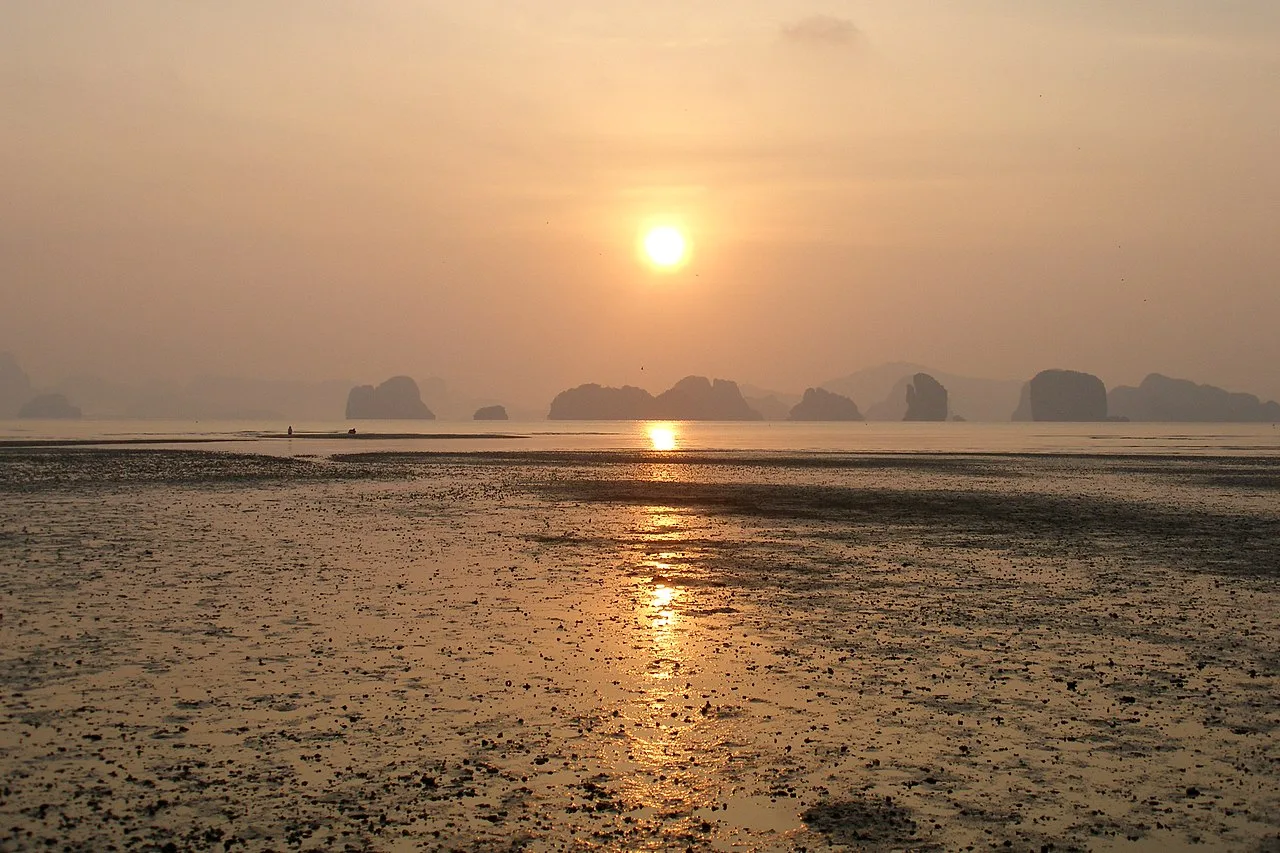
Phang Nga Bay is also beautiful in different light. In the morning, the cliffs look soft and pastel-colored. At midday, the water’s green becomes more intense. Toward the end of the day, the whole bay takes on a golden hue. That is why photographers and people looking for a peaceful getaway like to return.
How the Bay Differs from Thailand’s Classic Islands
In many parts of Thailand, the day revolves around beaches, snorkeling and swimming. It is different here. In Phang Nga Bay, the main attractions are caves, mangrove channels, viewpoints and boat rides between the cliffs. There are beaches, but they are usually not the main focus of the day.
The bay is also sheltered. The sea can be calmer here than on open-water routes to Phi Phi or the Similan Islands. That is why many people choose it as a safer option for a shorter stay. It is also a good choice if you do not like very fast boats.
It is best to think of Phang Nga Bay as a scenic excursion. It is a day for views, kayaking, caves and a relaxed pace, rather than a typical beach cruise.
Top Attractions in Phang Nga Bay: A Practical Table
The itinerary depends on the departure port, the weather and the type of boat. However, most routes include several similar stops. The table below shows what to expect and who each attraction is best suited to.
| Attraction | What You’ll See | Best For |
|---|---|---|
| James Bond Island | The famous Ko Tapu rock and a photo spot from the film | People who want to see the bay’s iconic landmark |
| Koh Panyee | A Muslim village on stilts, restaurants and local life | Families and people interested in culture |
| Hong Island in the bay | Lagoons, caves and kayaking between limestone walls | Nature lovers and those who prefer relaxed sightseeing |
| Panak Island | Caves, bats, stalactites and hidden coves | People who enjoy adventure without trekking |
| Phang Nga mangroves | Channels, mangrove roots and water birds | People looking for a less commercial route |
| Samet Nangshe Viewpoint | A view of the bay from the mainland, especially beautiful at dawn | Photographers and couples |
The most popular stop is James Bond Island. It is worth remembering, though, that it can get crowded. The best trips therefore do not end at a single rock. A good itinerary combines the bay’s icon with kayaking, the village and less obvious lagoons.
James Bond Island is a major draw in promotional materials. The visit itself, however, is brief. It usually consists of a walk, photos and a return to the boat. For that reason, it is not worth choosing a trip based only on this stop. It is better to consider the full day’s itinerary.
How to Plan a Trip to Phang Nga Bay Step by Step
The easiest way to explore Phang Nga Bay is on a day trip. You can set off from Phuket, Krabi, Khao Lak or the area around Phang Nga Town. Each option has a different transfer time, so choose a route based on where you are staying.
- Choose a departure port: From Phuket, people usually travel by speedboat or larger boat. From Phang Nga, you can set off by longtail boat through the mangroves.
- Check the style of the trip: A speedboat covers more stops in less time. A longtail is slower, more local and more relaxed.
- Compare the itinerary: Look for kayaking, caves, Koh Panyee and time to enjoy the views. James Bond Island alone is not enough.
- Decide on your comfort level: Families often prefer a larger boat. Couples and small groups are usually more comfortable on a private route.
- Check the start time: An earlier start helps avoid the crowds. It also provides better light for photos.
- Bring cash: It can come in handy for drinks, snacks, souvenirs and any local fees.
First, match the route to your own pace. Not everyone needs five stops in one day. Sometimes a relaxed trip with three attractions and more time for kayaking is better. Second, check whether the operator clearly describes hotel transfers.
If you are staying in Phuket, the most popular departures are from the northern or eastern part of the island. The route from Krabi can take longer, but it is still possible. From Khao Lak, consider combining the bay with a stop at Samet Nangshe Viewpoint. This plan delivers some truly impressive scenery.
What to See in Phang Nga Bay Beyond James Bond Island
Many people associate Phang Nga Bay only with James Bond Island. That is a mistake, because the most beautiful moments often happen away from the main photo stop. The quiet lagoons, cave entrances and kayaking beneath towering cliffs make the biggest impression.
- Koh Panyee: A village on stilts that shows another side of the bay. You can have lunch here and see local life.
- Sea canoe: Kayaks paddled by local guides. This is a good way to enter caves and small lagoons.
- Hongis and lagoons: Natural chambers surrounded by cliffs. They are often reached through low passages.
- Mangrove forest: Quiet channels among mangrove roots. They offer a good contrast to crowded islands.
- Samet Nangshe: A viewpoint on the mainland, offering one of the best panoramas of the bay.
- Panak Island: Known for its caves, dark passages and rock formations. It works well as part of a kayaking itinerary.
On the other hand, not every route includes the same stops. Some trips follow a fast-paced formula, while others are more flexible. Before booking, check whether the itinerary leaves time to enjoy nature, rather than only to take photos.
A private boat offers the most intimate atmosphere. You can set off earlier and avoid the heaviest traffic. The guide can also adjust the stops to suit the weather, tides and number of people at each location.
Best Time to Visit Phang Nga Bay and the Weather
The best time to visit Phang Nga Bay is generally from November to April. During this period, the sea is more likely to be calmer and visibility better. It is also high season in southern Thailand, so popular spots may be more crowded.
The rainy season runs from May to October. That does not mean a trip is not worthwhile. Rain often comes in spells, and the bay looks dramatic at this time. Cliffs, mist and darker skies create a distinctive atmosphere. On the other hand, the operator may change the route for safety reasons.
The best time of day depends on what you are looking for. Mornings are cooler and quieter. In the afternoon, the light can be warmer. If photos are important to you, consider an early start. You will also avoid some of the groups that arrive in the middle of the day.
The weather in Phang Nga Bay does not always have to be perfect. Light mist and clouds can give the bay more character than a clear sky at midday.
It is also worth keeping the tides in mind. Some caves and lagoons are accessible only at the right water level. A good guide knows the conditions and plans the route accordingly. That is why the trip price should not be the only factor in your choice.
Phang Nga Bay from Phuket, Krabi or Khao Lak: Where to Set Off
Most tourists visit Phang Nga Bay from Phuket. It is a convenient option, as the island has many tour agencies and hotels. Getting to the port is straightforward, and there is a wide choice of boats. One drawback may be the larger number of tourists on standard routes.
A trip from Krabi or Ao Nang is also possible. However, you should expect more time spent on logistics. This option makes sense if you are not planning to stay overnight in Phuket. For people combining Krabi, Railay and Ao Nang, the bay can be a good day away from the beaches.
Khao Lak offers a more relaxed kind of trip. It is a good choice for families, couples and people who avoid highly commercial routes. It is also easy to combine a trip with a stop at Samet Nangshe. This viewpoint is especially beautiful at dawn or early in the morning.
When to Choose a Private Trip
A private trip makes sense if you care about the pace, photos and comfort. It also works well for children, older people or special occasions. You can shorten some stops and spend more time at the places that really impress you.
A private boat also helps you avoid the standard itinerary. It does not always mean luxury. Sometimes it simply gives you better control over the day. That can make a big difference during a short stay in Thailand.
How Much Does a Trip to Phang Nga Bay Cost and What Affects the Price
The cost of a trip to Phang Nga Bay depends on the departure point, type of boat, number of people and itinerary. Group trips with hotel transfers are the cheapest. Small-group trips, private longtails and private speedboats cost more. The difference also comes down to the quality of the lunch, guide and time for kayaking.
When comparing offers, check what is included in the price. Transfers, lunch, drinks, insurance, kayaks and park fees matter. Some low-cost offers look attractive at first. Later, you may find that some costs have to be paid separately.
It is worth judging the price in terms of comfort. A long day at sea with a large group can be tiring. A smaller boat and a better guide can completely change how you experience the place. That is why the quality of the arrangements matters so much in Phang Nga Bay.
What Not to Skimp On
Do not skimp on safety, the guide or a clear itinerary. A good operator provides a realistic plan for the day. They also let you know about the weather and possible changes. This matters because access to many places in the bay depends on the tides.
The cheapest offer may mean large crowds, little time at the attractions and a rushed pace. It is better to pay more for a route that includes kayaking, a relaxed lunch and an early start. Then Phang Nga Bay will stay in your memory as an experience, not just a quick stop on the itinerary.
FAQ: Frequently Asked Questions About “phang nga bay”
Is Phang Nga Bay worth visiting on your first trip to Thailand?
Yes, definitely. Phang Nga Bay offers scenery you will not see on an ordinary beach. It is a great choice for people who want to combine views, a boat trip and a little adventure. It is especially well suited to a stay in Phuket, Krabi or Khao Lak.
How is Phang Nga Bay different from the Phi Phi Islands?
The Phi Phi Islands are more beach-focused and known for snorkeling. Phang Nga Bay is more about the scenery. The main features here are limestone cliffs, caves, kayaking and mangroves. The choice therefore depends on your travel style. If your schedule allows, it is best to see both places.
Is a trip to James Bond Island enough?
James Bond Island alone is not enough if you really want to get to know the bay. It is an important landmark, but the visit is brief. A better itinerary also includes Koh Panyee, kayaking, caves and lagoons. This makes the day fuller and more interesting.
Is Phang Nga Bay suitable for children?
Yes, the bay often works well for families. The sea can be calmer than on open-water routes. However, you need to choose the right boat and pace. Families with young children are usually more comfortable on a larger boat or private trip.
What should I bring on a trip to Phang Nga Bay?
Bring sunscreen, a hat, sunglasses, a towel and a lightweight long-sleeved shirt. Water shoes, cash and a waterproof phone case can also come in handy. It is also worth bringing a dry shirt for the trip back to your hotel.
Summary
- Phang Nga Bay: One of Thailand’s most beautiful bays, known for its limestone cliffs and green water.
- James Bond Island: The best-known stop, but not the only reason to visit.
- Kayaking and caves: The best way to experience the bay up close.
- Koh Panyee: An interesting cultural stop and a good place for lunch.
- Private route: The best option for people who want to avoid a rushed pace.
- Best time to visit: November to April usually offers the best conditions.
If you are planning a trip to southern Thailand, put Phang Nga Bay high on your list. This place offers much more than one popular photo. A well-chosen trip lets you see cliffs, lagoons, a village on stilts and the quieter side of the Andaman Sea. Plan it carefully to make the day comfortable, beautiful and truly worth the price.
No comments