

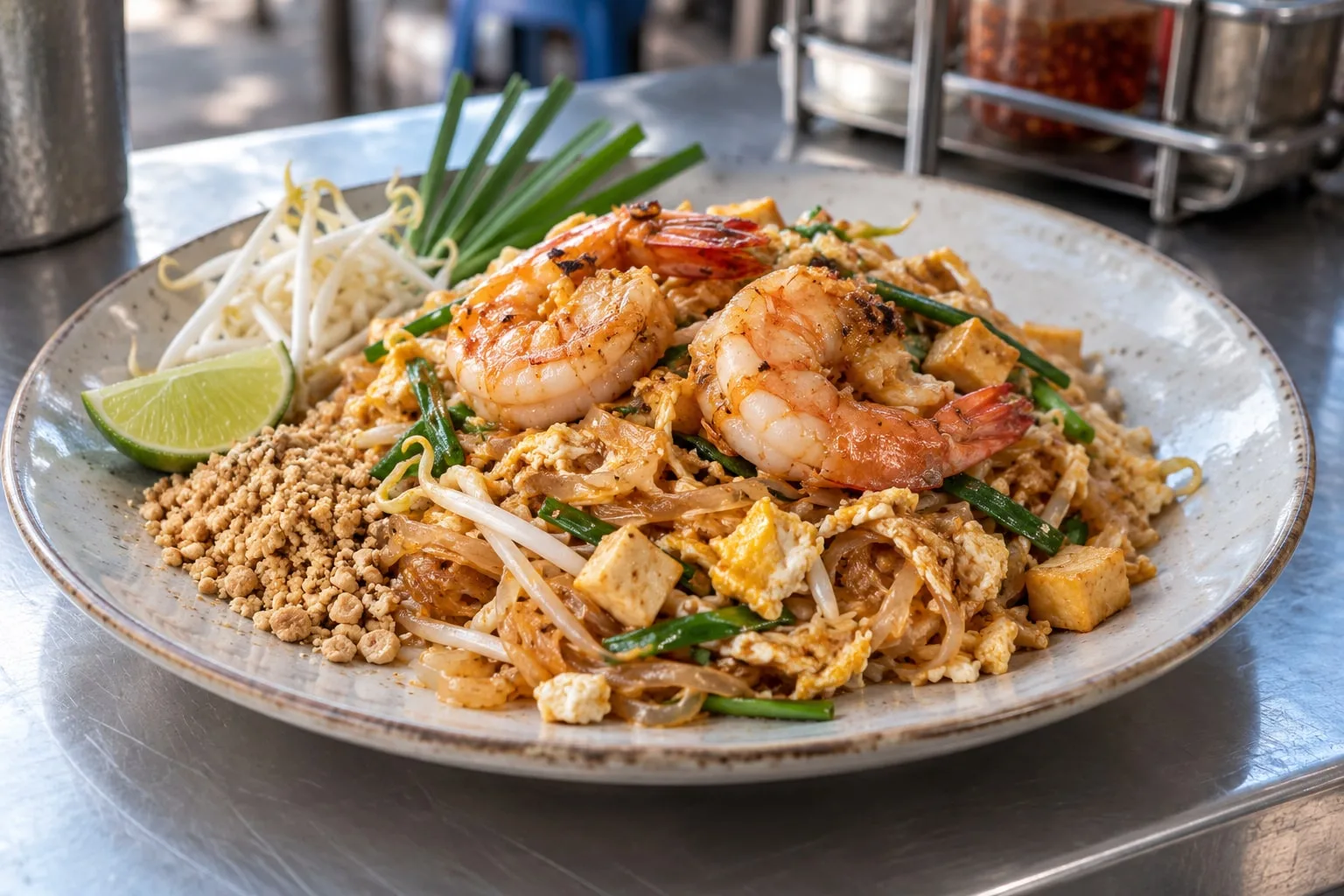
Pad thai is one of Thailand’s best-known noodle dishes, but a useful guide needs to go beyond a short ingredient list or a tidy origin story. Recipes vary, the history is more layered than the familiar claim that one politician invented it, and a vegetarian-looking plate may still contain fish sauce or dried shrimp.
This guide explains the dish’s main components, the government campaign that helped popularise rice noodles, the practical cooking sequence and the questions worth asking when you order. It is general culinary information, not a promise that every stall uses the same recipe or can meet every dietary requirement.
If food is part of the route you want to plan, browse AsiaTrip’s private tours in Thailand. The approved EN service is for one private, closed group of 4 to 20 guests. Unrelated customers are not combined. Each proposal is prepared individually and quoted in THB. AsiaTrip does not publish a standard EN package price. Any meal, food stop, licensed guide, service language or dietary arrangement must be listed in the written proposal to be included.
What is pad thai?
Pad thai is a stir-fried rice noodle dish assembled quickly in a wok. A typical version combines softened rice noodles with egg, firm tofu and sometimes prawns, chicken or another protein. Tamarind, fish sauce and palm or other sugar commonly provide the sour, salty and sweet base. Bean sprouts, Chinese chives or spring onions, crushed peanuts, chilli and lime may be cooked with the noodles or served alongside them.
There is no single plate that represents every cook, region or household. Noodle type, sauce proportions, cooking fat, preserved radish, dried shrimp and protein all vary. Some recipes are relatively dry and savoury, while others are sweeter or carry more sauce. The useful constant is the method: ingredients are prepared first, then cooked in a short sequence over high heat.
The main parts of the dish
Rice noodles provide the base. Tamarind contributes acidity, fish sauce supplies salt and savoury depth, and sugar rounds the sauce. Egg and tofu add texture and protein. Dried shrimp or fresh prawns appear in many versions, but neither should be assumed. Bean sprouts and chives bring freshness, peanuts add crunch, and lime and chilli let the diner adjust the finished plate.
These ingredients also explain why a diner with an allergy or dietary restriction should ask rather than judge by appearance. A plate without visible meat may still contain fish sauce, dried shrimp, egg or peanuts. A cook may also use the same wok and utensils for several dishes.
Flavour balance and regional variation
Pad thai is often described through a balance of sour, salty and sweet flavours. That is a useful starting point, not a fixed formula. Tamarind can be sharp or mellow, fish sauce varies in strength, and each cook decides how much sweetness belongs in the sauce. The condiments on the table allow further adjustment after serving.
Coastal versions may feature seafood. Some cooks use sen chan, a thin rice noodle associated with Chanthaburi. Other versions wrap the noodles in a thin layer of egg or use different garnishes. The name on a menu does not guarantee identical ingredients from one stall to the next.
How pad thai became a national symbol
Pad thai is closely associated with twentieth-century Thai nation-building, but its background also includes Chinese noodle traditions and existing Thai stir-fried noodle dishes. It is safer to describe its rise as a process of adaptation and promotion than as a dish created from nothing on a single date.
Chinese noodle roots and Thai adaptation
The longer name, kuai tiao phat Thai, reflects the Chinese origin of the noodle term. Noodles and wok cooking were already part of the region’s food culture. Thai cooks combined those techniques with ingredients such as tamarind, palm sugar, fish sauce, dried shrimp and local garnishes. Mi phat Korat, a dry noodle dish associated with Nakhon Ratchasima, is also discussed as one influence on the modern dish.
The Thailand Foundation’s history of pad thai describes this interaction between Chinese noodles, Thai tastes and government-era promotion. The account is valuable because it presents the dish as an evolution rather than a recipe isolated from earlier food traditions.
Government promotion in the Phibunsongkhram era
Plaek Phibunsongkhram served as prime minister from 1938 and pursued a nationalist modernisation programme. His government promoted rice-noodle production and consumption, and pad thai became associated with the effort to build a recognisably Thai national culture. An academic study held by Mahidol University’s repository examines how Chinese kway teow was localised and used within that wider nation-building project.
This evidence supports the link between pad thai and state promotion, but popular summaries often compress a contested history into the claim that Phibunsongkhram personally invented the dish. The more accurate conclusion is that government policy helped standardise and popularise rice noodles and a national image around pad thai during the late 1930s and the Second World War. The dish then continued to change as cooks, vendors and diners made it part of everyday food culture.
Core ingredients and what each one does

A good ingredient list should explain function as well as name. Pad thai is cooked quickly, so the sauce and garnishes need to be ready before the noodles reach the wok.
Tamarind, fish sauce and sugar
Tamarind supplies the characteristic acidity. Fish sauce contributes salt and fermented savoury flavour. Palm sugar is traditional in many recipes, although other sugars are also used. The sauce may be prepared in advance so the three elements can be adjusted before cooking.
No universal ratio works for every brand or palate. Tamarind concentrates differ, fish sauce can be very salty, and sugar varies in sweetness. Start cautiously, taste the sauce and remember that preserved radish, dried shrimp and table condiments may add more salt or sweetness later.
Noodles, egg, protein and garnishes
Thin or medium rice noodles are normally soaked until flexible rather than fully cooked in water. They finish cooking in the wok with sauce and a small amount of liquid. If they are too soft before frying, they can break or become sticky.
Egg, firm tofu, prawns and chicken are common additions. Preserved radish and dried shrimp may add texture and concentrated flavour. Bean sprouts and chives are usually added near the end so they retain some bite. Crushed peanuts, lime, chilli and extra bean sprouts are often served separately.
The Tourism Authority of Thailand’s overview of pad thai ingredients also highlights sen chan noodles, tamarind, dried shrimp, tofu and bean sprouts. It is a useful reference for the components most often associated with the dish, while individual recipes still differ.
How pad thai is prepared

The exact sequence changes with the recipe, but the principle is consistent: prepare everything first and cook one or two portions at a time. A crowded wok cools quickly and makes it harder to coat the noodles evenly.
Prepare the noodles and sauce first
Soak the rice noodles according to their thickness and the producer’s instructions. They should bend without being fully tender. Drain them well. Mix the sauce, cut the tofu and protein into suitable pieces, beat or set out the egg, and place the garnishes within reach.
If using raw prawns, chicken or another protein, follow appropriate food-safety guidance and cook it thoroughly. Keep raw ingredients and ready-to-eat garnishes separate. People with allergies should also consider cross-contact from sauces, utensils, cooking surfaces and packaged ingredients.
Cook quickly and adjust texture
Heat the wok, add a suitable cooking fat and cook the protein as required. Tofu and preserved ingredients may follow. Move the ingredients aside or remove them briefly before adding the egg, depending on the method. Add the drained noodles and sauce, then toss until the noodles absorb the liquid and reach the desired texture.
Small additions of water can help firm noodles finish cooking, but too much produces a wet result. Add bean sprouts and chives near the end. Return any separately cooked ingredients, combine thoroughly and serve immediately. A home hob may not reproduce the heat of a restaurant burner, but careful portion size and preparation still produce a balanced dish. A smoky flavour is not a reason to burn the noodles or overheat an unsuitable pan.
How to order pad thai in Thailand
Menus may use several English spellings, including pad thai and phat thai. The protein is often shown separately. Pad thai gai usually means chicken, while pad thai goong or kung refers to prawns. Pointing to a displayed ingredient can help, but it does not replace a clear allergy or dietary conversation.
Useful choices and realistic expectations
Ask what protein and sauce the stall uses. If you want tofu, say so explicitly. For a vegetarian or vegan meal, ask about fish sauce, oyster sauce, dried shrimp and egg rather than requesting only “no meat”. If an allergy is serious, a busy stall with shared equipment may not be able to provide reliable separation. Choose another venue if the answer is unclear.
Simple English may work in tourist areas, but it is not guaranteed. A translation card written by a fluent speaker can be useful for allergies. Do not assume that a phrase copied from an unverified website communicates the medical seriousness of a restriction.
Dietary choices, allergies and food safety
Pad thai commonly contains several major allergens, including peanuts, egg, fish and crustaceans. Soy may be present in tofu or sauces. Recipes and labelling practices vary, and cross-contact is possible in a shared wok. Travellers who need strict avoidance should discuss their requirements with the food business and follow medical advice prepared for their own condition.
Vegetarian does not automatically mean vegan
A tofu version can still contain fish sauce, dried shrimp or egg. Soy sauce may replace fish sauce in some vegetarian recipes, but that substitution is not universal. Ask about each ingredient that matters to you. The same applies to gluten: rice noodles do not prove that the complete dish is gluten-free, because sauces and shared preparation can introduce other ingredients.
Choose vendors that keep raw and cooked ingredients organised, use clean utensils and cook food to order. These observations can reduce avoidable risk, but no article or visual check can guarantee that a meal is safe for every person.
What to notice when you taste it
Pad thai is useful as a lens on Thailand’s food history because it combines migration, adaptation, government-era promotion and the daily decisions of individual cooks. Taste the sauce before adding table condiments. Notice whether the noodles remain separate, how tamarind balances sweetness, and how the fresh garnishes change each mouthful.
Choose a stall for the food, not a marketing promise
There is no single “best” pad thai that every traveller must find. Current opening hours, hygiene, queues, ingredients and individual taste matter more than an old ranking. A famous stall can be enjoyable, but a less publicised cook may use an equally thoughtful recipe. Check current information and decide according to your own dietary needs and route.
Food stops are not automatically included in an AsiaTrip itinerary. If you want a market visit, cooking activity or specific meal considered, include it in your request so availability, roles, inclusions and exclusions can be stated in writing. For wider planning context, read our practical guide to Bangkok.
No comments