

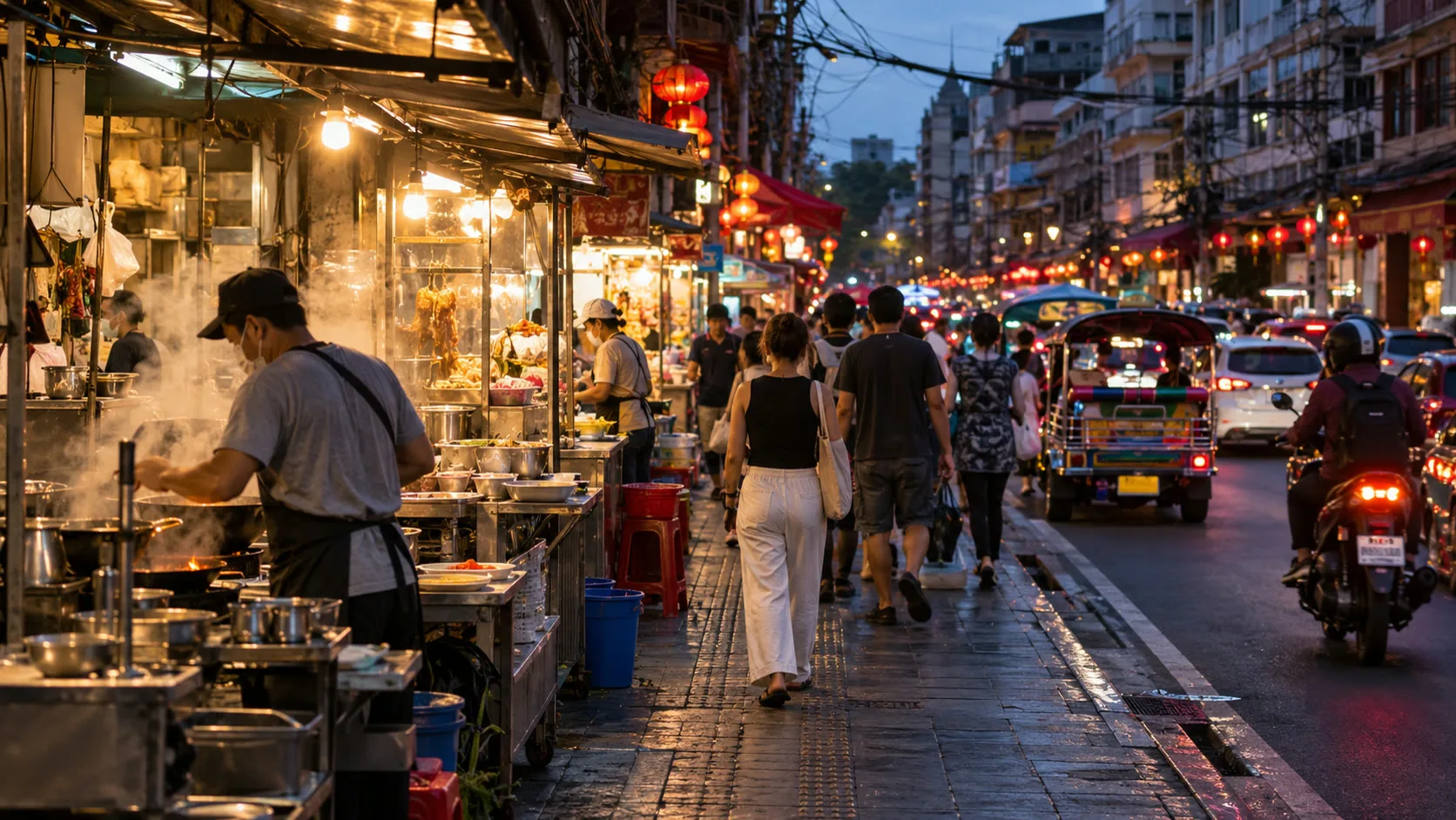
Street Food in Bangkok: The Complete Guide to Street Food in the Capital of Thailand
Bangkok street food is one of the biggest reasons so many travelers keep returning to Thailand. In this city, food is not just something you enjoy between sightseeing stops. It often becomes the highlight of the entire day.
In Bangkok, you can enjoy spicy pad kra pao, flavorful boat noodles, grilled skewers, mango sticky rice, and tom yum soup. This guide shows you where to find great food, what to order, and how to enjoy it without the stress.
You’ll discover specific neighborhoods, popular dishes, practical food hygiene tips, and advice for first-time visitors to Bangkok. This is not a random list of attractions. It’s a practical guide to experiencing the flavors of the city.
Bangkok Street Food: Why Street Food Is the Heart of the City
Bangkok street food is nothing like typical tourist dining. Here, the best meal might come from a tiny food cart, a plastic stool beside the road, or a stall without a fancy sign. What matters is a steady flow of customers, fresh ingredients, and a cook who knows their specialty.
Many stalls serve just one dish. That means the cook prepares the same recipe hundreds of times, perfecting it through repetition. Ingredients also sell quickly because locals eat at these stalls every day. That’s a major advantage over empty restaurants tucked away in tourist areas.
Bangkok also offers an incredible variety of flavors. Alongside Thai cuisine, you’ll find Chinese, Muslim, Lao, and Southern Thai influences. That’s why street food in Bangkok is such a fantastic way to get to know the city.
How to Spot a Good Street Food Stall
First, look at the queue. If locals are eating there, that’s usually a good sign. Second, check how quickly ingredients are being used and replaced. A sizzling wok, a steaming pot, and fast service tell you far more than attractive decorations.
It’s also worth checking whether the stall has a short menu. The fewer dishes on offer, the better the chances of fresh ingredients. So don’t be put off by simple-looking places. In Bangkok, simplicity often means specialization.
The best street food in Bangkok doesn’t always look impressive. Often, the winning choice is a small stall where the cook has perfected just one dish.
Best Neighborhoods for Street Food in Bangkok
Bangkok is enormous, so choosing the right area makes a real difference. Not every neighborhood offers the same dining experience. Some are perfect for an evening food walk, while others are better for breakfast or a late dinner.
| Neighborhood or Area | Best For | What to Eat | Atmosphere |
|---|---|---|---|
| Chinatown, Yaowarat | Travelers looking for an exciting evening | Oysters, noodles, seafood, desserts | Loud, crowded, and packed with food experiences |
| Victory Monument | Noodle lovers and travelers seeking an authentic local atmosphere | Boat noodles, fried rice, soups | Fast-paced, affordable, and very local |
| Silom and Sala Daeng | Travelers staying in central Bangkok | Pad kra pao, grilled dishes, curries, snacks | Practical, convenient, and close to the BTS |
| On Nut | Visitors staying along Sukhumvit | Chicken rice, soups, fruit, desserts | Local, more relaxed, and good value |
| Ari | Travelers looking for a trendy atmosphere | Thai dishes, cafes, small food stalls | Modern but still distinctly local |
| Pratunam | Travelers taking a break from shopping | Chicken rice, soups, snacks | Busy, commercial, and convenient |

What to Eat in Bangkok: 12 Must-Try Dishes
Street food menus can seem overwhelming at first. That’s why it’s best to start with the classics. The dishes below are popular, easy to find, and a great introduction to the character of Thai cuisine.
- Pad kra pao – stir-fried meat with Thai holy basil, chili, and a fried egg. It’s one of the best quick meals you can have in Bangkok.
- Pad thai – rice noodles with egg, tofu, shrimp, or chicken. The street food version can be far better than what you’ll find at a hotel.
- Boat noodles – a rich noodle soup with meat and a deeply flavorful broth. Portions are small, so you can order several bowls.
- Som tam – green papaya salad. It’s sour, salty, sweet, and often extremely spicy.
- Moo ping – grilled pork skewers. They’re especially delicious with sticky rice.
- Khao man gai – chicken served with rice cooked in broth. It’s simple, filling, and incredibly popular.
- Tom yum – a hot and sour soup flavored with lemongrass, galangal, and lime. It’s most commonly served with shrimp.
- Kuay teow – noodle soup available in countless variations. You can choose your noodles, meat, and seasoning preferences.
- Gai tod – Thai fried chicken. It often features crispy skin and a richly flavored marinade.
- Khanom buang – crispy Thai crepes filled with cream. They’re a great sweet snack.
- Mango sticky rice – fresh mango with sticky rice and coconut milk. It’s a classic dessert and an excellent choice for first-time visitors.
- Roti – a pan-fried flatbread served with banana, egg, or condensed milk. It’s particularly popular in the evening.
How to Order Street Food in Bangkok Without Stress
Ordering is easy once you know a few basic rules. First, simply point to the dish you want if you don’t know its name. Second, use short phrases. At many stalls, vendors understand basic English.
- Mai pet – means “not spicy.” It’s useful if you can’t handle much chili.
- Pet nit noi – means “a little spicy.” It’s a good compromise for most travelers.
- Sai kai dao – use this phrase to ask for a fried egg. It goes especially well with pad kra pao.
- Kin tee nee – means eating here or dining in. It’s useful at stalls with a few tables.
- Ao glap baan – means takeaway. Taking food home is extremely common in Bangkok.
- Don’t be afraid to point – it’s completely normal when there’s a language barrier. A smile also goes a long way.
Prices and Payment at Street Food Stalls
Cash is the most common payment method, so it’s worth carrying 20, 50, and 100 baht notes. Small stalls don’t always have card terminals, although QR payments are popular among locals.
A typical simple street food meal usually costs less than a restaurant dish. However, prices depend on the location. You’ll generally pay more in central Bangkok and near tourist attractions than in residential neighborhoods.
Street Food Safety and Hygiene in Bangkok
Bangkok street food can be safe if you choose carefully. One of the most important things to consider is the temperature of the food. Freshly cooked dishes from a hot wok, grill, or boiling pot of broth are usually a better choice than food that’s been sitting on a counter for hours.
At the beginning of your trip, it’s wise to avoid raw garnishes and ingredients from questionable sources. Be cautious with ice at very basic establishments, too. Popular eateries generally use commercially produced ice, but a little common sense still matters.
It’s also a good idea to start with milder dishes. Hot chili, fish sauce, and sour seasonings can be a surprise to your stomach. Your first day after a long flight isn’t necessarily the best time for unlimited culinary experimentation, either.
The safest choice is a busy stall serving freshly cooked, hot food to plenty of local customers. It’s a simple rule that works throughout Bangkok.
What to Avoid on Your First Day
Don’t start with extremely spicy salads, large portions of seafood, and several desserts all at once. Instead, try pad kra pao, noodle soup, or chicken rice. This makes it easier to see how your body responds to unfamiliar food.
Drink bottled water and carry tissues with you. Many local eateries provide napkins, but not all of them do. Hand sanitizer is another useful item to keep in your bag.
Bangkok Street Food at Night: Where to Go After Sunset
Bangkok changes pace in the evening. The streets become cooler, and food stalls get into full swing. That’s why nighttime street food is one of the city’s most enjoyable experiences.
The most famous destination is Chinatown. Yaowarat offers seafood, noodles, soups, desserts, and countless snacks. It’s crowded, but that lively chaos is exactly what gives the area its distinctive atmosphere.
For a more relaxed evening, head to a local market. On Nut, Ari, and smaller markets near BTS stations are convenient options. They also offer a less touristy experience.
How to Plan an Evening Food Walk
Don’t order a huge meal at your first stop. Instead, sample smaller portions at several different places. This way, you can try a wider variety of dishes without getting full too quickly.
A good plan includes one main dish, one soup, a grilled snack, and a dessert. To finish, pick up some fresh juice or fruit. This kind of walk gives you a well-rounded taste of Bangkok street food.
Common Mistakes Tourists Make When Eating Street Food in Bangkok
The biggest mistake is eating only near your hotel. Bangkok’s neighborhoods differ significantly in their food styles and prices. That’s why it’s worth combining sightseeing with a culinary adventure.
Another mistake is ordering everything “extra spicy.” Thai spicy food can be seriously hot. It’s better to start with mild or medium spice levels.
The third mistake is judging a place by its appearance. A tiny food cart might serve a better dish than a fashionable restaurant. On the other hand, you should never ignore basic hygiene standards.
How to Eat Like a Local Without Sacrificing Comfort
If you’re short on time, choose places near BTS or MRT stations. This helps you avoid long journeys through Bangkok’s traffic. The city is huge, so planning your transportation makes a difference.
If you’re traveling with children, look for food courts and markets with seating areas. You’ll still get to enjoy authentic local flavors, but the experience will be easier than eating beside a busy road.
FAQ – Frequently Asked Questions About Bangkok Street Food
Is Street Food in Bangkok Safe for Tourists?
Yes, but you need to choose carefully. The best options are busy stalls where food is prepared fresh throughout the day. Avoid dishes that have been sitting at room temperature for a long time.
Where Should I Try Bangkok Street Food for the First Time?
Chinatown, Silom, Pratunam, and On Nut are all good choices. Chinatown offers a lively, intense experience, while On Nut is more relaxed. The best option depends on your travel style.
How Much Does Street Food Cost in Bangkok?
Simple street food dishes are usually inexpensive, especially outside the city center. Prices tend to be higher near major attractions and in heavily tourist-oriented areas. It’s worth carrying cash in small denominations.
What Should I Order If I Don’t Like Spicy Food?
Choose khao man gai, pad thai, fried rice, or noodle soup without chili. You can also say “mai pet.” This tells the vendor that you’d like your food prepared without chili heat.
Can I Find Vegetarian Street Food in Bangkok?
Yes, but you should always ask about fish sauce and shrimp paste. In Thailand, a dish without meat isn’t necessarily fully vegetarian. The easiest option is to look for places displaying the jay vegetarian food symbol.
Conclusion
- Bangkok street food – it’s one of the city’s best attractions and an authentic way to discover local culture.
- Best neighborhoods – Chinatown, Victory Monument, Silom, On Nut, Ari, and Pratunam all offer different culinary experiences.
- Best dishes – start with pad kra pao, boat noodles, khao man gai, som tam, and mango sticky rice.
- Food safety – choose hot, freshly prepared dishes, busy stalls, and places popular with locals.
- Practical tips – carry cash, keep your orders simple, and try several small portions instead of one large meal.
If you’re planning a trip to Bangkok, make street food part of your sightseeing itinerary. Choose one neighborhood for the evening, plan a few dishes you’d like to try, and give yourself plenty of time. That way, Bangkok street food will become much more than just a meal. It could turn into one of your favorite memories of the entire trip.
No comments